- Call us 01444 237070

-
- Back
- Used Cameras
- Used Accessories
- Used Lenses
- Back
- Used Canon Lenses
- Used Nikon Lenses
- Used Fujifilm Lenses
- Used Sony Lenses
- Used Micro 4/3rds Lenses
- Used Leica Lenses
- Used Panasonic Lenses
- Used Pentax Lenses
- Used Samyang Lenses
- Used Sigma Lenses
- Used Tamron Lenses
- Used Tokina Lenses
- Used Voigtlander Lenses
- Used Zeiss Lenses
- Used Hasselblad Lenses
- Used Video
- Used Film Equipment
- Used Stock Alert
- Used Blank Test
- Sell or Part Exchange
- Used Clearance
- Recently Added Used Equipment
- Park Picks
- Faulty
- Trade-In
- Blog
- New in
- Call us
- Contact us
- Stores
- Sign in
- Categories
- Tips & Inspiration
- Reviews
- News
- Events
- Features
- Buying Guides
- Competitions
How is the OM-3 Astro Camera Different
Astrophotography is an engaging genre that often takes us out into nature during long nights of shooting, with the hope of capturing unique and compelling images of the night sky, deep-sky objects, and the phenomena beyond our planet. It is also a genre where the limitations of regular cameras can become quickly apparent.
Select OM System cameras already includes a number of integrated features that support night sky photography. However, the OM System OM-3 Astro is a dedicated astrophotography camera, not just a general-purpose model with an added filter.
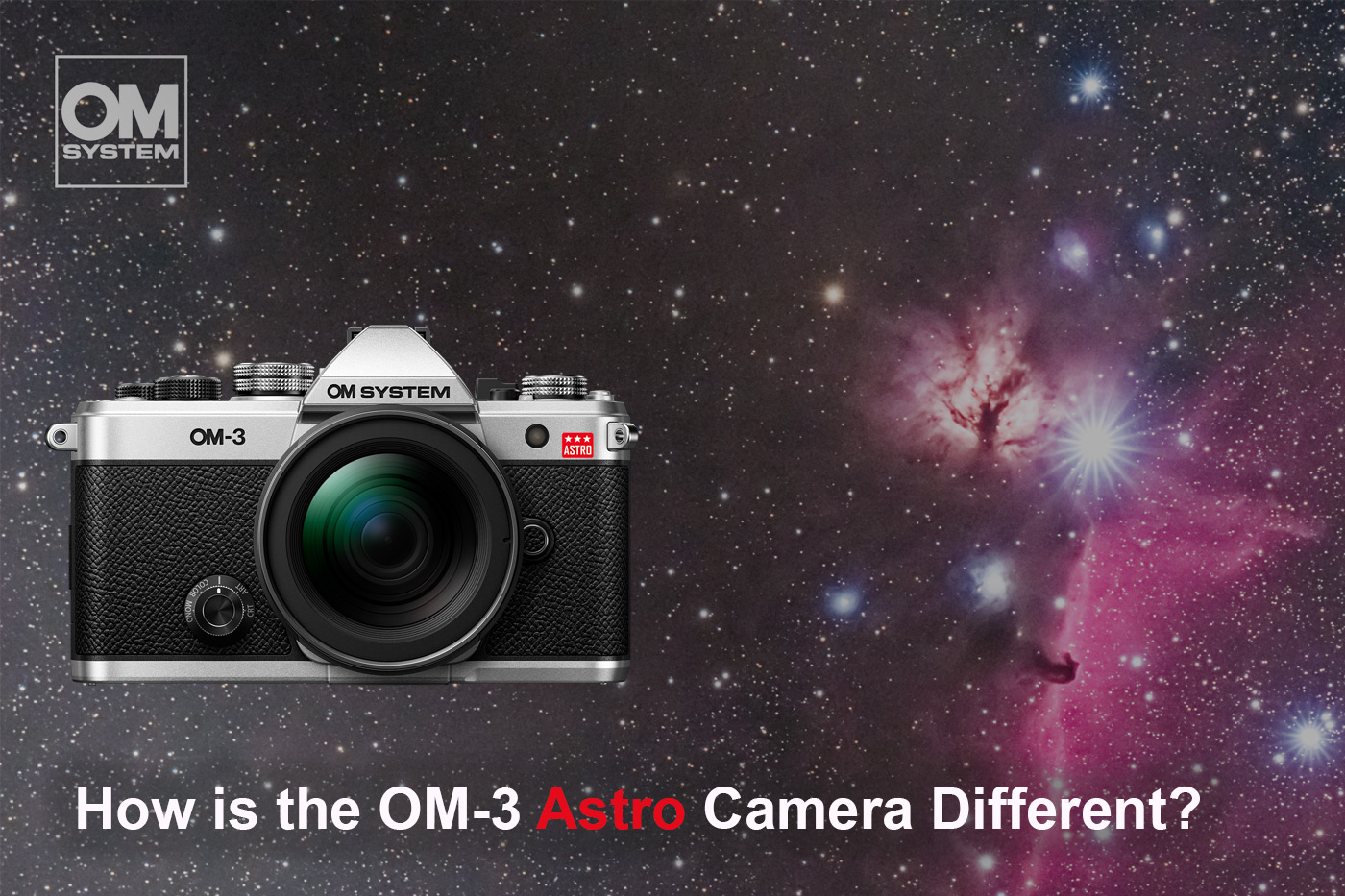
At first glance, it looks very similar to the standard OM-3. The body, controls and overall handling are largely unchanged, which raises the question how is the OM-3 astro camera different?
In this buying guide, we explore how this model sets itself apart, and how it could help you capture high-resolution images of stars, nebulae, the Milky Way and more, without many of the constraints of a conventional camera.
Does the OM-3 Astro capture nebulae and faint deep-sky detail better than a regular camera?
Yes, and it’s because of how the OM-3 Astro records light, which we explore next.
Most digital cameras reproduce natural-looking colours in daylight. To do this, they use an infrared cut filter that blocks a portion of Hα light, which is a wavelength strongly emitted by many nebulae. While this makes sense for everyday photography, it also means that emission nebulae often appear weak, colourless or absent, even in long exposures.
The specialised OM System OM-3 Astro has a modified infrared cut filter, which allows near-100% transmission of Hα wavelengths. This means red nebulae are recorded directly by the sensor, which allows colour to be far more visible without any editing.
This type of increased sensitivity also benefits general faint deep-sky detail, with night images showing more colour differences between stars, although it’s not just about more colour, as there’s more usable data in each exposure as well.
It is worth remembering that this is a specialised camera, which is why the OM-3 Astro is not ideal for general-purpose photography.
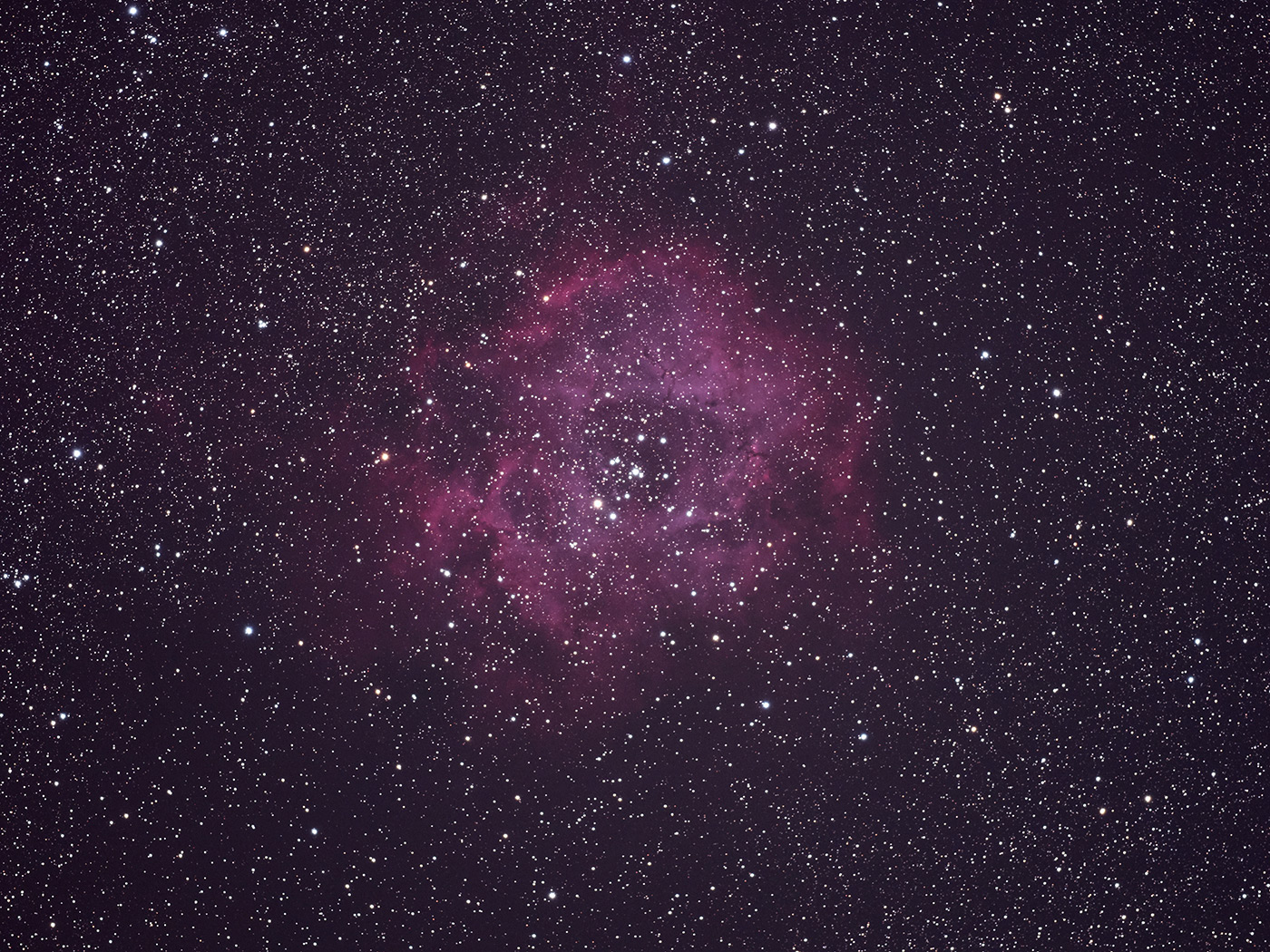
Sample 01 OM-3 Astro with M.Zuiko Digital ED 300mm F/4 IS PRO. Camera settings: Exposure 60 seconds. f/4.0. ISO 6400
Are there other differences?
Yes. While the camera looks and handles like the standard OM-3, several features have been changed specifically for night sky photography.
Aside from the modified infrared cut filter, the OM-3 Astro includes specific colour modes and access to dedicated colour profiles that are preset for different types of night sky subjects. These are configured to suit imaging of red nebulae or wide starry landscapes.
The camera also features custom modes that are preconfigured for astrophotography, including stacking-based shooting and handheld night landscape shots. These changes do not add entirely new features compared to other OM cameras, but alter how existing tools are accessed, which improves usability when shooting at night.
The following sections look at these differences in more detail, starting with the custom modes and colour profiles.
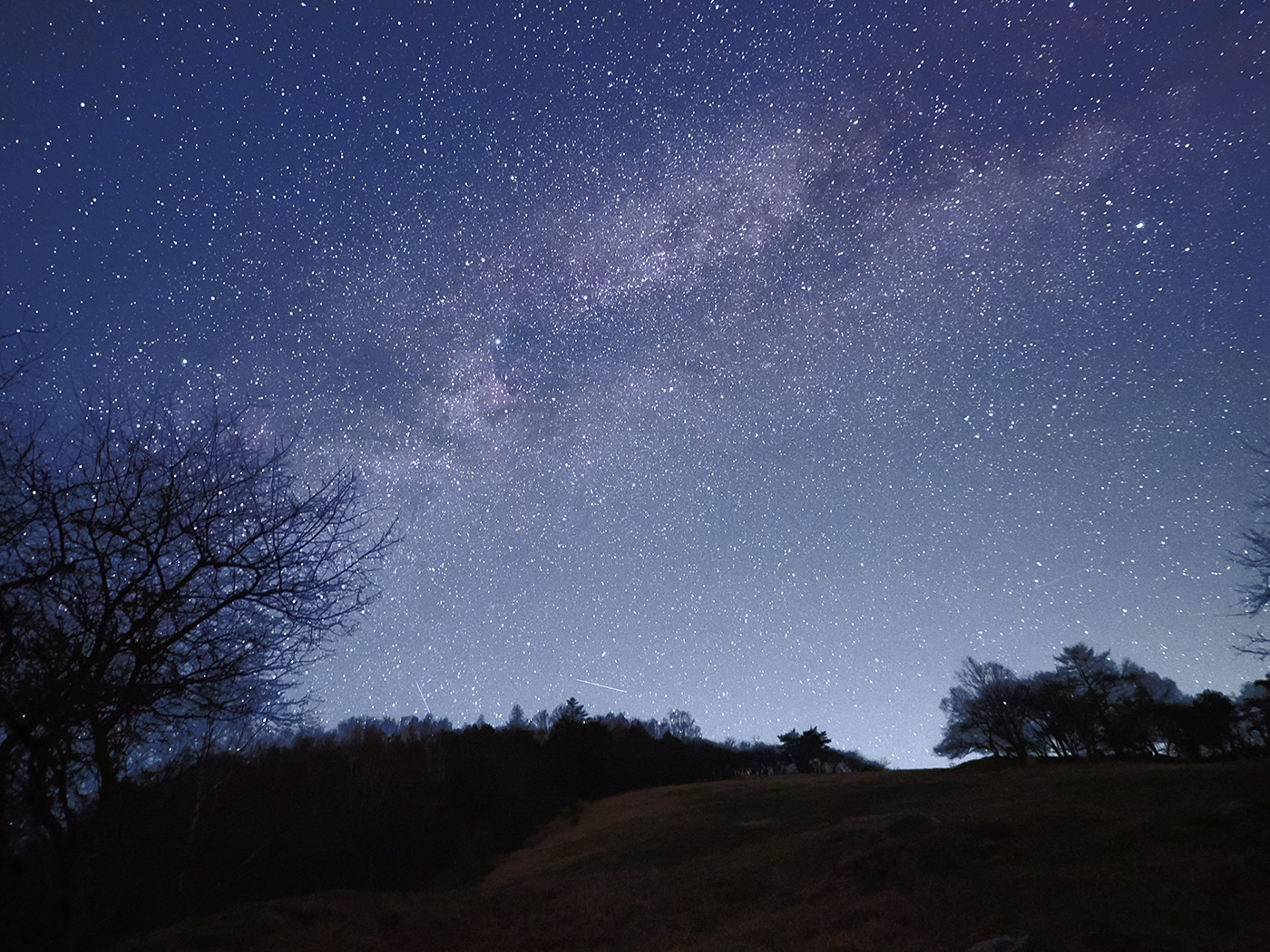
Sample 02 OM-3 Astro with M.Zuiko Digital ED 12mm F/2. Camera settings: Exposure 10 seconds. f/2.0. ISO 12800
Which custom modes and colour profiles are there?
The OM-3 Astro includes three preconfigured custom modes for night sky photography.
- C1 is for stacking, which is ideal when combining multiple stacked images when using a tracker.
- C2 is for stacked starry landscape photography, which includes both sky detail and foreground elements.
- C3 is for handheld starry landscape shooting, where stabilisation and shorter exposures are beneficial .
The camera has preset colour profiles for different night sky subjects, with one for astrophotography including red nebulae, and another for starry landscapes. These allow you to switch styles in an instant, while capturing more accurate results straight out of camera.
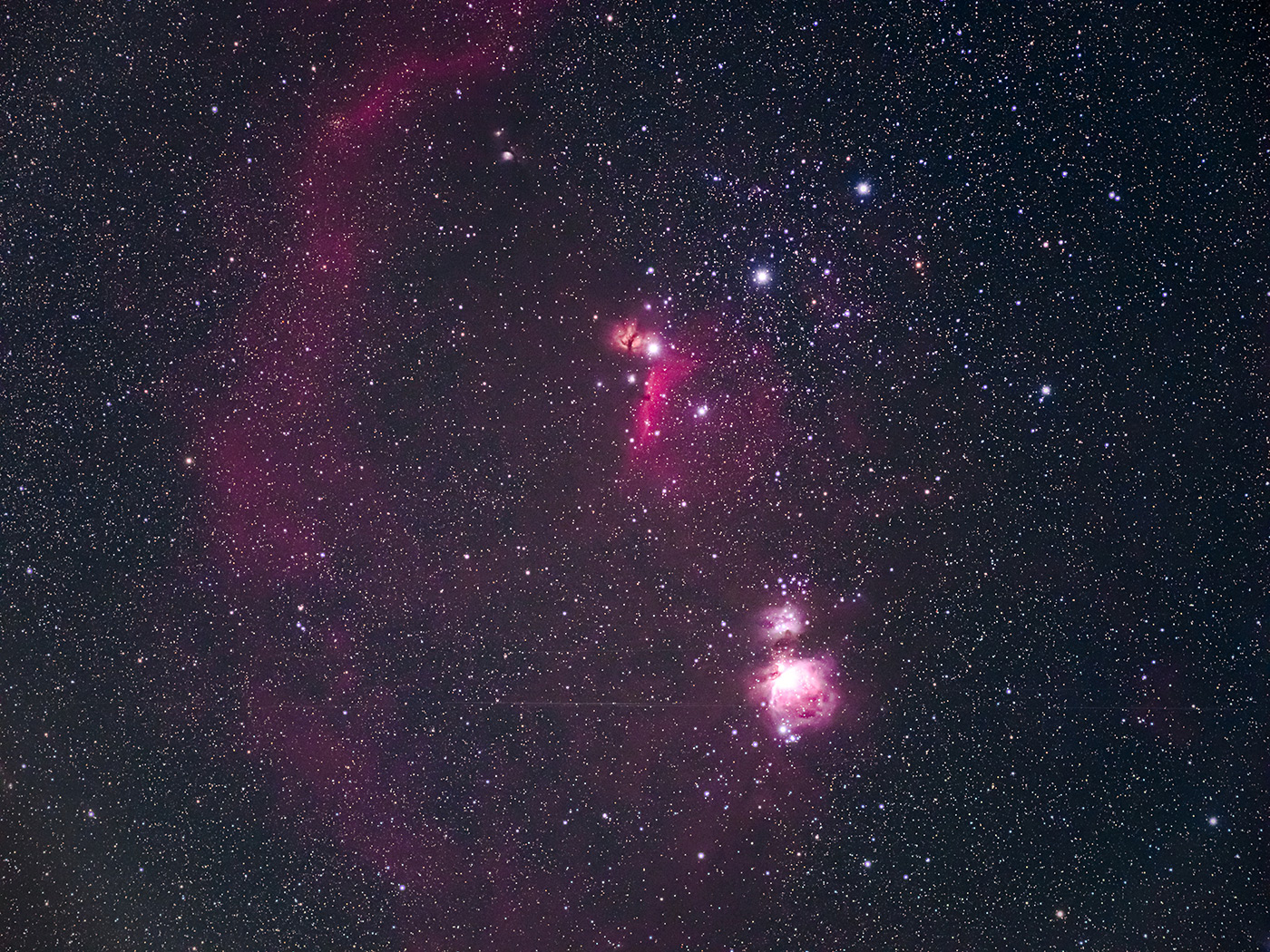
Sample 03 OM-3 Astro with OM-System M.Zuiko Digital ED 75mm F/1.8. Camera settings: Exposure 40 seconds. f/2.8. ISO 3200
Can the OM-3 Astro be used with a tracking mount or telescope?
Yes, it can be mounted to a telescope using a Micro Four Thirds adapter, which enables deep-sky imaging, to an equatorial mount, or with a portable tracker. Here are three common options:
- Equatorial mount with a lens. The camera is attached to a full equatorial tracking mount with a Micro Four Thirds lens used as normal. This is typical for wide-field shots of the Milky Way, large nebulae and constellations.
- Telescope with no lens. The lens is removed and the camera body is connected to a telescope via a Micro Four Thirds adapter. The telescope becomes the optical system, providing higher magnification for smaller deep-sky objects such as distant galaxies or nebulae.
- Portable astro tracker such as the Benro Polaris Astro 3-Axis Head. This lightweight tracking head lets the OM-3 Astro follow sky motion without a full equatorial mount. A lens (or small telescope) attaches to the camera as usual, and the Polaris Head moves to match sidereal rotation. This option is ideal for photographers who want tracked long exposures in a far more portable setup, which can even be remotely controlled.
Each has its own benefits for size, target type and portability, while all three allow the OM-3 Astro to record long exposures of the night sky with reduced star trails.
Important note on camera control:
When used with telescopes or equatorial mounts, the OM-3 Astro operates as a manually controlled camera rather than a fully computer-guided camera. At launch, OM System cameras are not supported by common telescope control platforms such as ASI Air or ASCOM-based software, so imaging relies on in-camera controls such as manual exposure, manual focus and the built-in intervalometer, with images processed later using standard stacking software.
While astrophotography is usually associated with tripods and mounts, the OM-3 Astro also supports handheld night sky shooting in certain situations. With good in-body stabilisation and dedicated night shooting modes, it is possible to capture exposures of star fields, constellations and night landscapes without needing a tripod.
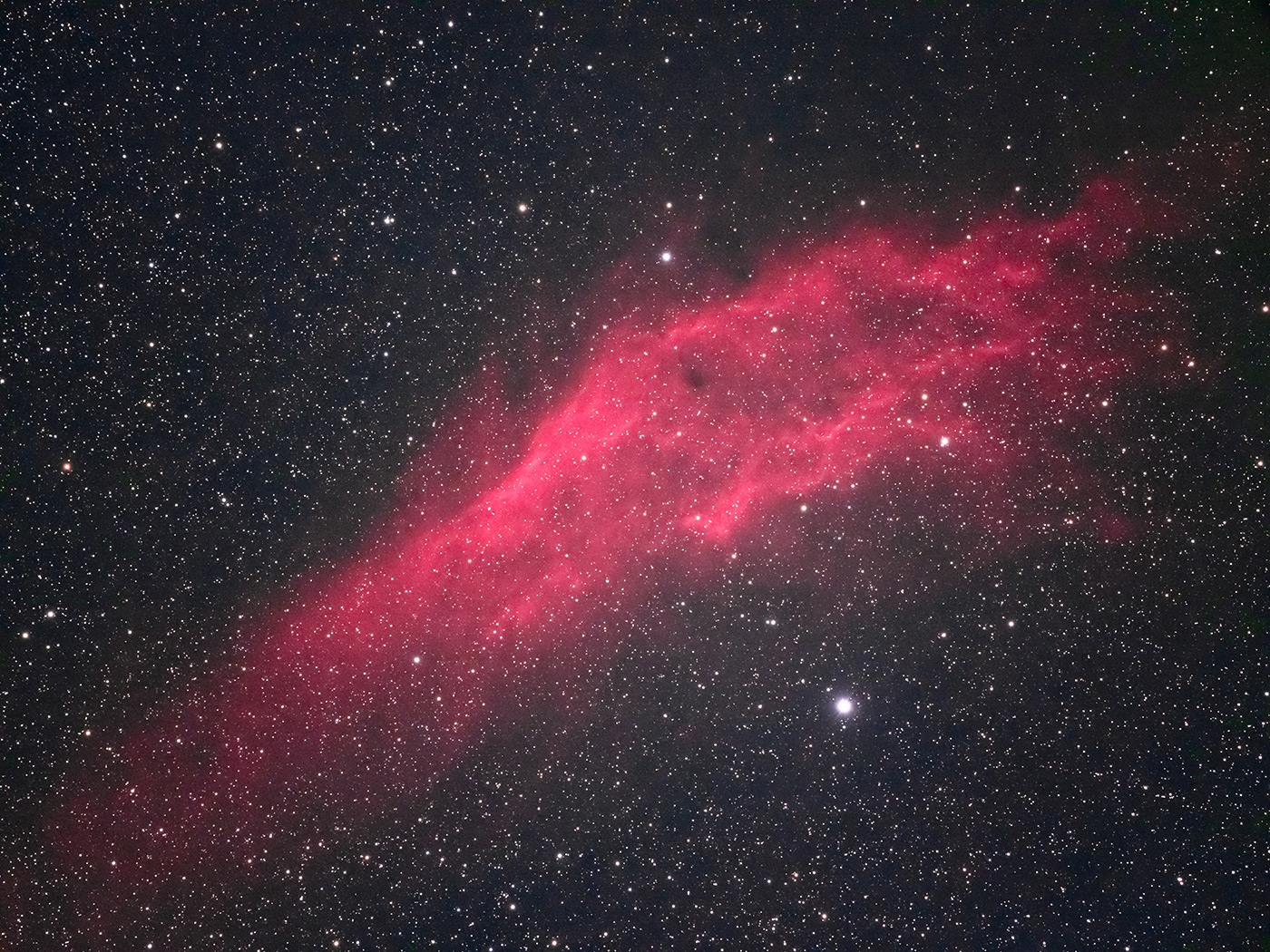
Sample 04 OM-3 Astro with M.Zuiko Digital ED 300mm F/4 IS PRO. Camera settings: Exposure 60 seconds. f/4.0. ISO 6400
Who is the OM-3 Astro for, and who is it not for?
With consistent colour, reduced setup time and better results straight out of the camera, the OM-3 Astro is ideal for a variety of beginner to advanced astrophotographers. It’s suitable for photographing stars, nebulae and deep-sky objects, while also being versatile enough to use with tracking mounts, astro trackers or a telescope.
The modified infrared response makes it unsuitable for everyday photography, daylight landscapes or casual use. Instead, this is a specialist option for dedicated photographers who want to spend time under the night sky.
Can I use regular lens filters with this camera and lenses?
Yes. The OM-3 Astro is compatible with standard front-mounted lens filters in the same way as any other Micro Four Thirds camera. This includes threaded light pollution filters and square filter systems, such as commonly used 100mm light pollution filters.
This works well if you tend to use the same lens for extended periods, or if your lenses already accept the same filter size.
However, front-mounted filters are less than ideal if you switch lenses frequently, move between wide and telephoto subjects, or use lenses that do not accept filters, such as some ultra-wide or fisheye lenses.
For these situations, OM System has released internal body mount filters which go inside the body, regardless of which lens is attached.
Let’s explore these in-camera astro filters next.
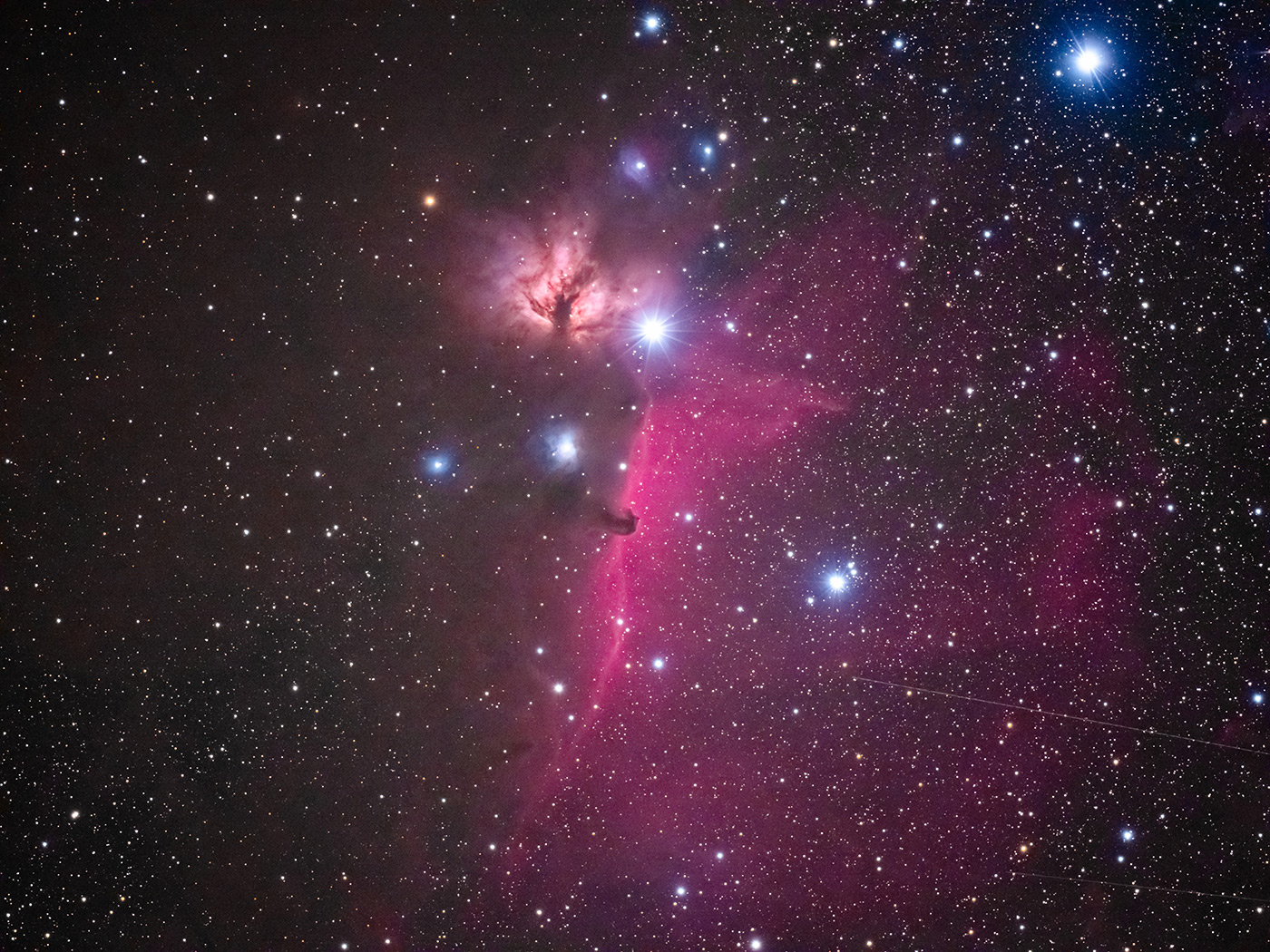
Sample 05 OM-3 Astro with M.Zuiko Digital ED 300mm F/4 IS PRO. Camera settings: Exposure 60 seconds. f/4.0. ISO 6400
Which body mount astro filters are available, and how do they work?
There are two optional body mount filters that fit inside the camera body, between the lens mount and the image sensor.
- The BMF-LPC01 Light Pollution Suppression Filter corrects light when shooting near towns or cities, or anywhere there is artificial lighting, which is common across much of the UK. This filter reduces the impact of light sources, retaining more contrast and colour in stars, constellations and nebulae, particularly when they are closer to the horizon.
- The BMF-SE01 Soft Filter changes how bright stars are rendered in camera. Instead of appearing as very small, sharp points, brighter stars appear slightly larger and more prominent, with more colour. This is an aesthetic filter for photographers who prefer a softer, more expressive star field.
It is worth noting that only one body mount filter can be used at a time, as they cannot be stacked. Because they are installed inside the camera body, their effect applies across all compatible lenses, including ultra-wide and fisheye lenses that cannot accept front-mounted filters.
The OM-3 Astro is a specialised camera that will appeal to night-time photographers. The modified infrared response, astro-specific colour profiles and preconfigured shooting modes address some of the limitations standard cameras have for astrophotography.
When shooting with a tracking mount, astro tracker or telescope, the OM-3 Astro offers a streamlined way to capture stars, nebulae and deep-sky detail, with more compelling results straight out of the camera.
There are also two useful body mount filters optionally available for shooting near towns or cities, or to capture more expressive star fields, all without much post-processing.
If you’re ready to explore astrophotography in more depth, view more and purchase the OM System OM-3 Astro camera body today, along with the compatible body mount astro filters.
Ready to explore more night photography? View and purchase the OM System OM-3 Astro Camera Body today, and add the OM System BMF-LPC01 Body Mount Light Pollution Suppression Filter or OM System BMF-SE01 Body Mount Soft Filter to refine your results from the outset.
Share this post:
By Nick Dautlich on 10/02/2026

Nick Dautlich
Senior Content Writer and Product Reviewer
Nick Dautlich is the Senior Content Writer and Product Reviewer at Park Cameras, with over 15 years of photography experience. A Sony Imaging Professional and expert reviewer, Nick has worked with major brands such as Canon, Sony and Nikon. His work is also featured on Vanguard World UK’s website, Capture Landscapes, and Shutter Evolve. Nick’s photography includes National Trust projects and magazine covers and he is passionate about landscapes and storytelling. Nick also enjoys hiking and teaching his children about nature. Learn more on his profile page.
Trade in your old equipment
Fast and easy trade in service ensures your old gear is collected efficiently and you are paid quickly! It's very simple to trade in your unwanted photography gear. Just head over to our dedicated Sell or Part Exchange page, fill out the details, and we'll get back to you with an offer for your old gear. Take the cash, or put it towards the cost of your new gear. It's up to you! Find out more
sign up to the newsletter
Keep up to date on the latest photography news, events and offers. Sign up now