- Call us 01444 237070

-
- Back
- Used Cameras
- Used Accessories
- Used Lenses
- Back
- Used Canon Lenses
- Used Nikon Lenses
- Used Fujifilm Lenses
- Used Sony Lenses
- Used Micro 4/3rds Lenses
- Used Leica Lenses
- Used Panasonic Lenses
- Used Pentax Lenses
- Used Samyang Lenses
- Used Sigma Lenses
- Used Tamron Lenses
- Used Tokina Lenses
- Used Voigtlander Lenses
- Used Zeiss Lenses
- Used Hasselblad Lenses
- Used Video
- Used Film Equipment
- Used Stock Alert
- Used Blank Test
- Sell or Part Exchange
- Used Clearance
- Recently Added Used Equipment
- Park Picks
- Faulty
- Trade-In
- Blog
- New in
- Call us
- Contact us
- Stores
- Sign in
- Categories
- Tips & Inspiration
- Reviews
- News
- Events
- Features
- Buying Guides
- Competitions
Ultimate Best Buys For Street Photography
Finding the best camera for street photography comes down to a few factors, which we explore in this guide. For 2026, we’ve updated the ultimate best buys for street photography with the latest cameras, lenses and accessories, in order for you to compare models for different budgets and skill levels. Whether looking for a compact camera for everyday use, a mirrorless kit for beginners, or the best lens, our post is full of useful recommendations.
We also cover considerations to help you get the best results, from the best focal lengths to accessories under £100 that can make a difference.
Whether you shoot in London, Glasgow, Brighton or Timbuktu, we’ve got you covered with the ultimate best buys to help you hone your skills and get the exact equipment you need.
What is the best camera for street photography in 2026?
Before diving into the post proper, let’s address this question, which comes up frequently. Unfortunately, there isn’t a single binary answer, as it depends on how you shoot, your budget and other priorities you may have.
Many photographers want a compact point and shoot for discretion, while others prefer a mirrorless kit that is lightweight, responsive and relatively unobtrusive. We can advise on the best features to look for, including fast autofocus, good low light performance and customisable controls, which help you anticipate the moment better.
For beginner photographers, a small and simple camera is often the best starting point, while more experienced creators may prefer higher resolution sensors for cropping, faster burst shooting or other features.
Ultimately, the best option is one that you can easily carry, operate quickly and rely on to capture the moment as it unfolds in front of you, which often comes down to practice. We’ll explore this in more depth later on. In the meantime, choose from the following links or scroll below to keep reading.
Quick links
- Best camera under £2000
- Best lens for street photography
- 35mm vs 50mm, which is best?
- What is street photography?
- What makes a good photo?
- Best buys under £100 (bags, straps, tripods and accessories)
- Inspirational links, samples and galleries
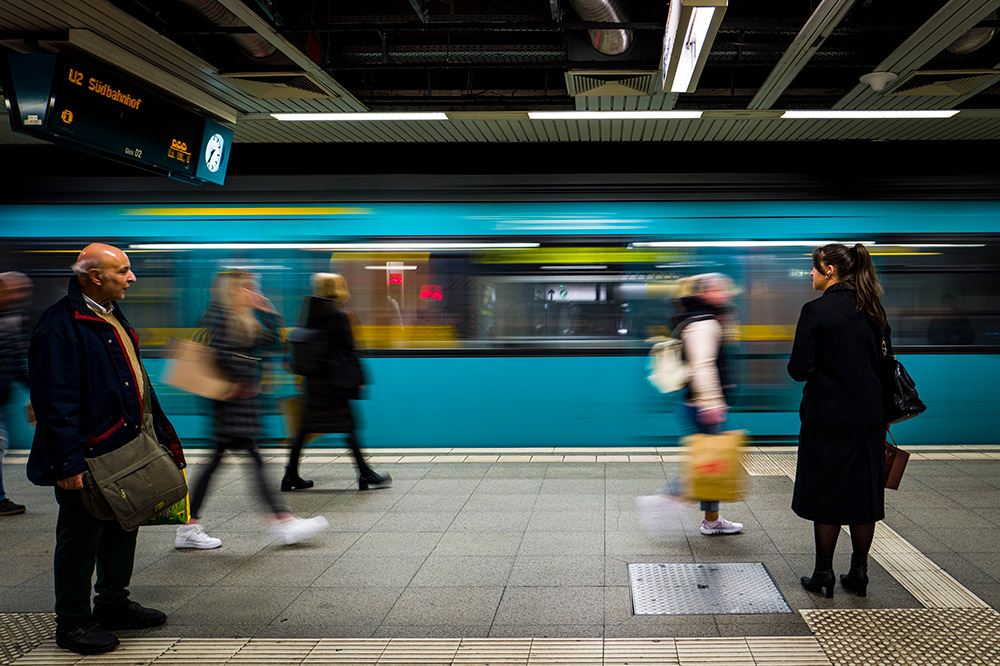
Best camera under £2000
Street photographers typically favour a fast, light, intuitive and discreet camera. There are plenty of options available, so we’ve selected some of the best choices under £2000, which combine many of these key characteristics.
Fast refers to a combination of lens aperture, ISO performance and burst shooting speed, as well as how quickly the buffer clears during continuous shooting.
- Being lightweight is important for long days on your feet scouting locations and looking for the right light at right moment.
- Intuitive handling allows you to react quickly, customise and adjust settings on the fly and capture spontaneous moments without hesitation.
- Discretion also plays a role, as smaller and less conspicuous cameras help you blend into your surroundings and capture more natural shots.
An articulating LCD screen is useful for shooting from high or low angles, along with touch focus for quick subject tracking and composition. Most modern mirrorless cameras now include some form of touchscreen control, including the models featured below.
That said, if you’re a beginner just getting started, you don’t need the best camera. Spending time with your camera, understanding how it works and learning to anticipate moments is just as important as having all of the latest features. Many photographers develop their skills with older or simpler equipment before upgrading.
With that in mind, here are some of our favourites...
|
Camera |
Why choose it |
RRP |
|
High resolution APS-C sensor with film simulations and tactile controls, suited to photographers who want a traditional shooting experience with high image quality and the flexibility to crop. |
£1,699.00 |
|
|
It may be the previous gen. but this has a full-frame sensor with fast, reliable autofocus and good low light performance, offering a well-rounded option with great image quality and robust subject tracking. |
£2,199.00 (less during the sale) |
|
|
Lightweight APS-C camera with fast burst shooting and effective stabilisation, which is useful for capturing fast moments as they happen and for long periods. |
£1,349.00 |
|
|
Compact Micro Four Thirds kit with stabilisation, suited tothis genre with a lightweight body that supports handheld shooting in varied conditions. |
£1,578.00 |
|
|
Retro-style full-frame camera with manual control dials and modern autofocus, appealing to photographers who enjoy a more hands-on shooting approach with strong subject detection. |
£2,149.00 (as low as £1699.00 in the sale) |
|
|
Full-frame camera with balanced image quality, stabilisation and reliable autofocus, offering a straightforward option for photographers moving into Nikon mirrorless. |
£1,599.00 |
|
|
Pocket-sized compact camera with a fixed wide-angle lens and fast operation, ideal for discreet shooting and everyday carry without the need for additional lenses. |
£1,199.00 |
|
|
Compact point-and-shoot with fast autofocus and a built-in zoom lens, useful for covering a wide range of scenes from wide views to tighter compositions. |
£1,049.00 |
|
|
Canon PowerShot G7 X III Graphite Anniversary Edition Compact Camera |
Popular pocket-sized compact camera with a fast lens and great autofocus, which is ideal for everyday photography, general shooting and discreet capture without needing a full camera system. |
£859.00 |
Now you’ve got some of the latest cameras to think about, let’s look at which lenses are best when using an interchangeable lens camera.
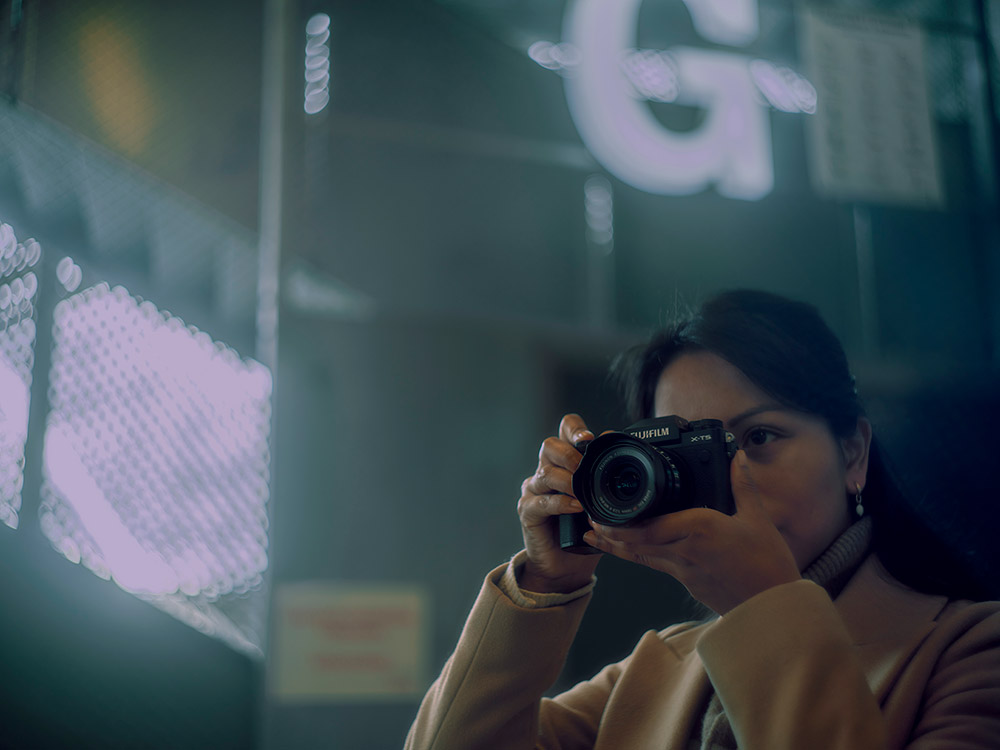
What is the best lens for street photography?
The lens choice will depend on your camera system and how you like to shoot. Many photographers gravitate towards a 35mm or 50mm focal length, as both offer a natural perspective that works well for everyday scenes, which are familiar to us.
Prime lenses are often preferred over zooms, as they are typically smaller, lighter and have wider apertures. This is better in low light and for keeping your setup discreet, which we noted as being important when capturing candid moments in urban environments.
|
Lens Mount |
Lowest cost option (best budget lens) |
Mid range (balanced performance and size) |
High end option (maximum aperture and image quality) |
|
50mm lenses (closer framing with a classic perspective) |
|||
|
Voigtlander 50mm F/1.0 Nokton (manual focus, ultra fast aperture) |
|||
|
Nikon Nikkor Z MC 50mm F/2.8 Lens (macro capability for detail shots) |
|||
|
Fujifilm XC 35mm F/2 Prime Lens Black (50mm equivalent) |
Fujifilm XF 35mm F2 R WR Standard Prime Lens Black (50mm equivalent) |
Fujifilm XF 33mm F/1.4 R LM WR Lens (50mm equivalent) |
|
|
Viltrox AF 50mm F/2 Air Sony E (compact alternative) |
|||
|
Olympus M.Zuiko Digital 25mm F/1.8 Lens Black (50mm equivalent) |
Panasonic Leica DG Summilux 25mm F1.4 II ASPH Lens (50mm equivalent) |
Olympus M.Zuiko Digital ED 25mm F/1.2 PRO Lens (50mm equivalent) |
|
|
35mm lenses (Slightly wider field of view for more environmental images) |
|||
|
For Canon cameras |
|||
|
For Nikon cameras |
|||
|
For Sony cameras |
|||
|
For Fujifilm cameras |
Fujifilm XC 35mm f/2 Lens Black (35mm equivalent) |
||
|
For MFT cameras |
Olympus M.Zuiko Digital 17mm F/1.8 (35mm equivalent) |
N/A |
Olympus M.Zuiko Digital ED 17mm F/1.2 PRO (35mm equivalent) |
|
For L Mount cameras |
|||
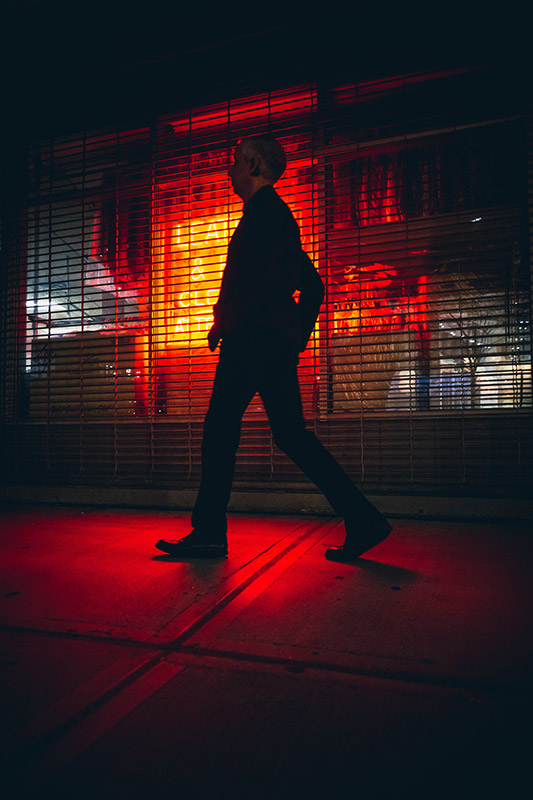
50mm vs 35mm
The enduring question of whether to choose a 50mm or 35mm for street photography often invokes passionate debate, yet ultimately boils down to personal preference. In a nutshell, 35mm lenses show more of the environment, whereas a 50mm lens crops into the scene slightly closer.
Regardless of which you choose, you can master that lens by consistently photographing with it and exploring various scenes to hone your skills with just that specific focal length. After a while, you can always trade in your lens for another and see which works better for your shooting style. You could also get a cost-effective second-hand lens and shoot with both to find your perfect partner.
The key is to practise, really study your photos to appraise what works, which elements of a story you are telling, and how the lens focal width supports that story. Ultimately, you can use virtually any lens and come away with engaging images that capture unique moments in time.
I also love shooting with an 85mm, as it enables you to stand slightly farther back and be even more unobtrusive. Our Hands-On Sigma 85mm F/1.4 DG DN Art review has several sample images, which may entice you to this popular focal length.
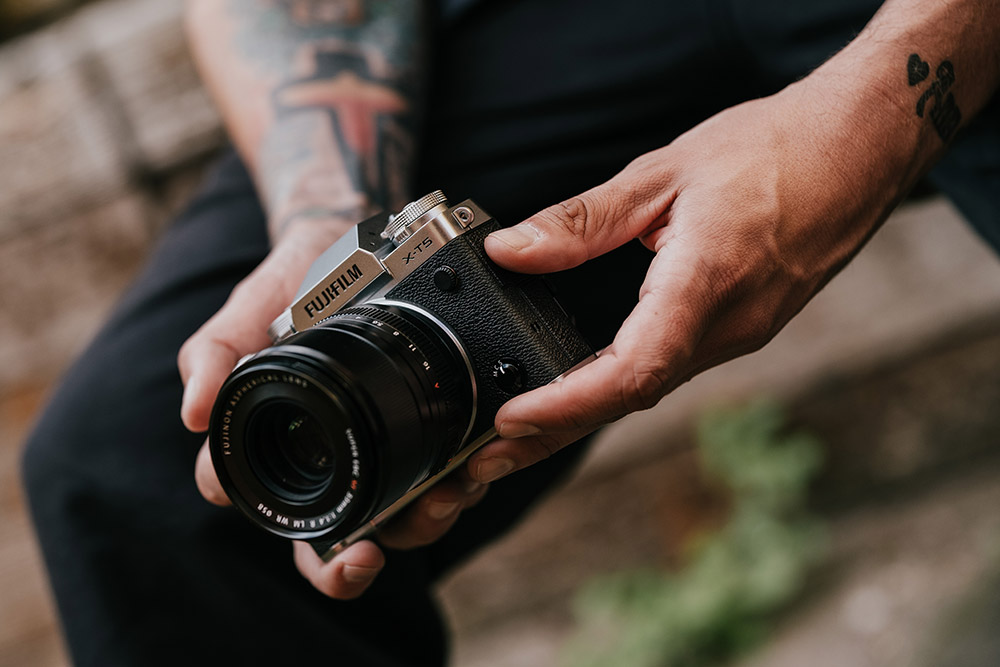
What is street photography?
This is a popular genre where the photographer responds to everyday life in public spaces. It encompasses architecture, candid portraits and the art of recognising fleeting moments that make for decisive, and unrepeatable images. The style of candid street photography often captures real, unposed scenes as they unfold.
The genre is more popular than ever, thanks to some of the most famous photographers, including Alfred Eisenstaedt, Vivian Maier and perhaps the best known pioneer Henri Cartier-Bresson, who were capturing timeless images nearly 100 years ago.
Their work helped define this genre and continues to influence urban photographers today. You can explore the origins through an insightful article on Britannica to gain a deeper understanding of how the genre has evolved.
Back to the present day, where we benefit from far more advanced technology at our fingertips, but the principles remain the same. Let’s explore what makes a good photo in order to establish what you might need.
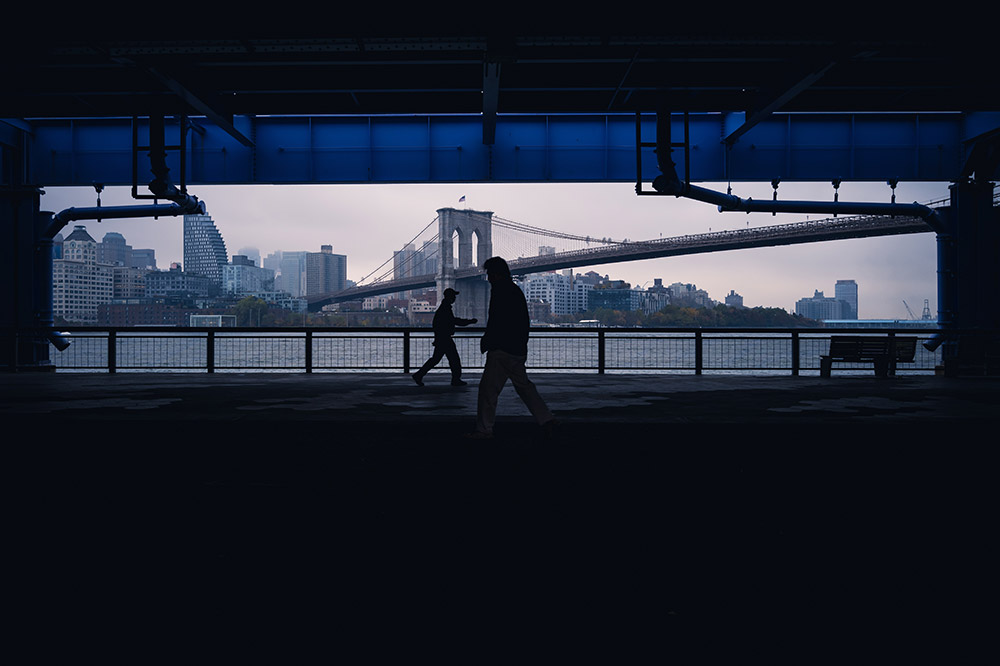
What makes a good street photo?
Bear in mind that the allure is subjective, and just as with other genres, photographers aim to bring together a number of elements, which result in a successful image. Techniques develop over time with practice and observation. Ideally they will include:
- An interesting subject
- Interesting light, which supports the subject
- Suitable composition
Other subtle yet potentially crucial elements can also come into play:
- Presence of a social element
- Challenge posed by the image
- Authenticity and lack of staging
- Innovation and uniqueness
- Simplicity and clarity
The continuous challenge of refining your approach is one of the key joys in photography, and something that keeps both beginner and experienced photographers improving over time. By studying your images and applying different photography techniques, you can better understand what works and how to capture more engaging results.
Best buys under £100
A relatively fast and reliable memory card lets you shoot with less delays waiting for the buffer to clear while capturing continuous bursts. There are lots available, so make sure to choose the right one for your camera. Our article memory cards explained has more detail.
Three popular options are:
- SanDisk 64GB Extreme PRO 200MB/s UHS-I SDXC Memory Card. A smaller, cost-effective option with fast performance, which is ideal as a secondary card.
- Lexar SD Silver Plus UHS-1 128GB V30 R205/W150MB/S. Budget mid capacity option for everyday shooting, with enough capacitywithout frequent card changes.
- SanDisk 256GB Extreme PRO 200MB/s UHS-I SDXC Memory Card. High capacity with fast performance that caters to a longer day in an urban environment.
Two or three spare batteries are essential when shooting in the city, particularly during cold or while using continuous burst and autofocus, which drain batteries more quickly. You should pick one suitable for your camera brand, but here are some of the most popular:
- Nikon EN-EL15C Battery for Z series cameras. Stable power for Nikon mirrorless bodies, with good capacity for long shooting sessions.
- Canon LP-E6P Battery Pack. Widely used in Canon bodies, offering consistent performance and compatibility with a range of models.
- Sony NP-FZ100 Rechargeable Battery. Sony’s high-capacity battery that revolutionised how durable a mirrorless camera can be for longer shooting sessions.
The best camera straps
A comfortable hand or neck strap can elevate your comfort when carrying your camera for hours, while also keeping it secure, and close so you're ready to shoot instantly. There are hundreds available, however these three from Peak Design are amongst the most popular:
- Peak Design Slide Camera Strap Black. Adjustable strap with a wider profile that’s suitable for slightly heavier equipment.
- Peak Design Leash Charcoal Camera Strap. A slimmer and lighter alternative to the Slide, suitable for smaller more compact setups.
- Peak Design Cuff Charcoal Wrist Strap. I use one of these and swear by it! A minimal wrist strap, which offers excellent portability, while keeping your camera secure and ready to shoot.
What is the best camera bag?
It's common to choose a smaller sling bag or shoulder bag, enabling quick access while also organising a handful of essential accessories. Large backpacks are handy for carrying lots of other equipment, but you want your camera readily available, rather than buried in a backpack.
Here are three fantastic options, which you might not have considered:
- Long Weekend Santa Fe Shoulder Bag Black. Simple, discreet design with enough space, which looks the part and is suitable, especially when using film!
- Domke F-5XB Shoulder/Belt Bag Olive. A classic rugged shoulder bag that is discreet and feel historic, while keeping gear close and quick to access.
- WANDRD Rogue Sling 4L V2 Wasatch Green. Wandrd has plenty of slings but this just falls into budget. It’s more structured with good access and compartmentalised storage for secure carry on the move.
Inspirational galleries and examples
Looking at the work of other photographers is a great way to develop your own style and approach.
The LensCulture Street Photography Awards gallery is an inspiration for up and coming creators. It features a range of contemporary photographers from around the world. Many of the images are presented as series, showing how to tell the story with multiple frames rather than a single shot.
A UK based source of inspiration is The Photographers’ Gallery in London, which hosts exhibitions from emerging and established photographers. As the UK’s first public gallery entirely for photography, it presents a wide range of work from documentary and urban to major retrospectives, making it well worth a visit for anyone.
There are also plenty of videos and tutorials online. In our own guide below, Gareth looks at finding a subject, framing, and telling a story.
You can take your skills to another level by practising, familiarising yourself with and mastering your camera body and lens, whether a 35mm, 50mm, 85mm or any other. You can also enjoy a more comfortable experience by using a handful of suitable photo accessories, and always have a spare battery and memory card, as well as a comfortable strap.
Browse our full range of cameras, including compact cameras, lenses and photo accessories to find the perfect setup for your style and upgrade your kit today.
Share this post:
By Nick Dautlich on 31/03/2026

Nick Dautlich
Senior Content Writer and Product Reviewer
Nick Dautlich is the Senior Content Writer and Product Reviewer at Park Cameras, with over 15 years of photography experience. A Sony Imaging Professional and expert reviewer, Nick has worked with major brands such as Canon, Sony and Nikon. His work is also featured on Vanguard World UK’s website, Capture Landscapes, and Shutter Evolve. Nick’s photography includes National Trust projects and magazine covers and he is passionate about landscapes and storytelling. Nick also enjoys hiking and teaching his children about nature. Learn more on his profile page.
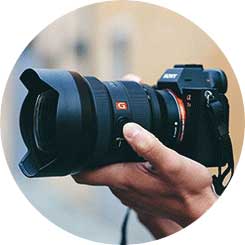
Trade in your old equipment
Fast and easy trade in service ensures your old gear is collected efficiently and you are paid quickly! It's very simple to trade in your unwanted photography gear. Just head over to our dedicated Sell or Part Exchange page, fill out the details, and we'll get back to you with an offer for your old gear. Take the cash, or put it towards the cost of your new gear. It's up to you! Find out more
sign up to the newsletter
Keep up to date on the latest photography news, events and offers. Sign up now