- Call us 01444 237070

-
- Back
- Used Cameras
- Used Accessories
- Used Lenses
- Back
- Used Canon Lenses
- Used Nikon Lenses
- Used Fujifilm Lenses
- Used Sony Lenses
- Used Micro 4/3rds Lenses
- Used Leica Lenses
- Used Panasonic Lenses
- Used Pentax Lenses
- Used Samyang Lenses
- Used Sigma Lenses
- Used Tamron Lenses
- Used Tokina Lenses
- Used Voigtlander Lenses
- Used Zeiss Lenses
- Used Hasselblad Lenses
- Used Video
- Used Film Equipment
- Used Stock Alert
- Used Blank Test
- Sell or Part Exchange
- Used Clearance
- Recently Added Used Equipment
- Park Picks
- Faulty
- Trade-In
- Blog
- New in
- Call us
- Contact us
- Stores
- Sign in
- Categories
- Tips & Inspiration
- Reviews
- News
- Events
- Features
- Buying Guides
- Competitions
Video And Photography Tripod Guide
Tripods perform one main task, which is to keep a camera steady when taking a photo or recording video. Whether you capture landscapes, architecture, interiors, wildlife, macro or video footage, using a tripod can allow you to shoot at slower shutter speeds and lower ISO values. This enables sharper, cleaner results than handheld shooting, regardless of modern camera stabilisation or ISO capabilities.
That being said, choosing the best camera tripod can be surprisingly difficult, especially for newer photographers and creators. There are so many different camera tripods available, ranging from compact travel models and lightweight carbon fibre designs through to large studio supports and fluid head tripod systems for video. At first glance many look similar, but the differences in materials, tripod heads, payload capacity and height can have a significant impact on how well they suit you, your camera equipment and your shooting style.
This Video And Photography Tripod Guide explains the key things to look for when choosing a tripod for the camera that you use, including the differences between aluminium and carbon fibre, the role of a suitable head, and which types of photography most benefit from a stable support. By understanding how different photography tripods are designed to work, it becomes much easier to find the right option for you.
We also highlight popular options from brands such as Manfrotto, Benro, Gitzo, 3 Legged Thing and Peak Design, along with links to more specialised guides including our detailed look at travel tripods for photographers.
Are All Tripods the Same?
There are countless variations between the various tripods that you can buy. As with all photography equipment, tripods also offer specific features for particular subjects and genres, which means one model won’t suit every photographer.
The number of leg sections determines its height and stability. Most mini tripods only have one leg section, whereas taller ones may have four or five sections to extend higher, while also folding down shorter for transport.
The way the legs are tightened varies too, with twist or lever locking mechanisms depending on the design. Manufacturers are constantly innovating too, and a newer range of Peak Design tripods offer a refined new way to release leg locks, which we explore later on.
The leg materials also differ, with many photographers choosing between aluminium tripods and a carbon fibre tripod, the later of which is usually lighter and better at absorbing vibration.
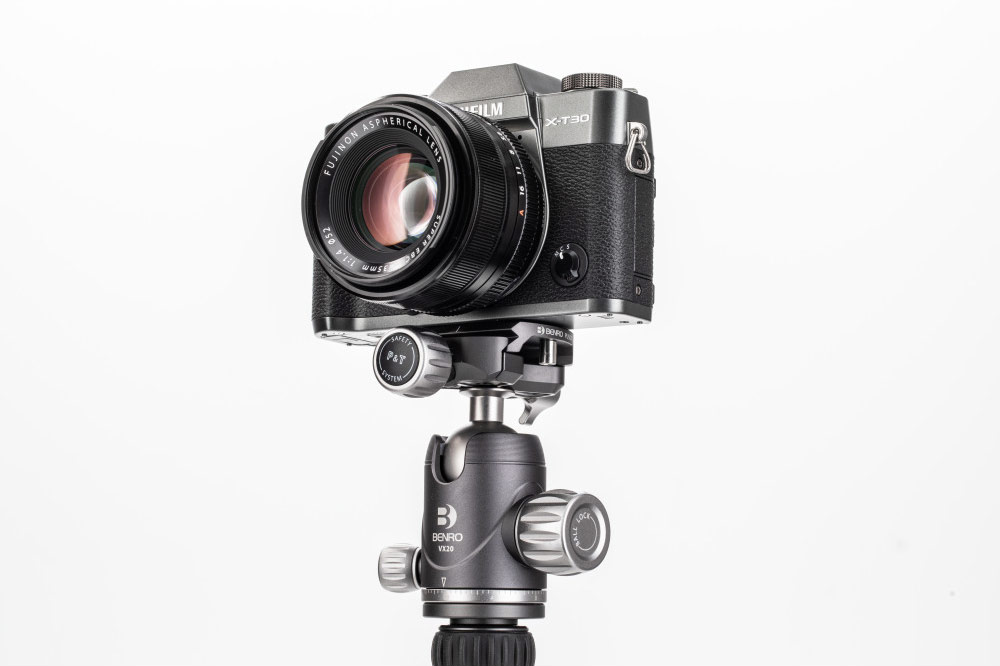
It’s also important to understand the difference between tripod heads. The head allows you to position and move the camera, and different designs are suited to different types of photography. A head requires a compatible tripod plate, which provides the camera attachment by screwing into the threaded mount on the base of the camera body. Personally I use an L bracket from 3 Legged Thing rather than a plate, allowing me to switch between horizontal and vertical orientations in a flash.
Many tripods are sold as complete kits with legs and a tripod head included, while others are legs only. Buying only the legs allows you to choose a specific head for your camera, lens and shooting style, and we discuss options later in this guide.
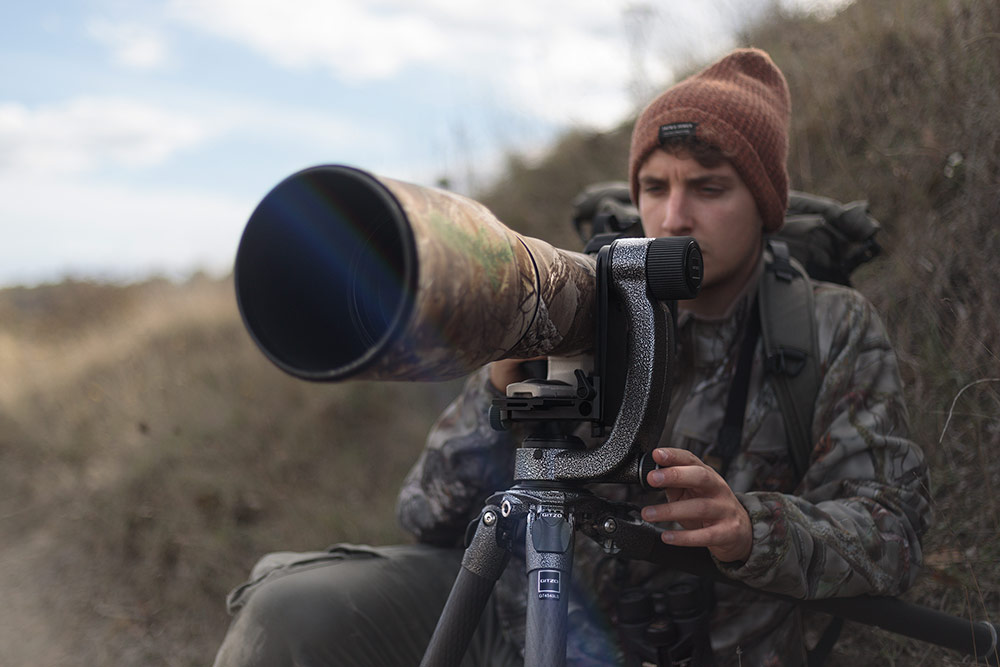
Gimbal head, suited to long telephoto lenses
Are Camera Tripods Universal?
Yes, any tripod kit is universal and will fit most mirrorless cameras, DSLR’s, camcorders and even the majority of compact cameras. Most camera tripods use the same standard threaded mount on the base of the camera body, which allows them to attach to a tripod plate and head.
To be 100% sure your camera will connect to a tripod, check for the small round threaded hole in the base of the camera body. This is where the plate is screwed into the camera before attaching to the tripod head.
Bear in mind that although tripods will fit most cameras, they aren’t always right for the type of photography you have in mind. Buying a bulky tripod if you travel a lot wouldn’t be appropriate. It’s also important to ensure that your camera equipment doesn’t exceed the maximum payload the tripod can safely support, which we look at next.
What Camera Tripod Should I Buy?
When choosing the best camera tripod for your specific needs, start out by considering the type of photography or video you shoot most often. Different tripods cater to different requirements. For example portability for frequent travel, stability for long exposures, or smooth movement for video. There’s also the question of budget, which can help refine your options.
ℹ️ There’s a short quiz after this section if you want to skip ahead and answer some easy questions to help you decide, otherwise, keep reading here.
- One of the first things to check is the maximum height it can reach. If too short, you may find yourself constantly bending down, which becomes uncomfortable quite quickly (especially if you have a backpack on). Taller tripods are generally better for studio and landscape photography, while compact models are better if you travel with your camera or shoot interiors where space is limited.
- Weight is another key consideration. Aluminium tripods are usually heavier but more affordable, while a carbon fibre is lighter and better for those who hike or carry their equipment for longer. Travel tripods are specifically portable, folding down smaller so they can fit into a backpack or a carry-on roller bag.
- Many photographers also choose their tripod based on the head they’ll be using. A ball head is perfect for general photography, whereas a fluid head is better for video, as it enables smooth panning and tilting.
If you’re unsure where to begin, it’s worth looking at some of the most popular models from industry leaders such as Manfrotto, Benro, Gitzo, Sirui and Peak Design. They all make highly regarded models covering everything from travel to heavy-duty studio supports.
For example, the Manfrotto ONE Photo Aluminium Tripod With XPRO 3-Way Head is a newer model for photographers who want a stable, all-purpose tripod for landscape, studio and general shooting. Benro tripods are a brand that offer excellent value and are widely used by photographers looking for strong, reliable support at a competitive price.
For travel and everyday photography, the Peak Design Travel Tripod Carbon Fibre has become particularly popular thanks to its compact and lightweight design.
Ultimately, the best tripod for photography will depend on how and where you shoot, and with what equipment. Thinking about weight, height, load capacity and tripod head type will make it much easier to narrow down the right option for your camera and lenses.
Next up is our quick quiz to help you decide.
Which tripod should you choose?
If you are not sure which tripod suits your camera and the way you shoot, answer these four quick questions and we will point you towards a sensible starting point.
Tripods for Night Photography Including Astro, Stars and Milky Way
Night photography typically requires a tripod - capturing the moon, stars, Milky Way and the aurora is demanding! Even with the very best camera and lens stabilisation systems, a tripod is essential to steady the camera for several seconds or minutes.
A heavyweight, extra-sturdy set of legs are often considered the best choice for night photography, to ensure stability. If hiking, consider a lighter model with fewer leg sections, like the Manfrotto MT055CXPRO3 055 3 Section Carbon Fibre Tripod. At 2kg, it’s a good compromise for long distance hikes, offering a steady platform on 3-section rigid legs and low vibration support for loads up to 9kg.
The Benro Rhino Carbon Fibre Three Series Travel Tripod with VX30 Head is similarly lightweight, including a strong dual panoramic ball head. Lighter again, Peak Design’s Aluminium Travel Tripod is 1.5kg but offers an extremely stable platform for up to 9.1kg of equipment.
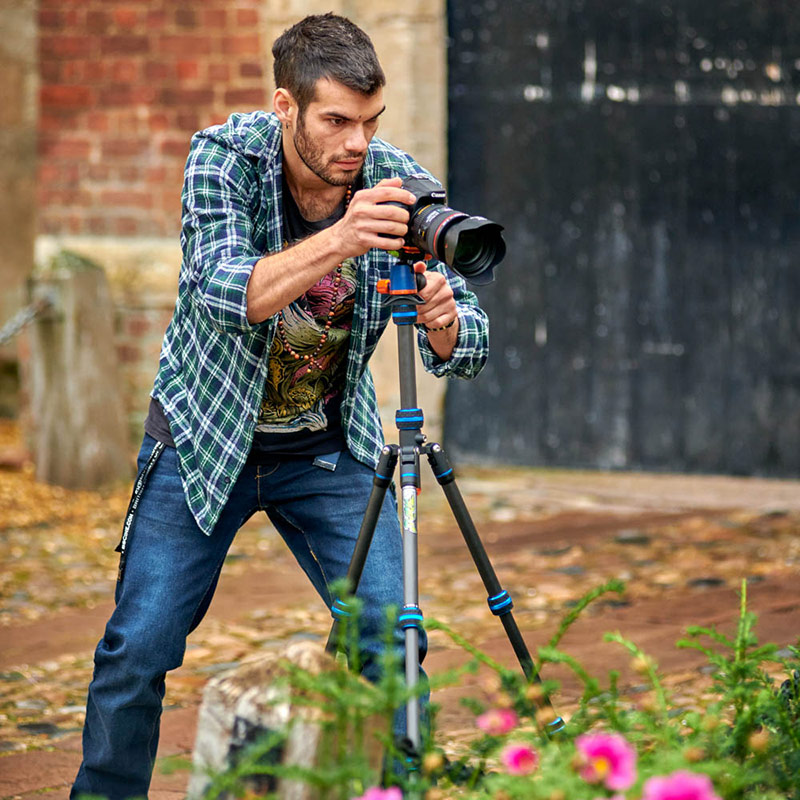
Which Is The Best Tripod For Landscape Photography?
Landscape photography is one of the most popular genres that benefits from using a tripod. Landscape images usually require a large depth of field to achieve sharp results from front to back, while lower ISO settings typically produce the cleanest images. This means many landscape photographs are taken using slower shutter speeds, with narrow apertures and low ISO settings, which is difficult to achieve when handholding a camera.
It is also widely accepted that shooting at higher ISO values reduces dynamic range, which is why many landscape photographers aim to capture scenes using the lowest ISO possible.
Landscape photography includes long exposure images, where using a remote shutter release helps avoid camera shake by allowing the photographer to trigger the shutter without touching the camera. The same applies to panoramic photography, where the ability to pan the tripod head smoothly without introducing vibration is important for maintaining sharp results.
Choosing the best tripod for landscape photography comes down to how and where you shoot. If you regularly travel or hike to locations, a lightweight tripod is often preferable. For photographers working closer to the car or shooting from easily accessible locations, a taller and heavier tripod can offer greater stability.
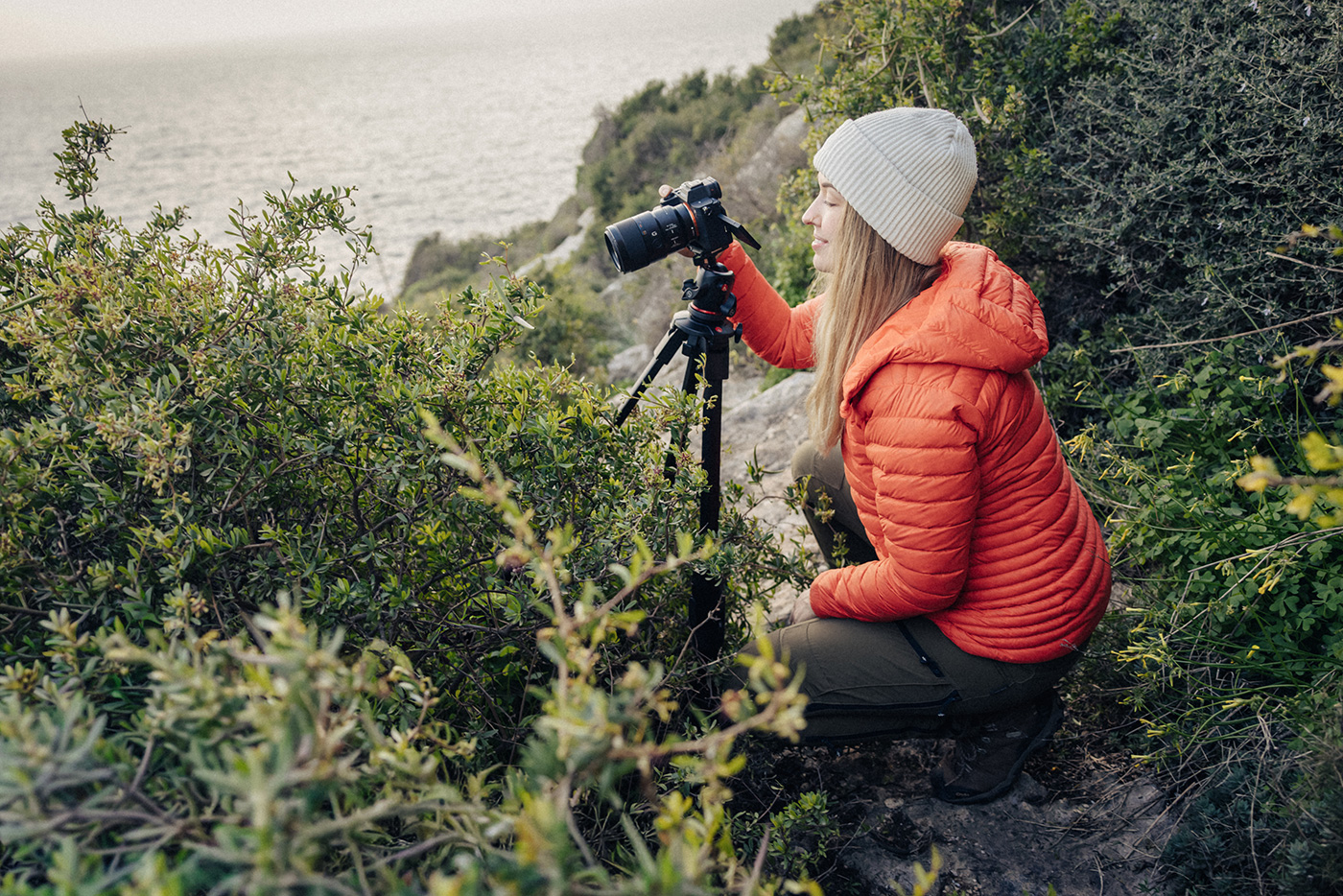
Shooting landscapes with the Manfrotto One Photo
Some landscape photographers have two tripod setups, keeping a compact travel tripod for hikes and a heavier model for situations where maximum stability is required, simply swapping a tripod head between them when needed.
Despite the higher cost, carbon fibre tripods are extremely popular with landscape photographers because they are lighter and help absorb vibration. Compact models such as the Vanguard Vesta TB 204CB Carbon Fibre Travel Tripod with Twist Locks are easy to carry on longer walks, while the Manfrotto MT290XTC3 290 Xtra Carbon Fibre Tripod offers a good balance between payload capacity and weight, extending higher while allowing you to choose your own preferred tripod head.
Gitzo tripods are often considered a benchmark for serious landscape photographers who shoot in all weather conditions. The Gitzo GT4553S Systematic Series 4 5-Section Carbon Tripod is well suited to long exposures and panoramic photography, while the Gitzo GK1545T-82TQD Traveler Series 1 4-Section Carbon Tripod Kit is for photographers who need a more portable option. Both are highly rigid, stable and extremely durable, and regarded as the best tripod for landscape photography by some fervent users.
Lastly the Peak Design Pro Tall Tripod Black deserves a special mention at this point. It brings an innovative new leg design for additional stability, with an 18.1 kg payload and working height of just under 2m for taller users and for those who shoot on slopes. It targets the excellent Gitzo GT3543XLS, which I was fortunate to access during a Gitzo Systematic Series 3 Tripod Review, which still offers exceptional height, stability and portability for pro users.
Gitzo Mountaineer Tripod Hands-On First Look Video
What is the best tripod head for landscape photography?
A ball head is commonly used for landscape photography because of its compact size and comparatively low weight. Ball heads allow for quick, easy compositional changes as they rotate, while also being able to pan through 360º when framing a scene. The two main locking mechanisms for ball heads are lever locks and screw-type knobs.
Popular models range from premium options such as the Gitzo Centre Ball Head Series 4 With Screw Knob through to the Benro VX30 or VX25, which are both more cost-effective yet sturdy 360º panning options.
Geared heads are also popular with landscape photographers who want to make precise adjustments to their compositions. The Benro GD3WH Precision Geared Tripod Head is one of the most widely used options, combining strong payload capacity with accurate micro-adjustments at a relatively accessible price.
Meanwhile the Manfrotto 405 Geared Tripod Head takes precision even further, offering a higher payload and refined gearing for extremely accurate compositional control.
If macro is more your style, join us as we explore that next.
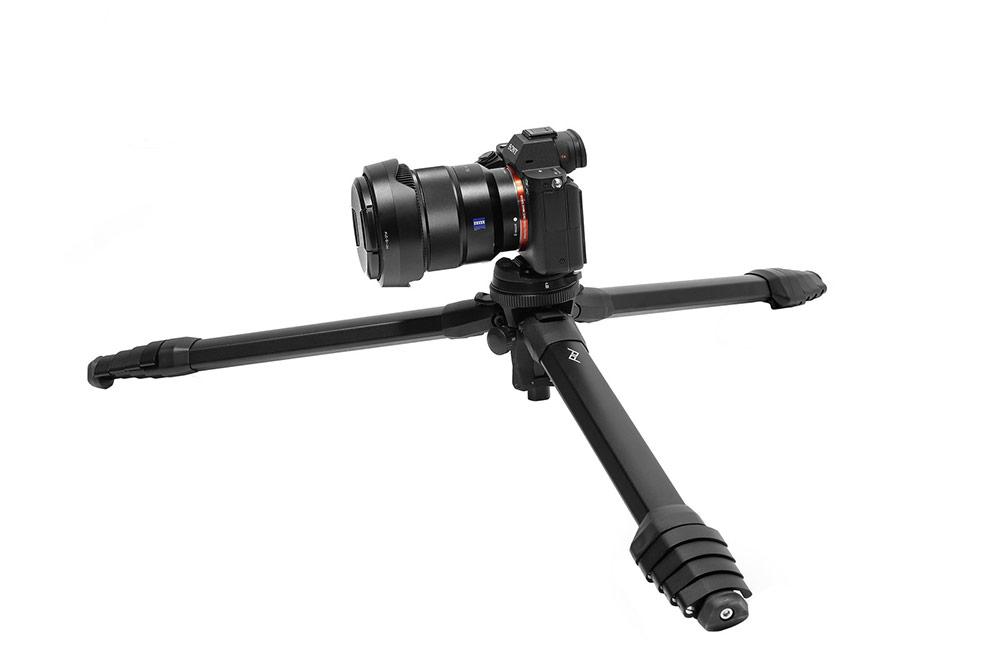
Getting the tripod low to the ground is ideal for some type of macro photography
How to choose a tripod for macro photography
A tripod for macro photography should be easy to adjust, relatively lightweight and preferably able to reach very low to the ground without lots of faffing about. Bear in mind that even the tiniest movement can ruin a macro shot, making leg stability particularly important.
A good choice is the Vanguard VEO 3+ 263CB Carbon Fibre Tripod, or any model in the VEO 3+ series thanks to the Multi-Angle Central Column, which allows the camera to be positioned very low to the ground without needing an adaptor. Another versatile option is the 3 Legged Thing Punks Brian 2.0 With Airhed Neo 2.0 Black. This includes a ball head, supports up to 30kg, reaches as low as 10.6cm using removable and reversible legs, and can also convert into a monopod or boom pole.
The Manfrotto ONE Photo Aluminium Tripod With XPRO 3-Way Head is a newer model featuring the innovative Q90 column, which allows both vertical and horizontal setups as low as 10cm from the ground. It’s also very sturdy, although it weighs 4.11kg, which may put some users off. A good alternative that weighs 3.1kg is the Manfrotto MK190XPRO4-3W 190 XPRO 4 Section Aluminium Tripod With XPRO 3-Way Head.
Manfrotto MT055 Series Hands-On First Look Video
Meticulous compositions are key to macro photography, which means choosing a suitable head for the style you’re shooting. Advanced macro photographers might opt for a slow-working, but extremely precise option like the Manfrotto 405 Geared Tripod Head, whereas the more versatile Vanguard Alta BH-300 Ball Head is better-suited to newcomers for general use. The Vanguard has a huge 30kg payload and rotates smoothly through 360º, yet manages to remain competitively priced.
The Best Tripod For Wildlife Photography
Wildlife photography generally requires long and heavy super telephoto lenses, where even the smallest movement can be exaggerated when shooting at longer focal lengths, so a strong set of legs and a suitable head are essential. Avoiding a centre column is also preferable, as this improves stability and you are unlikely to raise the column when a heavy super telephoto lens is mounted.
Many wildlife photographers prefer to shoot handheld or with a monopod because of the mobility these provide, but a tripod is invaluable when working close to the ground or from a fixed position such as a hide. It also becomes useful when photographing birds, mammals or distant subjects over longer periods.
Unlike some genres where the camera remains static, wildlife photographers often need to track their subjects across the landscape. For this reason, many pair their tripod with a gimbal head, which balances a long lens and allows the camera to move smoothly while following birds or animals. We look at some suitable options at the end of this section.
To support wildlife setups with large lenses, the best tripod for wildlife photography is typically stronger and heavier, often with fewer leg sections for improved rigidity. Carbon fibre tripods are popular because they combine strength with relatively low weight, although aluminium tripods are also commonly used, with the decision often coming down to budget.
Examples of suitable models include several options from the Gitzo Systematic series, such as the Gitzo GT5543LS Systematic Series 5 4-Section Long Carbon Tripod. This model is known for being extremely sturdy, offering a generous 42kg payload while weighing only 2.82kg for the legs.
A more budget-friendly alternative is the Sirui W-2204 Carbon Fibre Waterproof Tripod Legs. These are waterproof, include a convertible monopod and provide excellent stability, all of which are features well suited to wildlife photography. Another strong option is the Benro Mammoth 3-Section Carbon Fibre Tripod TMTH33C, which is worth considering for its low weight, levelling bowl design and respectable 18kg payload capacity.
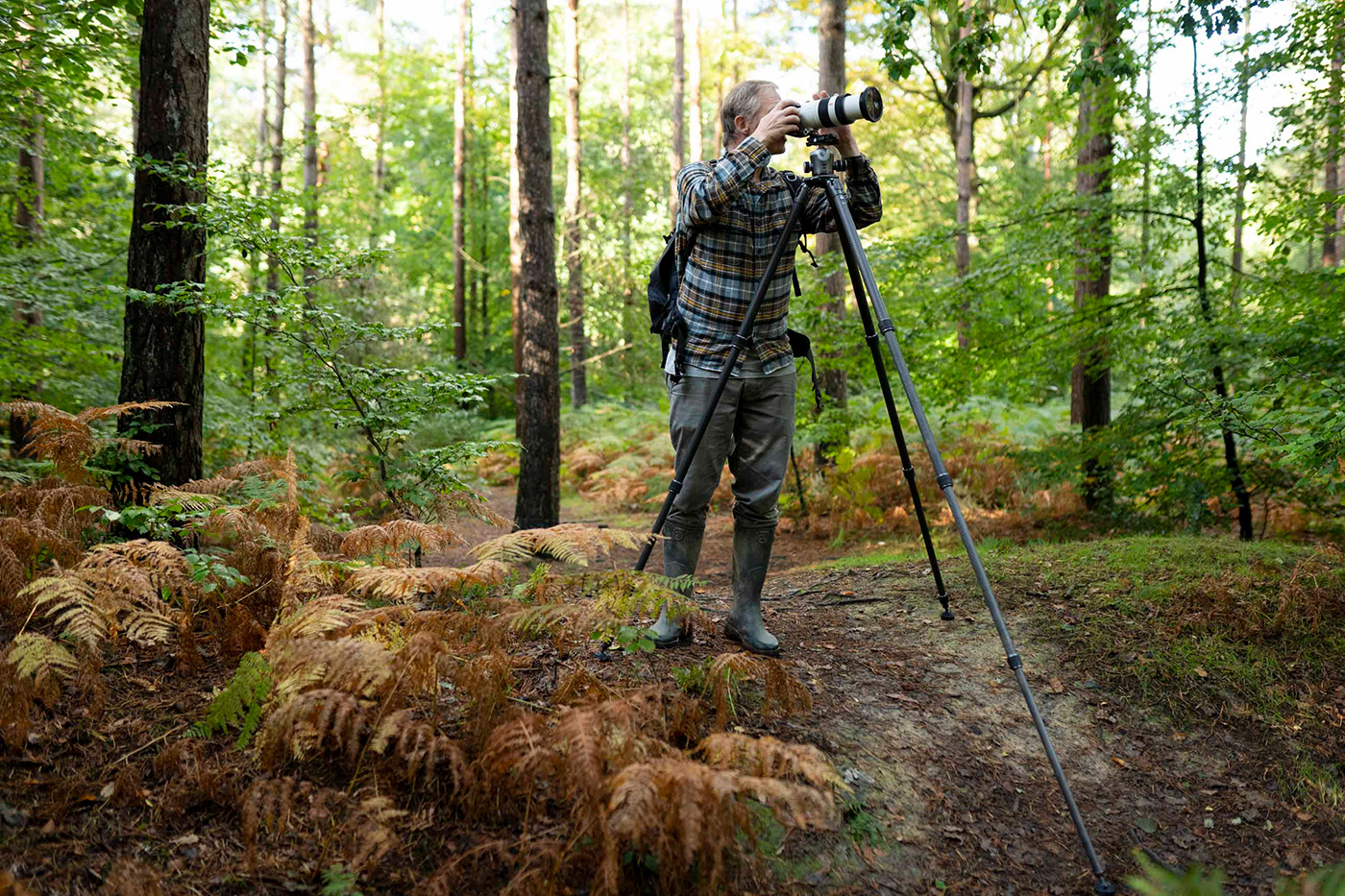
What tripod head is best for wildlife?
Suitable tripod heads for wildlife include the Wimberley Gimbal Head WH-200 Mk II, which is sometimes considered the benchmark by which gimbal heads are compared. It offers extremely smooth movement, excellent stability and very high strength, although this performance comes at a premium price.
A more affordable option is the Benro GH5C Carbon Fibre Gimbal Head, which supports equipment weighing up to 30kg while costing slightly less.
A 3 Way Tripod Head such as the Vanguard VEO PH-38S is a good alternative, combining the versatility of telescopic rotating handles with smooth and precise movements suited to both stills and video. The only drawback is the relatively modest 10kg payload, so it is important to check your equipment weight before choosing a three-way head.
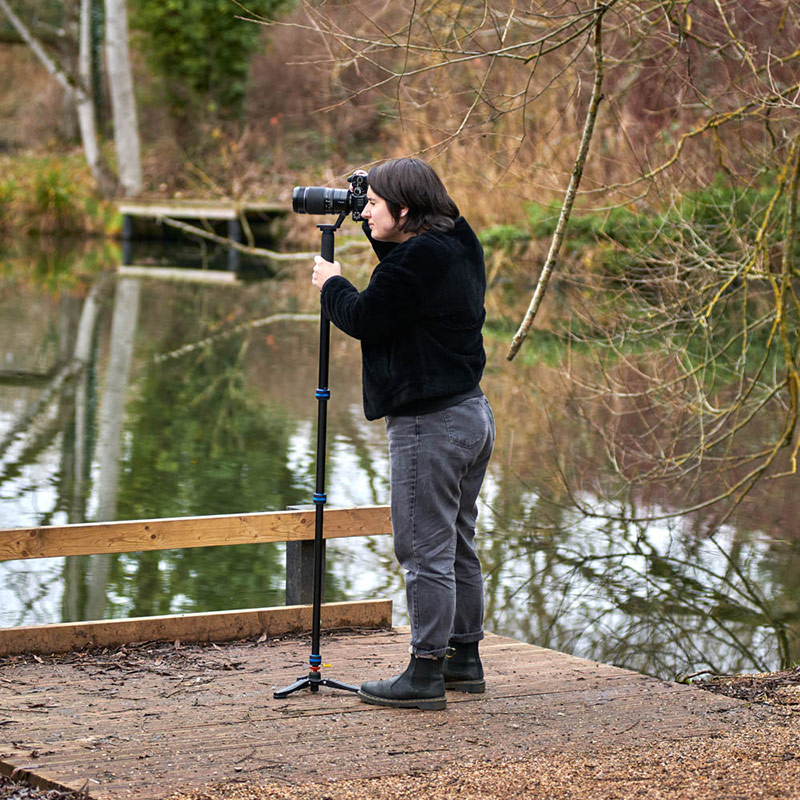
How To Choose The Best Tripod For Sports Photography
Most sports photographers prefer to use a monopod rather than a tripod. Monopods are much more portable yet still allow the photographer to track the action. A monopod also takes up less floor space when shooting from on the sidelines of sporting events.
Monopods come into their own when using telephoto lenses, recording video and when tracking subjects up and down the field, which can quickly become tiring if handholding. By supporting the weight, a monopod reduces fatigue while still allowing freedom of movement to follow the action, especially when using a suitable head.
When choosing a monopod, much like with a tripod the number of leg sections affects portability, compacted length and stability. Many feature four to six sections, allowing them to collapse down for transport while still extending to a decent shooting height.
Some, like the 3 Legged Thing Alana Monopod w/Docz2 Foot Stabiliser Kit Slate Grey include removable stabiliser feet, which allow the base to rotate. This creates a sort of hybrid monopod/tripod shooting experience, being less portable but more stable.
Using a suitable head can improve handling. While some photographers attach their camera or lens directly to the monopod itself, a tilt head or ball head allows the camera to move vertically while the monopod handles horizontal movement.
The best monopod for sports photography includes the Manfrotto 290 Carbon Fibre Monopod, which is a budget-friendly option that weighs just 500g thanks to the carbon fibre design.
Another option is the Gitzo GM4562 Series 4 6-Section Carbon Monopod, a premium option known for durability and stability, which supports heavier loads while collapsing down short for transport due to the 6-Section design.
The Manfrotto XPRO 4 Section Aluminium Photo Monopod is a good alternative with aluminium that helps to keep the cost lower than carbon fibre models.
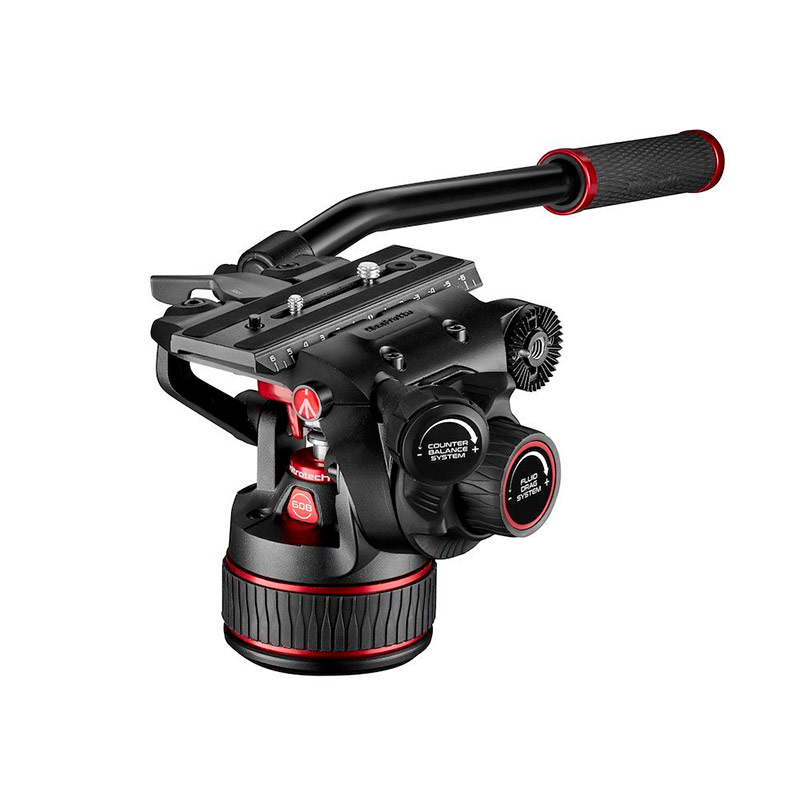
Manfrotto video head showing panning arm and other video features
What to Consider When Buying a Video Tripod
Video is specialised and has its own style of tripods, which are different from photography tripods. The most obvious difference is the fluid video head, which allows smooth panning and tilting movements when recording footage. Other key features to look for in a video tripod include:
- Pan and tilt drag adjustment. High quality video heads let you adjust drag resistance, which controls how easily the camera moves during pan and tilt. Increasing drag create slower and more controlled movement.
- Counterbalance systems keep everything balanced when tilting, preventing the camera from tipping forward or backward when using heavier lenses or cinema rigs.
- Bowl levelling system. Many video tripods include a 75mm or 100mm bowl mount, which allows the camera to be levelled quickly using a half-bowl adaptor instead of adjusting each leg individually.
- Twin-tube leg design. Professional video tripods often use dual-tube legs, which increase rigidity and reduce twisting when panning with a cinema camera.
- Mid-level or ground spreaders maintain stability and prevent the legs from shifting while filming.
- Pan handles allow the operator to move the camera smoothly during pan and tilt movements.
- Sliding quick-release plate. Video heads typically use a long sliding plate that allows the camera to be balanced correctly on the head.
- Payload. Video legs sometimes feature mounting points for accessories such as monitors, microphones and cages, so the tripod and head must comfortably support the total weight of the setup.
- Height range such as maximum and minimum height are important depending on whether you need to shoot above crowds or close to the ground.
- Flat base compatibility. Some video heads include a flat base so they can be mounted on sliders, jibs or other support systems.
The best video tripods include the SmallRig AD-01 Heavy-Duty Tripod with Fluid Head, which isa very affordable option that includes a fluid head with 360° panning and +90° to -75° tilt movement, along with a 75mm bowl for quick levelling.
Another excellent value option is the Benro KH26PC Video Tripod Kit, which is suitable for compact video cameras and hybrid setups. The included fluid video head provides smooth pan and tilt control, while the tripod can support camera systems weighing up to approximately 6.8kg.
For hybrid shooters who capture both video and stills, the Manfrotto ONE Carbon Fibre Tripod with 500X Fluid Head offers the newest approach with a redesigned leg system, and fluid drag with the 500X head providing movement for video.
For professionals, the Manfrotto Nitrotech 608 Series with 635 Fast Single Leg Carbon Tripod uses a continuous counterbalance system for precise control of rigs up to around 8kg.
Choosing the best tripod depends on how and where you shoot. Landscape photographers may look for lightweight carbon fibre designs for hiking, wildlife photographers need stronger systems for large lenses, and videographers benefit from dedicated fluid heads for smooth camera movement.
Whether you need a general-purpose photography tripod, a studio support or a video tripod, explore our range of camera tripods from the world’s leading brands and discover the setup that suits your style of shooting.
Share this post:
By Nick Dautlich on 16/03/2026

Nick Dautlich
Senior Content Writer and Product Reviewer
Nick Dautlich is the Senior Content Writer and Product Reviewer at Park Cameras, with over 15 years of photography experience. A Sony Imaging Professional and expert reviewer, Nick has worked with major brands such as Canon, Sony and Nikon. His work is also featured on Vanguard World UK’s website, Capture Landscapes, and Shutter Evolve. Nick’s photography includes National Trust projects and magazine covers and he is passionate about landscapes and storytelling. Nick also enjoys hiking and teaching his children about nature. Learn more on his profile page.
Trade in your old equipment
Fast and easy trade in service ensures your old gear is collected efficiently and you are paid quickly! It's very simple to trade in your unwanted photography gear. Just head over to our dedicated Sell or Part Exchange page, fill out the details, and we'll get back to you with an offer for your old gear. Take the cash, or put it towards the cost of your new gear. It's up to you! Find out more
sign up to the newsletter
Keep up to date on the latest photography news, events and offers. Sign up now