
Z 100-400mm f/4.5-5.6 VR S
Compact versatile zoom
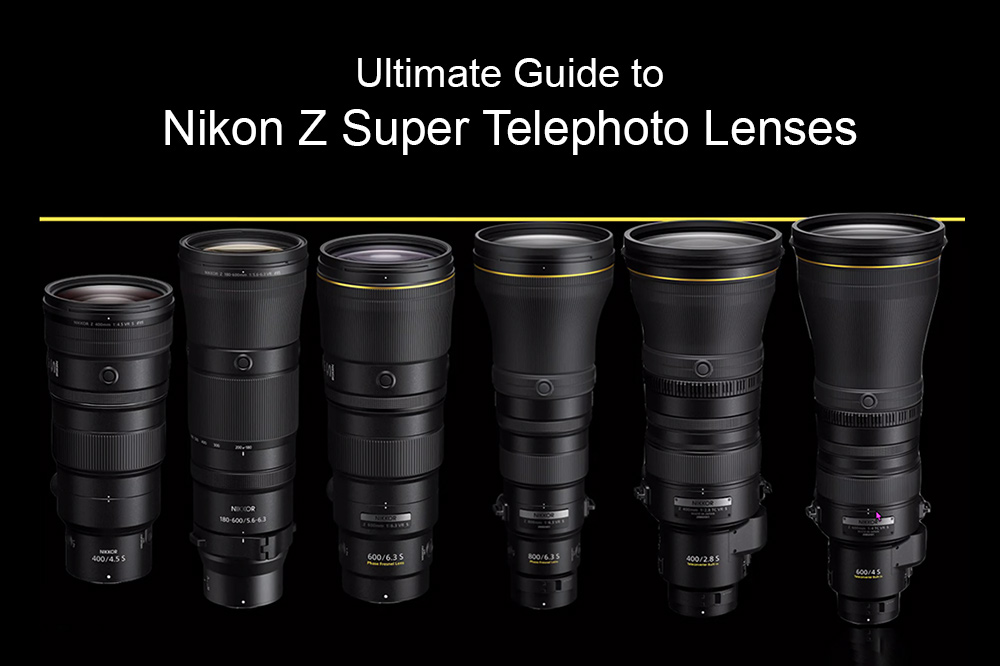
View Z 100-400mmNikon's Z system now includes seven super-telephoto zooms and primes, covering everything from compact handheld shooting to professional sport and wildlife photography.
The range spans focal lengths up to 800mm, with considerable variation in weight, aperture, versatility and teleconverter support. This makes choosing between them more complicated than simply picking the longest or cheapest option.
For many photographers, the Nikon Z 180-600mm f/5.6-6.3 VR is the obvious starting point, thanks to a broad, versatile zoom range that handles birds, wildlife and distant action well. That raises the question: is it really the best all-rounder, and what do you gain by choosing one of the others?
This guide compares the current Nikon Z super-telephoto range, highlighting the key specifications and differences that matter most in the field. We'll also cover teleconverters, cropping for extra reach, VR and weather resistance, and using existing F-mount glass through the FTZ II adapter.
Billed as the "All-round FX zoom", the 180-600mm is a brilliant choice for birds, wildlife, aviation (particularly with a Z teleconverter), and outdoor action. Its biggest advantage is versatility, capable of capturing a subject within a whole scene or as a smaller vignette or close-up portrait.
The internal zoom mechanism keeps the same length throughout, needing just a 70° turn to move through the entire range. It also offers 5.5 stops of VR and relatively close focusing.
On the downside, it weighs 1,955g without the tripod collar, and the f/5.6-6.3 maximum aperture doesn't gather as much light as some of the brighter options.
So the question becomes less about whether this is the best overall, and more about which compromises you're prepared to make for the subjects you shoot.
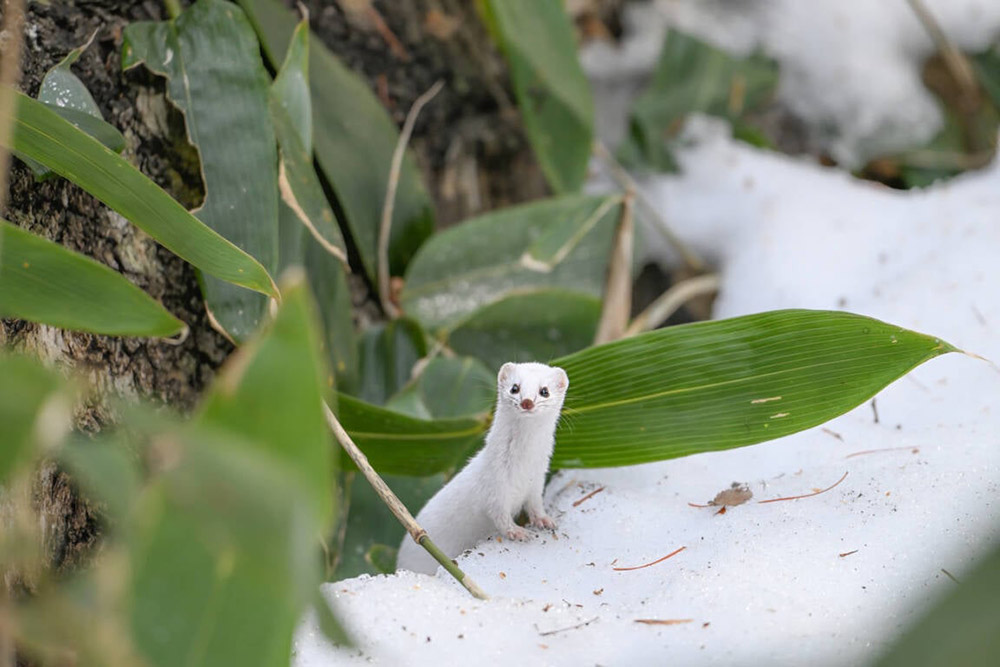
Sample image captured with the Z 180-600mm f/5.6-6.3 VR.
| Specification | Z 100-400mm f/4.5-5.6 VR S | Z 180-600mm f/5.6-6.3 VR | Z 400mm f/4.5 VR S | Z 600mm f/6.3 VR S | Z 800mm f/6.3 VR S | Z 400mm f/2.8 TC VR S | Z 600mm f/4 TC VR S |
|---|---|---|---|---|---|---|---|
| Type | Zoom | Zoom | Prime | Prime | Prime | Prime with built-in 1.4x TC | Prime with built-in 1.4x TC |
| Focal length | 100-400mm | 180-600mm | 400mm | 600mm | 800mm | 400mm / 560mm with built-in TC | 600mm / 840mm with built-in TC |
| Maximum aperture | f/4.5-5.6 | f/5.6-6.3 | f/4.5 | f/6.3 | f/6.3 | f/2.8 / f/4 with built-in TC | f/4 / f/5.6 with built-in TC |
| Optical VR | 5.5 stops | 5.5 stops | 5.5 stops | 5.5 stops, up to 6.0 with Synchro VR | 5.0 stops, up to 5.5 with Synchro VR | 5.5 stops | 5.0 stops, up to 5.5 with Synchro VR |
| Minimum focus distance | 0.75m at 100mm / 0.98m at 400mm | 1.3m at 180mm / 2.4m at 600mm | 2.5m | 4.0m | 5.0m | 2.5m | 4.3m |
| Maximum reproduction ratio | 0.38x | 0.25x | 0.16x | 0.15x | 0.16x | 0.17x | 0.14x / 0.20x with built-in TC |
| Lens construction | 25 elements in 20 groups | 25 elements in 17 groups | 19 elements in 13 groups | 21 elements in 14 groups | 22 elements in 14 groups | 25 elements in 19 groups | 26 elements in 20 groups |
| Special optical elements | 6 ED, 2 Super ED | 6 ED, 1 aspherical | 1 ED, 2 Super ED, 1 SR | 2 ED, 1 SR, 1 PF | 3 ED, 1 SR, 1 PF | 2 ED, 1 Super ED, 2 fluorite, 1 SR | 3 ED, 1 Super ED, 2 fluorite, 2 SR |
| Diaphragm blades | 9 | 9 | 9 | 11 | 9 | 9 | 9 |
| Z TC-1.4x compatible | Yes | Yes | Yes | Yes | Yes | Yes | Yes |
| Z TC-2.0x compatible | Yes | Yes | Yes | No | Yes | Yes | Yes |
| Filter size | 77mm | 95mm | 95mm | 95mm | 46mm drop-in | 46mm drop-in | 46mm drop-in |
| Dimensions (diameter x length) | 98 x 222mm | 110 x 315.5mm | 104 x 234.5mm | 106.5 x 278mm | 140 x 385mm | 156 x 380mm | 165 x 437mm |
| Weight | 1,435g* | 2,140g* | 1,245g* | 1,470g* | 2,385g | 2,950g | 3,260g |
*Weight includes the tripod collar where Nikon publishes separate figures with and without the collar. VR performance is based on Nikon's CIPA testing; Synchro VR figures require a compatible camera body.
With high 0.38x magnification and close focusing to 0.98m, the Z 100-400mm f/4.5-5.6 VR S is a great option for tele-macro subjects, adding extra versatility to the classic zoom range.
At 1,245g including its tripod collar, the 400mm f/4.5 is even lighter than the 100-400mm zoom, while the 600mm f/6.3 weighs 1,470g, that's 670g less than the 180-600mm despite offering the same 600mm f/6.3 combination at the long end. Weight is a major factor, and one well worth considering if you move locations and hike a lot while scouting and shooting.
The 800mm f/6.3 unsurprisingly provides the greatest native reach, while the two pro TC primes feature built-in 1.4x teleconverters, making extension more accessible without ever removing the lens from the camera.
All told, this goes some way to explaining why the 180-600mm remains such a versatile all-rounder.
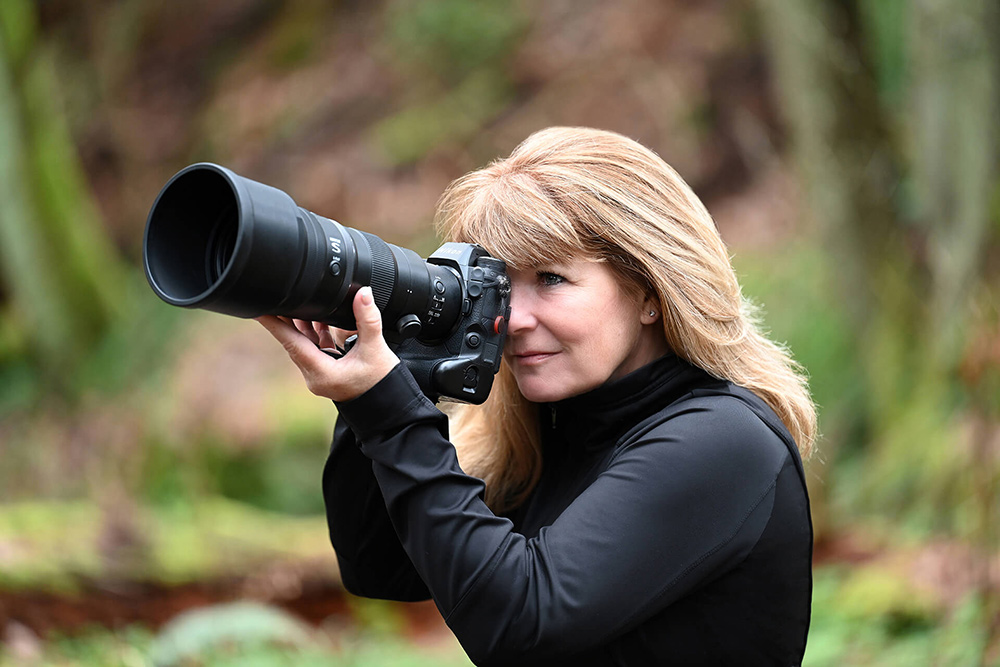
The 400mm f/4.5 weighs just 1,245g including its tripod collar, making it one of the most portable options in the range.
Choose what you photograph to compare the seven lenses.
Select a subject to see the ratings.
Compact versatile zoom
Versatile long-range zoom
Lightweight fast prime
Lightweight 600mm prime
Maximum native reach
Fast professional action prime
Professional long-range prime

Wildlife sample captured with the Z 600mm f/6.3 VR S.
Anyone moving from a DSLR may already own high-end F-mount telephotos, and these can continue to be used on compatible Z bodies through the FTZ II. This can make switching systems considerably less expensive, particularly if your existing optics still meet your needs.
There’s no stated maximum, but Nikon's guidance kicks in once the attached optic exceeds 1,300g. Support the barrel rather than letting weight hang from the mount, and skip the camera strap for carrying. With larger telephotos that have a tripod collar, mount your tripod or monopod there instead of through the adapter. As a rule of thumb, the heavier the setup, the more you should treat the body as attached to the optic, not the other way round.
The Z TC-1.4x adds 1.4x focal length at a one-stop aperture cost, while the Z TC-2.0x doubles reach with two-stops of light reduction. Both are useful for various subjects, but bear in mind that autofocus may suffer depending on subject, light, and focus position.
Both are weather sealed, retain full autofocus compatibility (unlike many DSLR-era extenders), and don't affect minimum focus distance, so tele-macro close-ups stay on the table.
At longer focal lengths, atmospheric haze becomes a limiting factor, so unless maximum reach is the goal, most photographers settle on the 1.4x for a balance of reach and image quality.
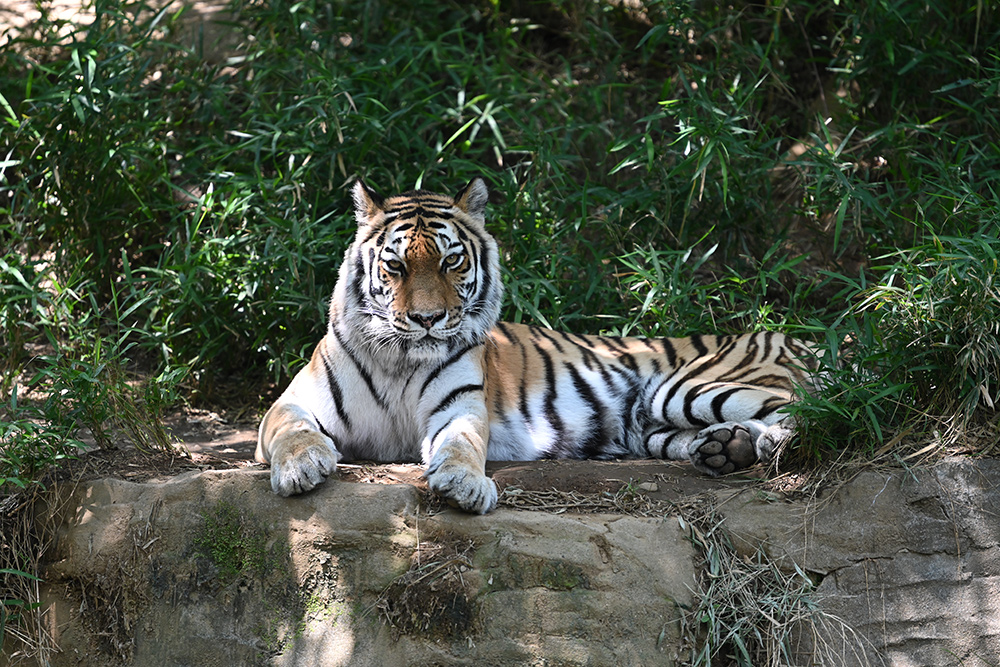
Tiger photographed using the Z TC-1.4x, showing how extra optical reach can help with more distant subjects.
Both make a distant subject fill more of the frame, but they work differently. Cropping means zooming in on the photo after you've taken it, using your editing software to cut away the edges. A teleconverter on the other hand magnifies the image before it even reaches the sensor.
The result is that a teleconverter can capture more real detail on your subject, since it's working with a bigger, more zoomed-in image from the start rather than just enlarging what was already there. Cropping, on the other hand, only works well if you have a high-resolution camera to begin with, since you're throwing away part of the picture.
Distance is also relevant with heat shimmer and atmospheric disturbance, and no amount of magnification recovers detail that wasn’t captured cleanly.
High-resolution bodies like the Z9, Z8, or Z7 II offer plenty of cropping latitude, which is totally fine for social media. For print, where resolution counts, going optical is usually the safer bet.
In short: good light, a stable position, and reasonable distance favour the optical route; poor light or turbulent air often favour shooting clean and cropping after.
No. Z teleconverters are only compatible with Z-mount optics and cannot be used with DSLR glass.
Since small movements are magnified in the viewfinder, Vibration Reduction (VR) becomes more valuable as focal length increases. The ability to shoot at slower shutter speeds controls ISO and ultimately enhances image quality to some degree.
Shutter speed still has to suit your subject, so the benefit of VR is usually less obvious during fast action.
All seven of these models include optical stabilisation, while certain combinations also support Synchro VR with compatible bodies. coordinating in-body and optical stabilisation dos offer better effect.
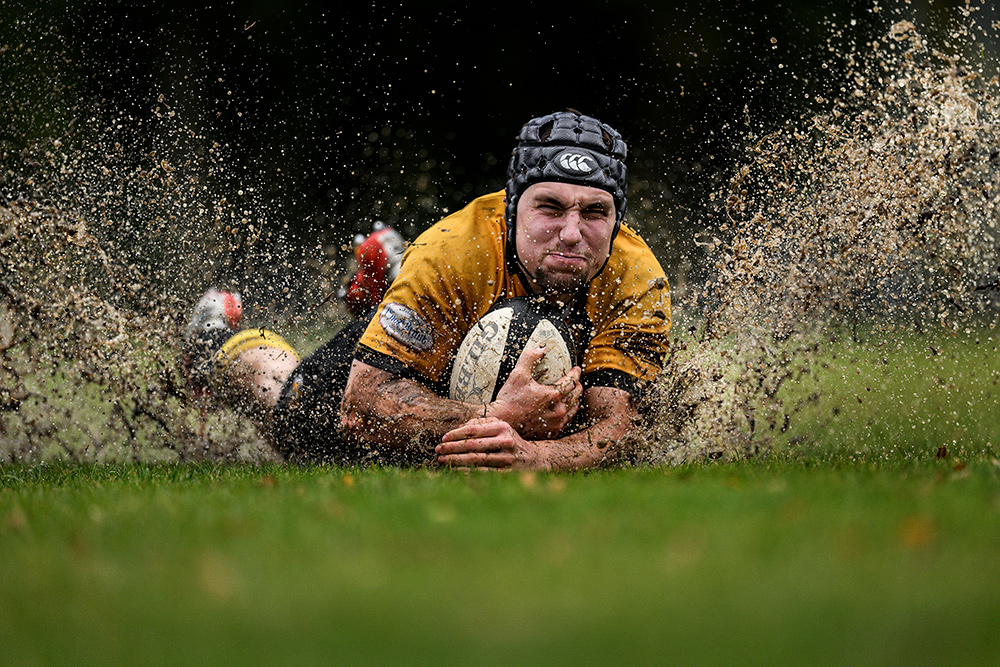
Fast rugby action captured with the Z 400mm f/2.8 TC VR S.
These are all made for outdoor shooting, so dust and moisture resistance is essential to some degree. It's never going to be waterproof, and no IP rating is available, but weather resistance is vital in heavy rain, spray, sand, or dust.
Sealing does vary by model. The 180-600mm is sealed against dust and rain, while the 600mm f/4 and 400mm f/2.8 offer the highest level of resistance according to Nikon. Just something to consider.

Bird photographed at 800mm, where the long native reach is particularly useful.
There's not just one lens that works for every photographer, or subject. The 180-600mm is still the most rounded option, but there are also much lighter primes, brighter apertures and longer reach, which all offer a compelling reason to choose an alternative.
To decide, think about where you shoot, how far you lug your kit and whether zoom versatility is less important than weight, or light gathering. Considering these elements might be more useful than choosing simply based on focal length.
Explore the current Nikon Z lens range, or compare Nikon mirrorless camerasto create your perfect your setup.
Share this post:
By Nick Dautlich on 21/09/2026

Nick Dautlich is the Senior Content Writer and Product Reviewer at Park Cameras, with over 15 years of photography experience. A Sony Imaging Professional and expert reviewer, Nick has worked with major brands such as Canon, Sony and Nikon. His work is also featured on Vanguard World UK’s website, Capture Landscapes, and Shutter Evolve. Nick’s photography includes National Trust projects and magazine covers and he is passionate about landscapes and storytelling. Nick also enjoys hiking and teaching his children about nature. Learn more on his profile page.
Trade in your old equipment
Fast and easy trade in service ensures your old gear is collected efficiently and you are paid quickly! It's very simple to trade in your unwanted photography gear. Just head over to our dedicated Sell or Part Exchange page, fill out the details, and we'll get back to you with an offer for your old gear. Take the cash, or put it towards the cost of your new gear. It's up to you! Find out more
Keep up to date on the latest photography news, events and offers. Sign up now