- Call us 01444 237070

-
- Back
- Used Cameras
- Used Accessories
- Used Lenses
- Back
- Used Canon Lenses
- Used Nikon Lenses
- Used Fujifilm Lenses
- Used Sony Lenses
- Used Micro 4/3rds Lenses
- Used Leica Lenses
- Used Panasonic Lenses
- Used Pentax Lenses
- Used Samyang Lenses
- Used Sigma Lenses
- Used Tamron Lenses
- Used Tokina Lenses
- Used Voigtlander Lenses
- Used Zeiss Lenses
- Used Hasselblad Lenses
- Used Video
- Used Film Equipment
- Used Stock Alert
- Used Blank Test
- Sell or Part Exchange
- Used Clearance
- Recently Added Used Equipment
- Park Picks
- Faulty
- Trade-In
- Blog
- New in
- Call us
- Contact us
- Stores
- Sign in
Call us: 01444 237070
Search terms
Brands
Category
Products
[[{name}]]
[[{attributes.Price}]]
- Categories
- Tips & Inspiration
- Reviews
- News
- Events
- Features
- Buying Guides
- Competitions
New Leica SL Lenses Announced For 2026
New Leica SL lenses have been announced for 2026 to coincide with the launch of the Leica SL3-P, which is the first P series full-frame SL camera. Slated for release in the Autumn, the Leica Summilux-SL 50mm f/1.4 ASPH Lens is the world’s most compact autofocus 50mm f/1.4 lens, while the Leica APO-Macro-Elmarit-SL 100mm f/2.8 introduces dedicated 1:1 macro capability to the SL system for the first time.
With enthusiasts and professional users scrutinising the flagship hybrid mirrorless camera, we explore what these new lenses will bring for everyday content creation, starting with what the Leica Summilux-SL 50mm f/1.4 ASPH offers.
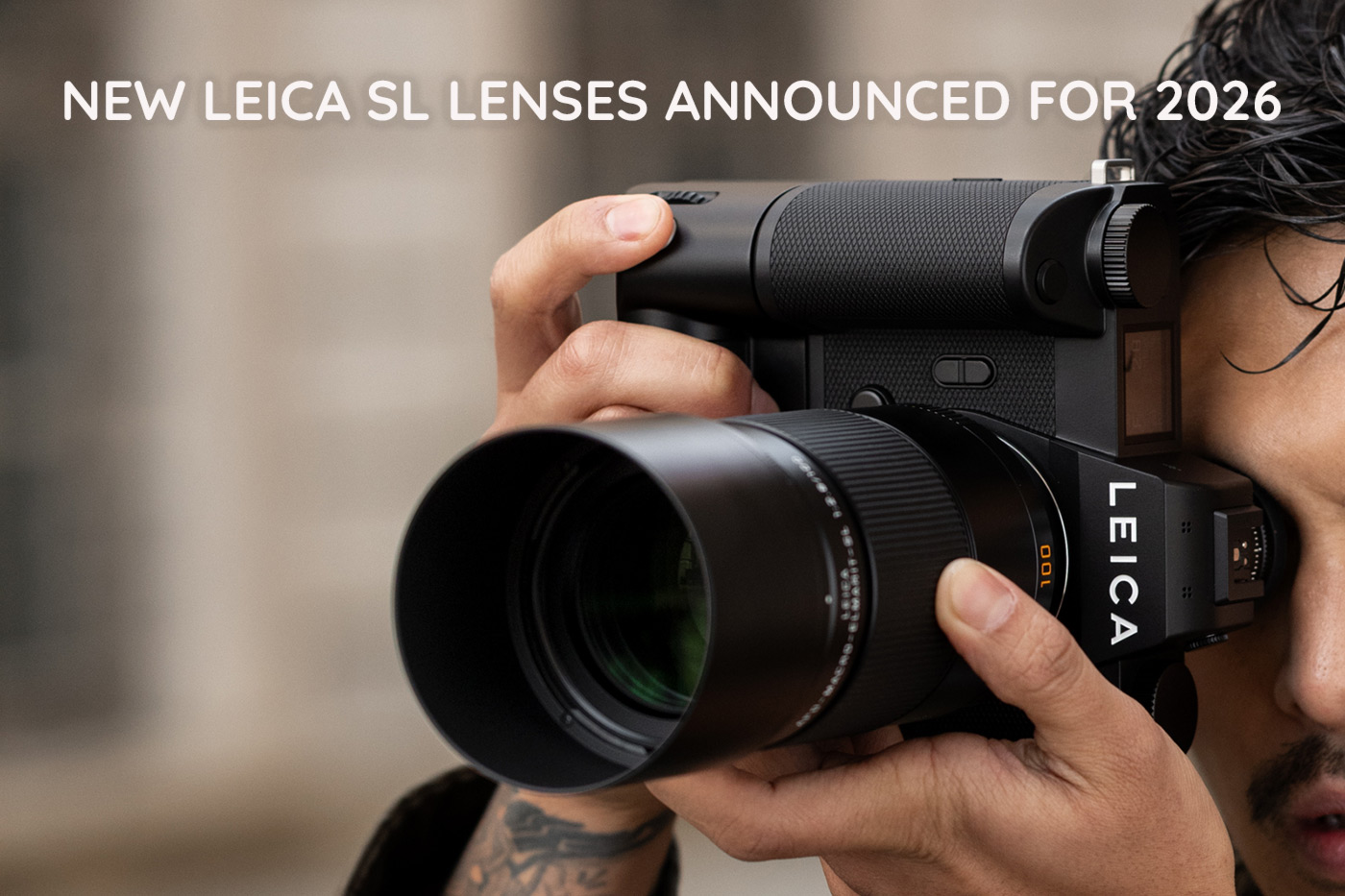
What does the Leica Summilux-SL 50mm f/1.4 ASPH offer?
With a length of 75.5mm and a weight of just 584g, this is the world's most compact autofocus 50mm f/1.4 full-frame lens, which provides greater portability for handholding. Despite this, it is still weather sealed, features an 11-blade aperture and uses a precision Voice-Coil autofocus system, which is the first time we’ve seen it in an APO-Summicron-SL lens.
Existing SL users may recognise that Leica already offers a Summilux-SL 50mm f/1.4. The newer version takes a different approach, reducing size and weight dramatically (down from 124mm and 1,065g to 75.5mm and 584g) while retaining a fast f/1.4 aperture and autofocus system, which we look at more closely next.
What does Leica's Voice-Coil AF system do?
Leica has paired the new optical design with a Precision Voice-Coil AF system, which is intended to deliver fast, near-silent focusing for both stills photography and video.
VCM systems can outperform standard stepping motor designs, offering fast AF speed, greater precision and the ability to handle large optics. With autofocus performance covered, next we turn to the optical design and potential image quality.
Lens optical design
Leica uses an optical design with 11 elements arranged in six groups, including two aspherical elements manufactured using its precision glass moulding process. This allows the Summilux-SL 50mm f/1.4 ASPH. to retain its bright f/1.4 aperture while becoming significantly smaller and lighter than the original lens.
The lens focuses down to 0.50m and provides a maximum magnification ratio of 1:7.6, which is closer than many standard 50mm primes allow for. It features a full-metal aluminium construction, Leica’s hydrophobic Aqua-Dura coating and an E67 filter thread for filters and lens accessories.
Who, and what is this 50mm lens for?
With such a small size and weight, this is an appealing 50mm lens for a range of popular subjects, including portraits, street photography, documentary, travel and everyday shooting. It is equally suited to long days of handheld photography as it is to commercial shoots, spanning events and portraits. This extends its appeal from enthusiasts through to professional users.
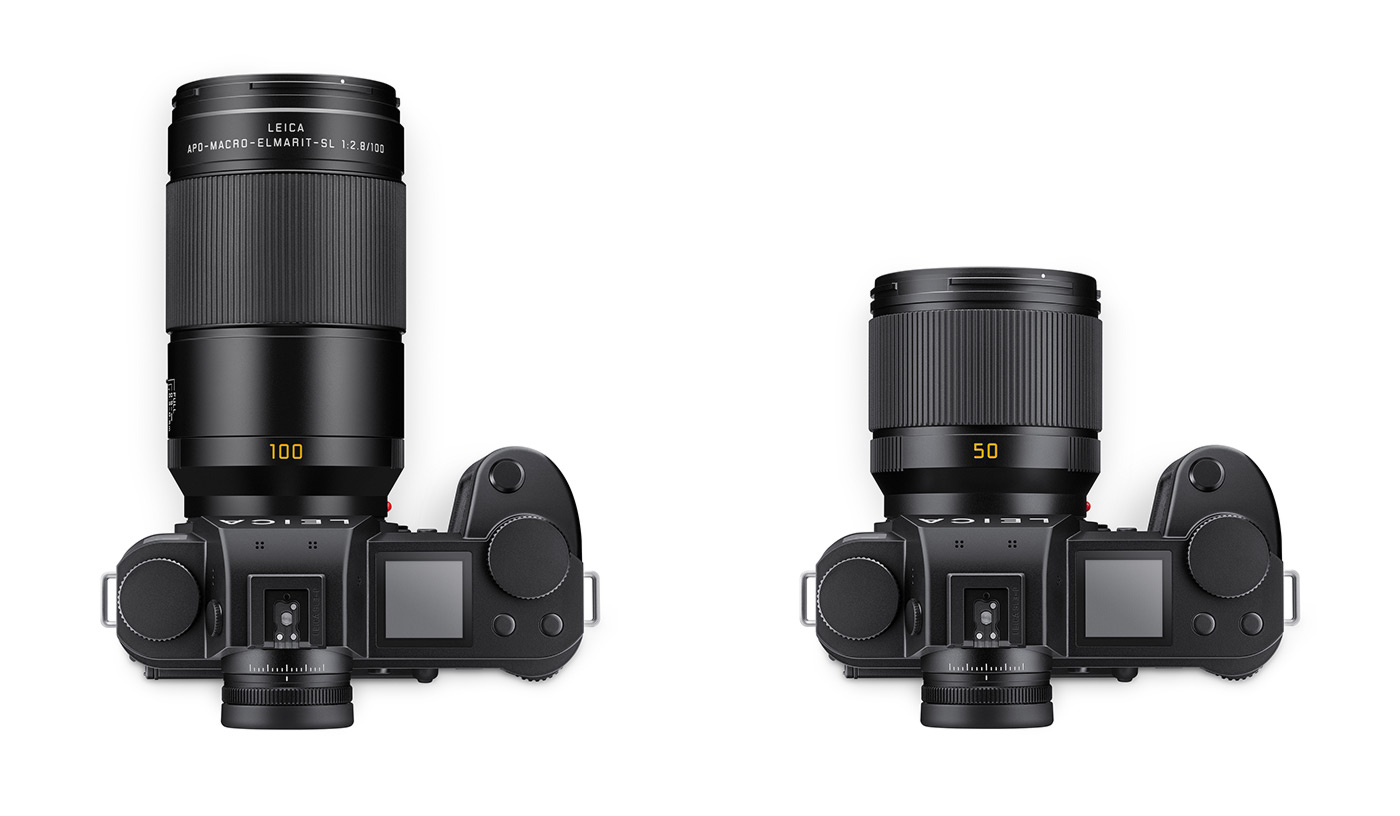
What does the Leica APO-Macro-Elmarit-SL 100mm f/2.8 offer?
Unlike the new 50mm f/1.4 ASPH., the APO-Macro-Elmarit-SL 100mm f/2.8 fills a gap in Leica's SL lineup. It is designed as a successor to the APO-Macro-Elmarit-R 100mm f/2.8 from 1987, bringing 1:1 macro photography to the SL system for the first time from Leica.
A few features set this apart from existing macro lenses for L Mount, which we explore next.
What sets Leica’s Macro lens apart?
What sets the APO-Macro-Elmarit-SL 100mm f/2.8 apart is Leica's combination of apochromatic correction, teleconverter compatibility and a dual-purpose design that combines true 1:1 macro photography with portrait capability.
What is the optical design?
The lens has an optical construction of 17 elements in 12 groups, which is apochromatically corrected throughout. This helps control chromatic aberration and maintain colour accuracy and fine detail throughout the focus range, whether photographing at life size or using the lens for portraiture and other telephoto subjects.
It focuses down to 30cm for true 1:1 macro magnification, and is fitted with a 9-blade aperture plus an autofocus system with a focus limiter for quicker subject acquisition during close-up shooting.
APO is something Leica reserves for its highest-performing lenses, and one of the reasons the APO-Macro-Elmarit name remains so highly regarded.
Who is this lens for?
The 100mm macro is aimed at photographers who enjoy shooting macro, such as nature photography, or those who need a true 1:1 reproduction ratio. That ability extends its usefulness to subjects like product photography, artwork and fine art reproduction within the SL system.
At the same time, the 100mm focal length is ideal for portraits, providing a flattering perspective and strong subject separation from distracting backgrounds, adding a capability that was previously missing from Leica's native lens lineup.
Explore current SL cameras and Leica L Mount lenses here, and sign up to be notified about these and other new releases.
Share this post:
By Nick Dautlich on 25/06/2026

Nick Dautlich
Senior Content Writer and Product Reviewer
Nick Dautlich is the Senior Content Writer and Product Reviewer at Park Cameras, with over 15 years of photography experience. A Sony Imaging Professional and expert reviewer, Nick has worked with major brands such as Canon, Sony and Nikon. His work is also featured on Vanguard World UK’s website, Capture Landscapes, and Shutter Evolve. Nick’s photography includes National Trust projects and magazine covers and he is passionate about landscapes and storytelling. Nick also enjoys hiking and teaching his children about nature. Learn more on his profile page.
Trade in your old equipment
Fast and easy trade in service ensures your old gear is collected efficiently and you are paid quickly! It's very simple to trade in your unwanted photography gear. Just head over to our dedicated Sell or Part Exchange page, fill out the details, and we'll get back to you with an offer for your old gear. Take the cash, or put it towards the cost of your new gear. It's up to you! Find out more
sign up to the newsletter
Keep up to date on the latest photography news, events and offers. Sign up now