- Call us 01444 237070

-
- Back
- Used Cameras
- Used Accessories
- Used Lenses
- Back
- Used Canon Lenses
- Used Nikon Lenses
- Used Fujifilm Lenses
- Used Sony Lenses
- Used Micro 4/3rds Lenses
- Used Leica Lenses
- Used Panasonic Lenses
- Used Pentax Lenses
- Used Samyang Lenses
- Used Sigma Lenses
- Used Tamron Lenses
- Used Tokina Lenses
- Used Voigtlander Lenses
- Used Zeiss Lenses
- Used Hasselblad Lenses
- Used Video
- Used Film Equipment
- Used Stock Alert
- Used Blank Test
- Sell or Part Exchange
- Used Clearance
- Recently Added Used Equipment
- Park Picks
- Faulty
- Trade-In
- Blog
- New in
- Call us
- Contact us
- Stores
- Sign in
- Categories
- Tips & Inspiration
- Reviews
- News
- Events
- Features
- Buying Guides
- Competitions
Sony RX10 V Review With RX10 IV Comparison
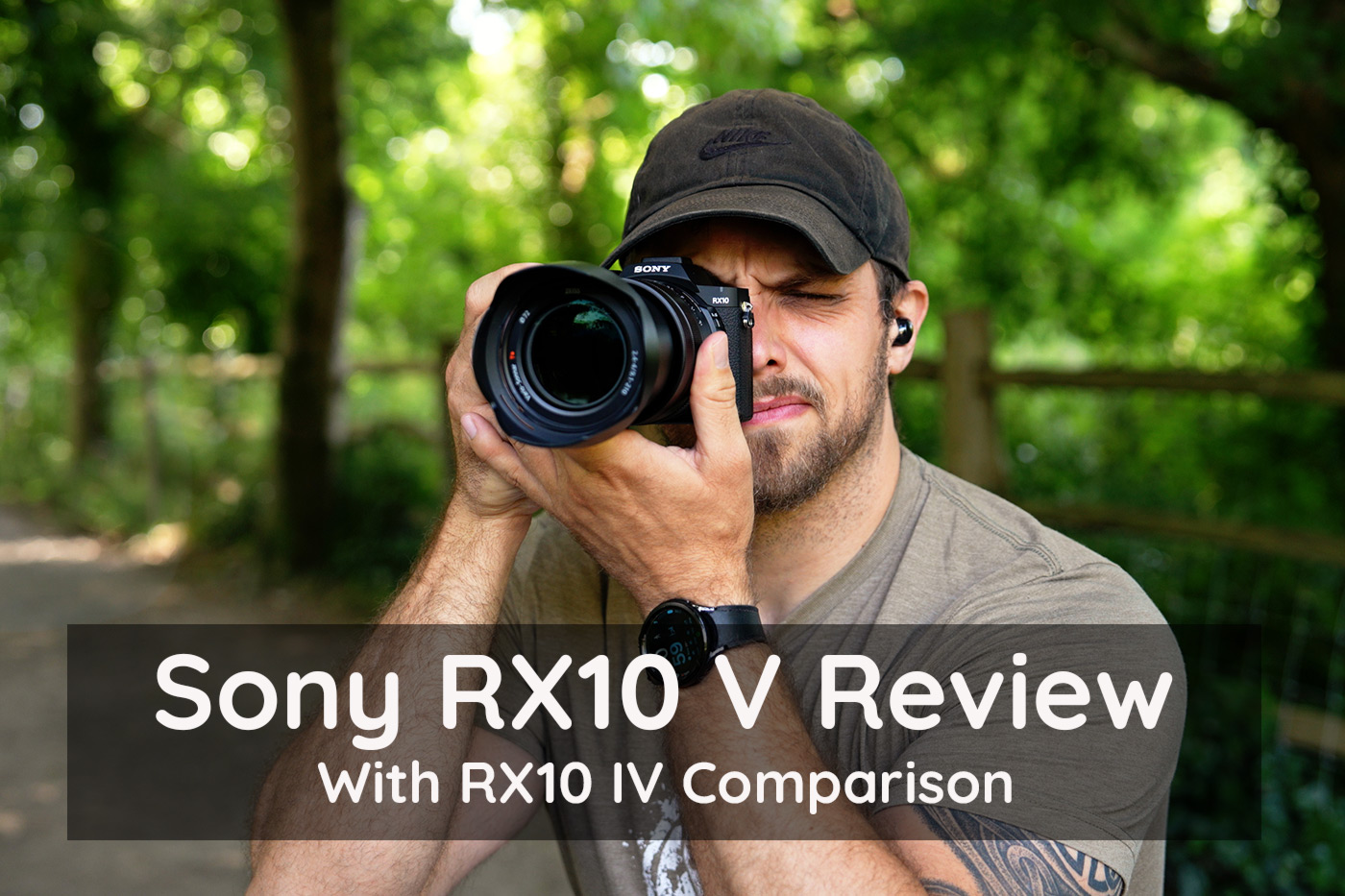
The long-awaited high-end RX10 Sony bridge camera was released nine years after its predecessor, giving Sony the opportunity to modernise almost every aspect of this popular model. In this Sony RX10 V Review with RX10 IV Comparison, you'll discover exactly how the fifth-generation fixed lens camera translates a next-generation AI processor and major video upgrades into everyday photography and video content creation.
Hands-On Video Review by Gareth
Just like the Mark IV, this bridge camera's non-removable, versatile 24-600mm 35mm full-frame equivalent zoom lens makes it a natural choice for travel, birds, wildlife, aviation and sports photography. Our review includes a detailed specs comparison with the mark IV, plenty of sample images, and Gareth's first look video review, so you can decide if the new model is right for your needs.
Whether you enjoy bird photography, are heading on a summer adventure, or you're simply interested in what technology has been upgraded after nine years, join us as we learn all about it, starting with price and launch date.
How much is the RX10 V in the UK?
It costs £2,299.00 in the UK and was released on 9 July 2026, with stock expected almost immediately. The previous model was originally priced at £1,699.00 back in 2017, which reflects the strong feature set this Cyber-shot camera offers.
With price covered, the next question on everyone's lips is what's new, which we explore next.
ℹ️ Right click to enlarge images
The biggest upgrades at a glance
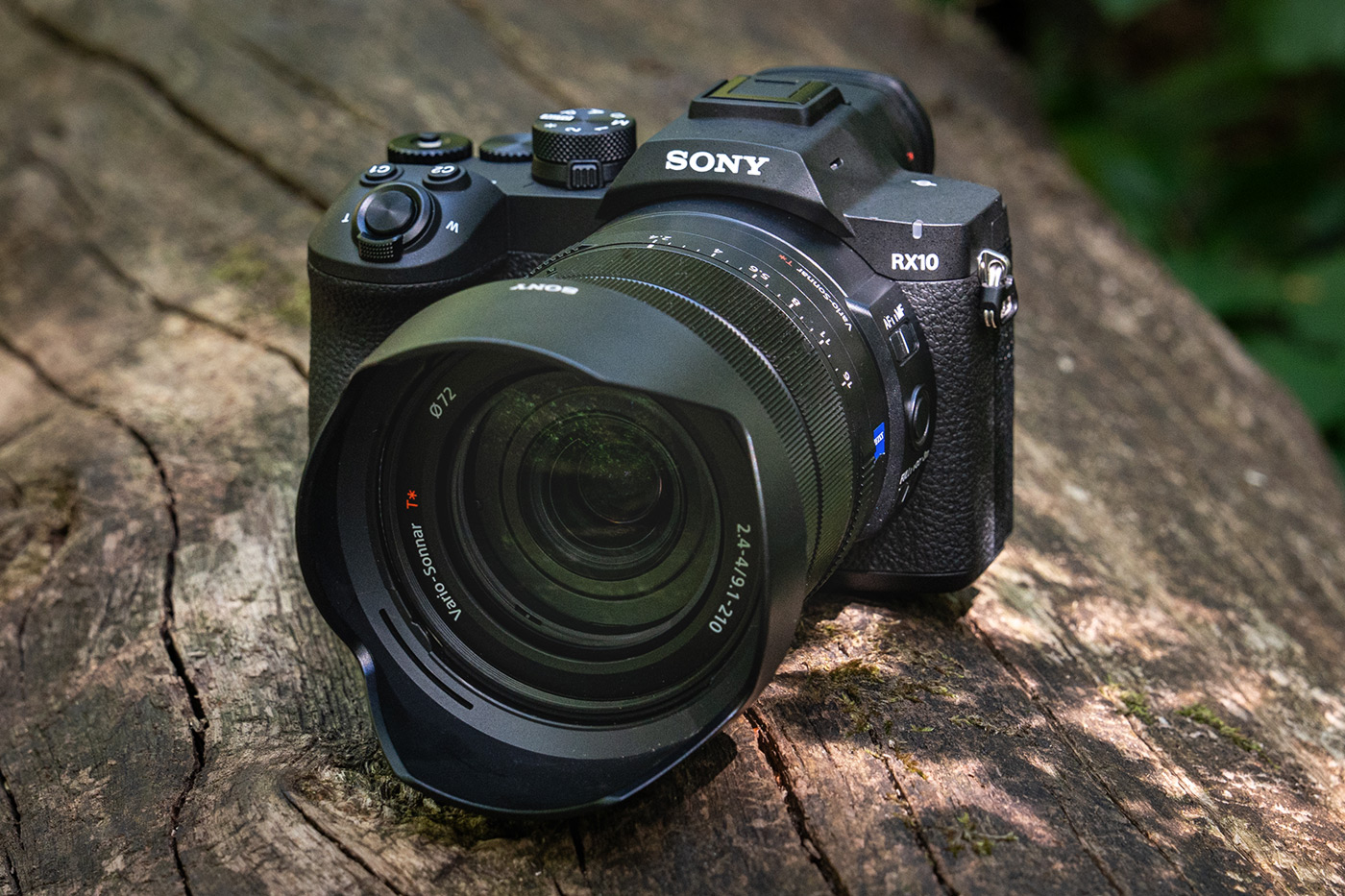
This generation sees lots of updates. Here's 10 upgrades that stand out most:
- BIONZ XR processor
- AI Processing Unit
- AI subject recognition, including birds, insects, vehicles, and aircraft (more on this below)
- 30fps continuous shooting
- 4K120p video
- 3.68M-dot EVF
- More durable NP-FZ100 battery
- Updated USB-C with Power Delivery
- Creator's App support and 5GHz Wi-Fi
- Lossless RAW, HEIF, and new Creative Looks
A detailed look at what's new
So what exactly has changed? Here's the full breakdown, split into brand-new additions and upgrades to features previous owners already know and appreciate.
Completely New Features
Processing and AI
AI Processing Unit A dedicated AI processor now sits alongside the BIONZ XR chip, handling advanced subject recognition, colour and more.
BIONZ XR Processor Replaces the older BIONZ X + Front-end LSI combo entirely.
AI Subject Recognition The system recognises:
- Human
- Animal
This model adds:
- Birds
- Insects
- Vehicles
- Trains
- Aircraft
- Auto subject detection
- Improved Human Pose Estimation (eyes / head / body)
- Improved Animal and Bird Eye AF

Sample 01 Squirrel @210mm. Settings: 1/1000 sec. f/4.0. ISO 2000 – Sample by Gareth
New Video Features
- 4K 120p Video A major leap from the previous-gen. 4K30.
- S-Cinetone
- S-Log3 Gamma
- LUT Import / LUT Preview
- Digital Audio Interface Enables a direct digital connection to the MI Shoe microphones and accessories.
Refined Connectivity and Controls
- USB-C Connector Replaces the old Micro USB port.
- Still / Movie / S&Q Mode Dial
- AF-ON Button
- Spot XL AF Area Size
- Custom Focus Area Sizing (Levels 1–3)
- Continuous Shooting Speed Boost
- Live Streaming Support (UVC/UAC)
- Creators' App Support
- 5GHz Wi-Fi
Image Quality and Looks
- HEIF Recording
- Lossless Compressed RAW
New Creative Looks Including:
- FL2 Film Look 2
- FL3 Film Look 3
Expanded D-Range Optimiser Now extended to Level 8.
Expanded Smooth Skin Effect Higher settings
USB Power Delivery Support
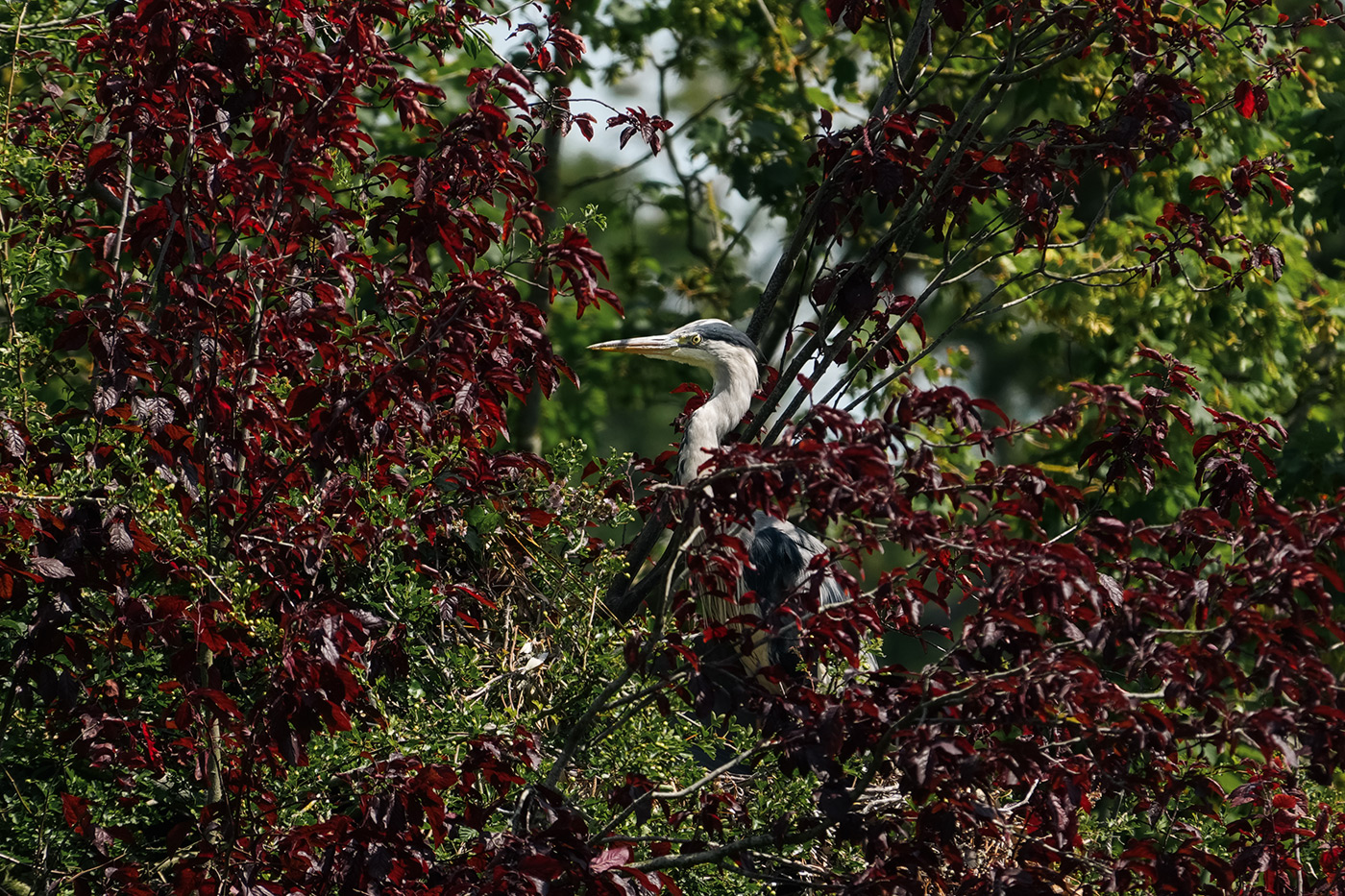
Sample 02 Heron @210mm. Settings: 1/640 sec. f/4.0. ISO 100 – Sample by Gareth
Kept vs. Upgraded
Here’s how one of the best bridge cameras most talked-about legacy features stack up against the RX10 IV.
Continuous Shooting
- Increased from 24fps → 30fps (electronic shutter)
Autofocus improvements
- Faster Fast Hybrid AF
- Better subject tracking
- AI-assisted recognition
- 575 phase-detection points
- 70.6% sensor area coverage
Electronic Viewfinder (EVF)
- 2.36 million → 3.68 million dots
- 0.39-inch → 0.5-inch panel
- New higher refresh mode (120fps)
Rear LCD
- 1.44 million → 1.62 million dots
- Aspect ratio changed from 4:3 → 3:2
- New information layout matching Alpha cameras
Colour Reproduction
- Improved colour reproduction and rendering through BIONZ XR processing.
High ISO Noise Reduction
- Improved medium- and high-ISO performance
Close Focusing
Maximum magnification:
- Wide: 0.42x
- Tele: 0.49x
Battery
- NP-FW50 → NP-FZ100
- Battery life improves from approximately:
- Monitor: 400 → 630 shots
- EVF: 370 → 570 shots
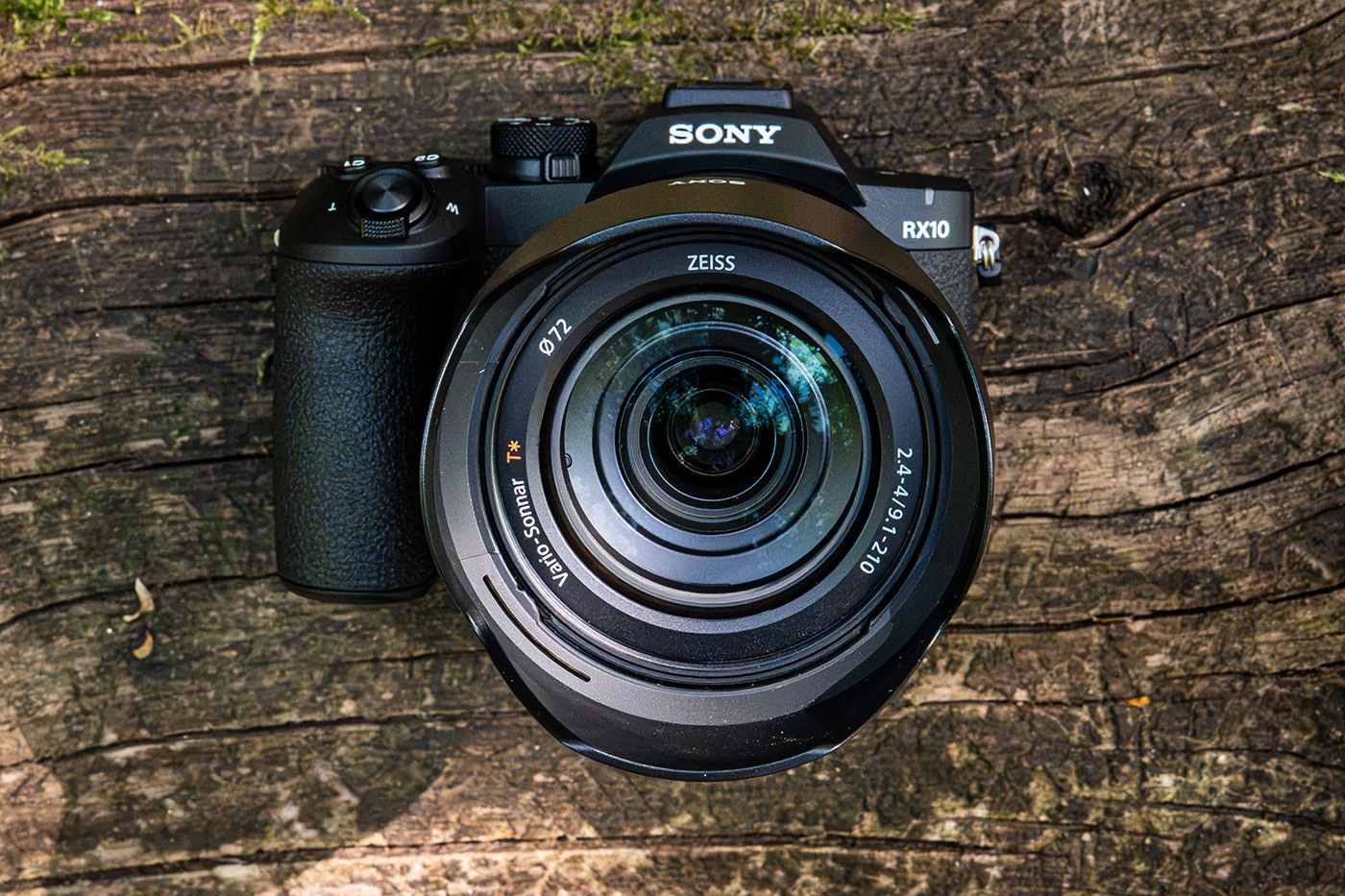
Ergonomics and usability
Revised controls including:
- New control wheel layout
- New mode dial
- Dual rear dials
- Multi-selector
- Improved button placement
Lens Controls
The lens is unchanged, but offers:
- Advanced Focus Mode
- Enhanced Focus Mode switch
- Focus Hold
- Refined Focus Limiter
Connectivity
- USB upgraded to 10Gbps USB 3.2 Gen 2
- Faster wireless transfer via 5GHz Wi-Fi
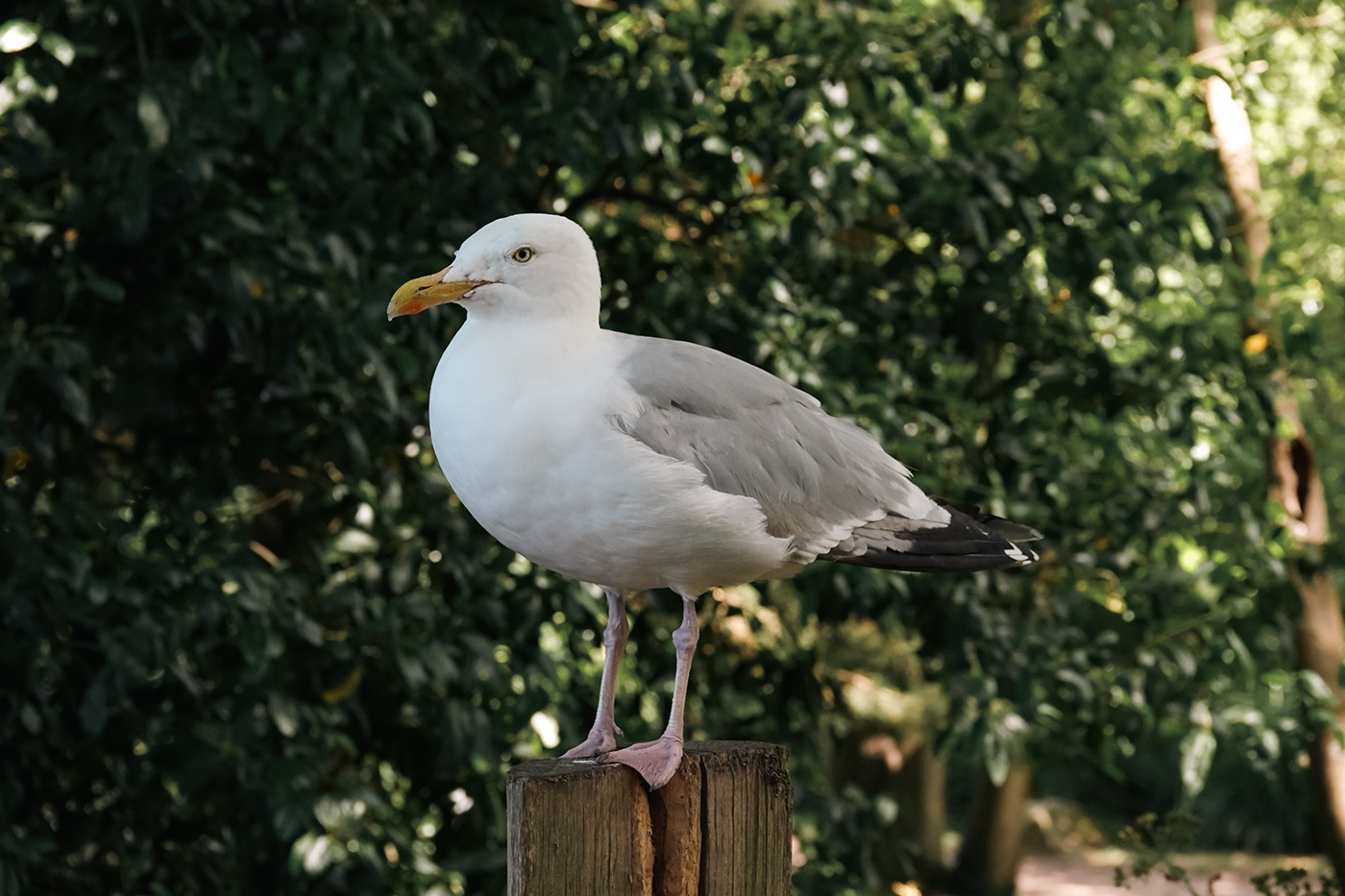
Sample 03 Seagull @33mm. Camera settings: 1/250 sec. f/4.0. ISO 800 – Sample by Gareth
What has stayed the same?
The following features are retained, largely because they are key strengths of the Cyber-shot bridge series:
- 20.1MP 1.0-type Exmor RS stacked CMOS sensor
- ZEISS Vario-Sonnar T* 24-600mm f/2.4-4 lens
- 25x optical zoom
- Optical SteadyShot
- Single UHS-II SD card slot
- Optical + Electronic movie stabilisation
- Dust and moisture resistance
What’s it like for Wildlife and Bird Photography?
The series is a firm favourite among bird and wildlife photographers. This is because few cameras combine such an extensive 24-600mm equivalent zoom range with a one-inch stacked sensor in such a portable package. This model is undoubtedly Sony’s best wildlife bridge camera, and they have improved usability rather than switching out the lens design.
Importantly, autofocus, subject recognition and continuous shooting performance are fully available throughout the zoom range, including at 600mm, allowing photographers to make the most of the maximum reach.
The biggest improvement is autofocus. During fast-moving action, AI Processing recognises a much broader range of subjects than before, including birds, insects, vehicles, and aircraft, while Animal and Bird Eye AF lock onto subjects more confidently. Combined with 30fps continuous shooting, the camera feels much better equipped for unpredictable moments such as birds taking flight, wildlife behaviour, or aircraft passing overhead.
Existing users will notice this upgrade immediately, particularly as you’re able to spend more time concentrating on the artistic side of your work, rather than worrying about achieving accurate focus all of the time.
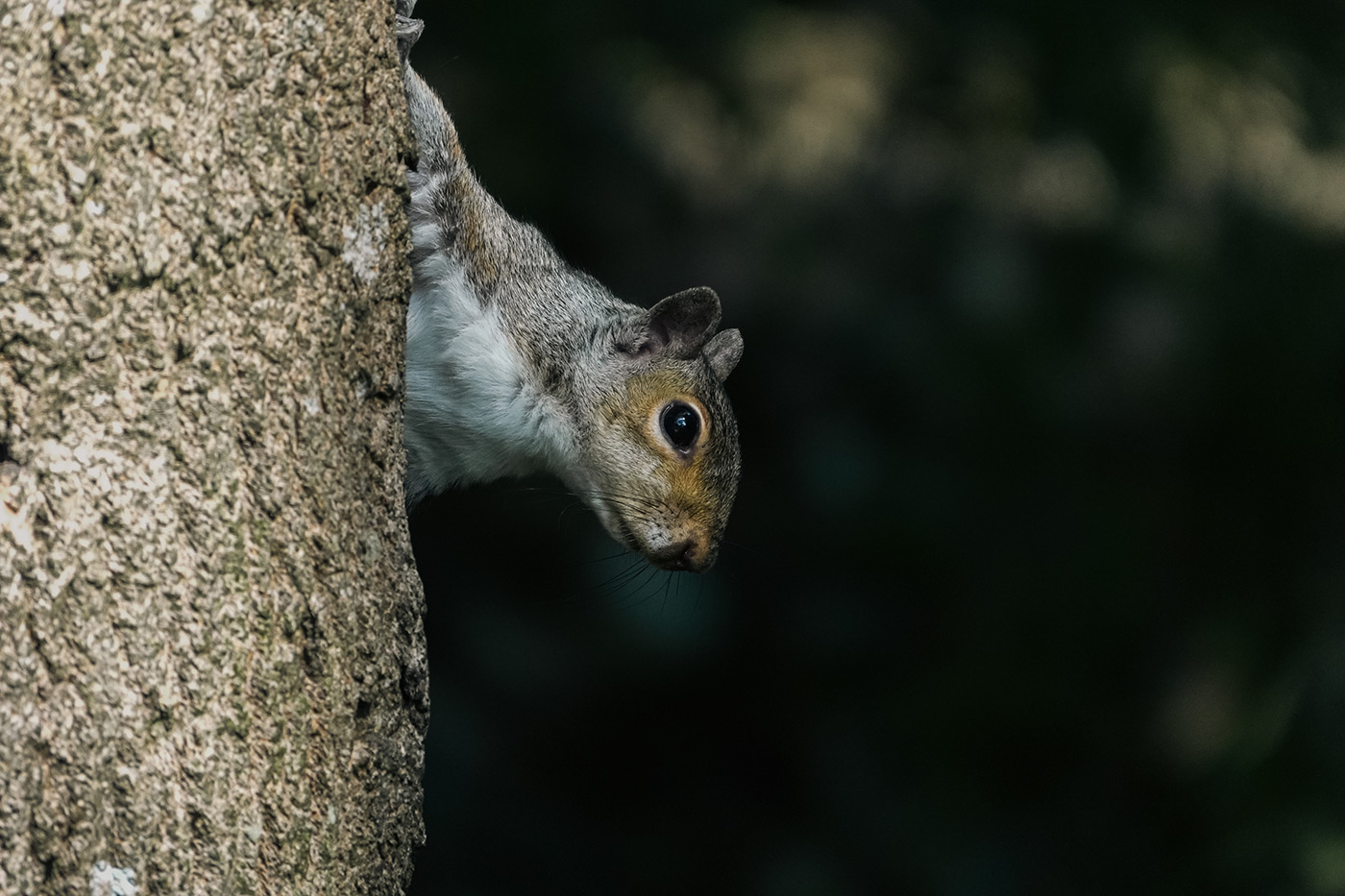
Sample 04 Squirrel @210mm. Settings: 1/1000 sec. f/4.0. ISO 640 – Sample by Gareth
RX10 V or Sony A6700, which is better for birds and wildlife?
This is a tough choice that comes down to what you most value. The A6700 With 70-350mm Zoom Lens Kit offers comparable features for the same price, although at the time of writing it's on sale for £1,699.00. This is £600.00 less than the new bridge camera, but how do they stack up against each other?
Both share AI autofocus technology, recognise a wide range of subjects including birds, animals, and insects, and are great options for wildlife, sports, and outdoor photographers. The A6700 has a larger 26MP APS-C sensor, which delivers better low-light performance depending on the lens, with wider dynamic range and more control over depth of field. It also opens the door to an extensive E-mount lens range, allowing photographers to diversify with dedicated lenses.
On the other hand, a bridge camera offers more convenience. It has an integrated ZEISS 24-600mm equivalent lens covering everything from wide-angle landscapes to distant wildlife without ever needing to switch lenses, get dust on the sensor, or miss shots because of lens changes. The zoom range is also wider, and 75mm longer compared to the A6700 kit's 105-525mm range. This lens is also brighter throughout much of the zoom range, opening at f/2.4-4 compared with f/4.5-6.3 on the 70-350mm G OSS, allowing more light to hit the sensor at all focal lengths. The brighter lens partly offsets the smaller one-inch sensor by gathering more light throughout much of the zoom range, particularly towards the telephoto end.
This means your choice between these two comes down to ongoing priorities. If you expect to be growing a mirrorless system over time and want the image quality advantages of a larger sensor, the A6700 kit offers excellent value. If you prefer to carry a single weather-resistant camera that covers almost every photographic situation without ever changing lenses, the RX10 V is one of the most compelling all-in-one cameras available.
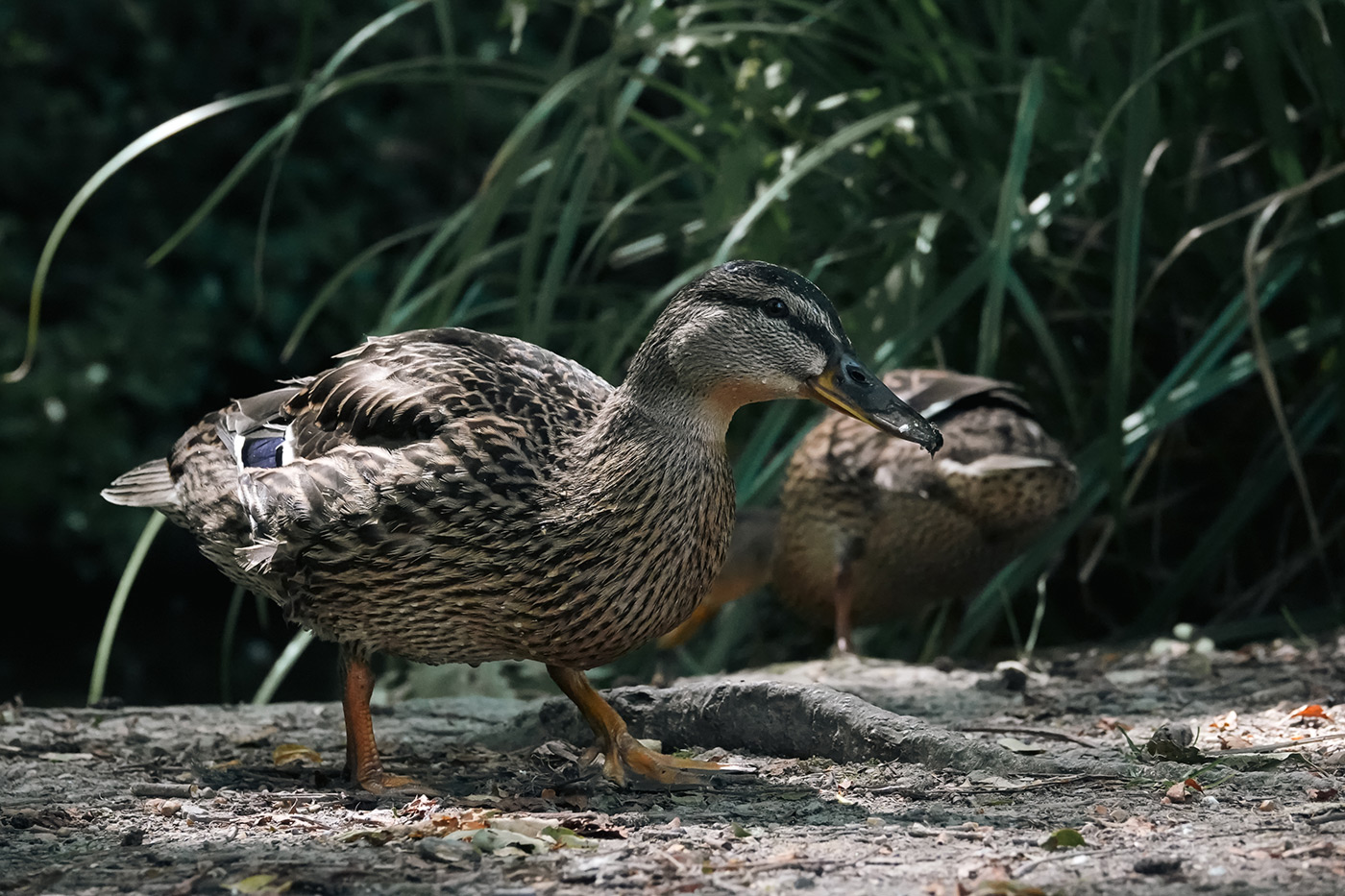
Sample 05 Ducks @44mm. Camera settings: 1/1000 sec. f/4.0. ISO 2500 – Sample by Gareth
Sony RX10 IV Vs Sony RX10 V Specs comparison
The table below compares the key specifications of these two models side by side. With nine years between them, it's no surprise that the upgrades span everything from image processing to battery life, and it shows across almost every feature.
|
Specification |
Sony RX10 V (New) |
Sony RX10 IV |
|
Image Sensor |
1.0-type stacked sensor |
1.0-type stacked sensor |
|
Effective Resolution |
20.1MP |
20.1MP |
|
ISO Range |
100-12800 |
100-12800 |
|
35mm Equivalent Focal Length |
24-600mm |
24-600mm |
|
Clear Image Zoom |
2x (Still & FHD), 1.5x (4K) |
2x (Still & FHD), 1.5x (4K) |
|
Digital Zoom |
4x (Still & FHD/4K) |
4x (Still & FHD/4K) |
|
Maximum Aperture |
f/2.4-4.0 |
f/2.4-4.0 |
|
Subject Recognition |
Human, Animal, Bird, Insect, Car, Train, Airplane, Auto, Face/Eye, Head/Body |
Human (Face/Eye), Animal (Eye) |
|
Autofocus System |
Fast Hybrid AF (Phase Detection / Contrast Detection) |
Fast Hybrid AF (Phase Detection / Contrast Detection) |
|
Maximum Shutter Speed |
1/16000 sec |
1/32000 sec |
|
Continuous Shooting |
30fps |
24fps |
|
Image Stabilisation (Still) |
Optical |
Optical |
|
Image Stabilisation (Movie) |
Optical + Electronic |
Optical + Electronic |
|
Built-in Flash |
Not available |
Yes |
|
Movie Recording |
4K120p (cropped), 4K60p (no crop) |
4K30p |
|
HFR / S&Q |
S&Q (e.g. 5x slow motion in 4K) |
HFR (up to 40x slower, 960fps/24p) in XAVC S HD format |
|
Time Lapse |
Yes |
Not available |
|
Electronic Viewfinder |
0.5-type, 3,686,400 dots |
0.39-type, 2,359,296 dots |
|
Rear Monitor |
3.0-inch (3:2), 1,620,000 dots |
3.0-inch (4:3), 1,440,000 dots |
|
USB |
USB Type-C |
Multi / Micro USB |
|
HDMI |
Micro HDMI |
Micro HDMI |
|
Memory Card Slot |
Single SD (UHS-I / UHS-II) |
Single SD (UHS-I) |
|
Live Streaming |
Yes, up to 4K30p |
Not available |
|
Wireless LAN |
IEEE 802.11a/b/g/n/ac (2.4GHz / 5GHz) |
IEEE 802.11b/g/n (2.4GHz) |
|
Battery |
NP-FZ100 |
NP-FW50 |
|
Battery Life (Monitor) |
Approx. 630 shots |
Approx. 400 shots |
|
Battery Life (Viewfinder) |
Approx. 570 shots |
Approx. 370 shots |
|
Dimensions |
136.4 × 94.5 × 151.3mm |
132.5 × 94.0 × 145.0mm |
|
Weight |
Approx. 1111g |
Approx. 1095g |
Having being improved in almost every way, it may well be the ideal choice for you, which we look at next.
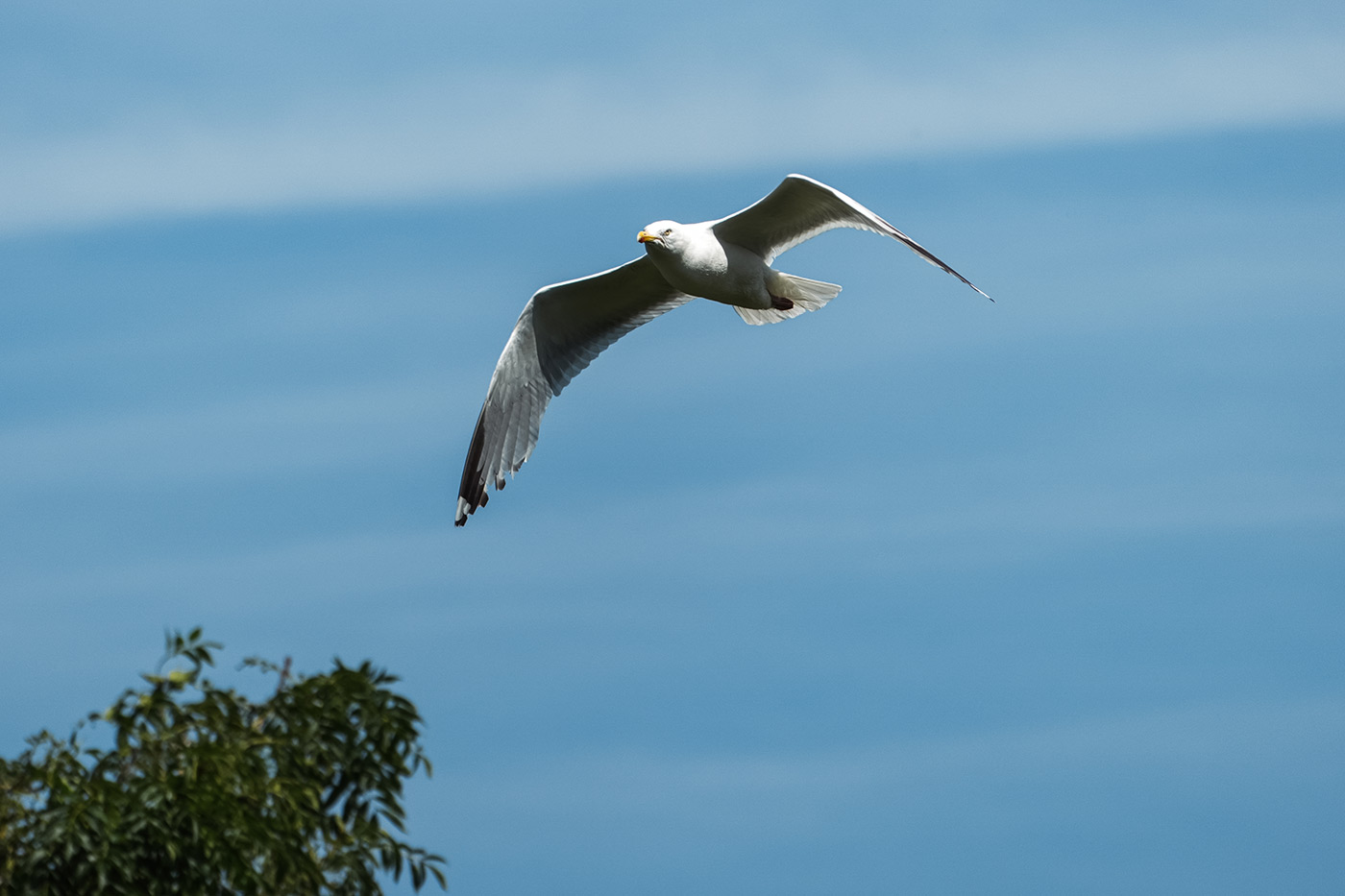
Sample 06 Seagull in flight @210mm. Camera settings: 1/250 sec. f/4.0. ISO 100 – Sample by Gareth
Is it the Right Camera for You?
Bird and Wildlife Photographers
This model makes a compelling choice for shooting distant subjects without carrying long, heavy lenses. The 24-600mm equivalent zoom allows you to capture environmental wildlife portraits in their habitat, small birds and quite distant subjects.
A well-established AI Processing Unit adds relevant subject recognition for birds, insects and aircraft while also improving Animal and Bird Eye AF. This makes the camera an especially appealing choice for photographers who spend a lot of time scouting and walking in nature, or on hikes where carrying large lenses isn’t especially enjoyable.
Travellers and Outdoor Photographers
The idea of travelling with an all-in-one, superzoom, weather-resistant camera is one of the main appeals. The zoom range lets you shoot most travel subjects, such as landscapes, architecture, street photography, birding and wildlife, completely removing the need to pack several lenses for any trip. Despite this, it delivers high image quality that certainly outperforms many compacts and smartphones across both stills and video.
Existing Users
This is a significant update. Although the sensor and lens are the same, there are many other notable upgrades to autofocus, processing, video, battery life and handling which improve usability, image quality and its effectiveness across a wide range of genres, making it a worthy upgrade for existing users.
Who Should Considera Different Camera?
If the ultimate image quality or shooting in very low light are your main priorities, an APS-C or full-frame Sony mirrorless camera may prove a better investment. Cameras like the A6700 or A7 V provide many of the same technologies while offering a larger sensor plus the benefits of interchangeable lenses.
This is a camera that offers exceptional reach, modern autofocus, and all-in-one convenience. If that sounds ideal for you, visit our Sony RX10 V page for the latest price, full specifications and current availability.
Share this post:
By Nick Dautlich on 09/07/2026

Nick Dautlich
Senior Content Writer and Product Reviewer
Nick Dautlich is the Senior Content Writer and Product Reviewer at Park Cameras, with over 15 years of photography experience. A Sony Imaging Professional and expert reviewer, Nick has worked with major brands such as Canon, Sony and Nikon. His work is also featured on Vanguard World UK’s website, Capture Landscapes, and Shutter Evolve. Nick’s photography includes National Trust projects and magazine covers and he is passionate about landscapes and storytelling. Nick also enjoys hiking and teaching his children about nature. Learn more on his profile page.
Trade in your old equipment
Fast and easy trade in service ensures your old gear is collected efficiently and you are paid quickly! It's very simple to trade in your unwanted photography gear. Just head over to our dedicated Sell or Part Exchange page, fill out the details, and we'll get back to you with an offer for your old gear. Take the cash, or put it towards the cost of your new gear. It's up to you! Find out more
sign up to the newsletter
Keep up to date on the latest photography news, events and offers. Sign up now