- Call us 01444 237070

-
- Back
- Used Cameras
- Used Accessories
- Used Lenses
- Back
- Used Canon Lenses
- Used Nikon Lenses
- Used Fujifilm Lenses
- Used Sony Lenses
- Used Micro 4/3rds Lenses
- Used Leica Lenses
- Used Panasonic Lenses
- Used Pentax Lenses
- Used Samyang Lenses
- Used Sigma Lenses
- Used Tamron Lenses
- Used Tokina Lenses
- Used Voigtlander Lenses
- Used Zeiss Lenses
- Used Hasselblad Lenses
- Used Video
- Used Film Equipment
- Used Stock Alert
- Used Blank Test
- Sell or Part Exchange
- Used Clearance
- Recently Added Used Equipment
- Park Picks
- Faulty
- Trade-In
- Blog
- New in
- Call us
- Contact us
- Stores
- Sign in
- Categories
- Tips & Inspiration
- Reviews
- News
- Events
- Features
- Buying Guides
- Competitions
Tamron 16-50mm F2.8 A First Look for APS-C
Tamron has released a new 16-50mm F2.8 A lens, which is a compact standard zoom for APS-C mirrorless cameras. It comes bearing a new “A” in the simpler name, and will arrive for Sony E, Canon RF, Nikon Z and Fujifilm X mounts.
Watch Gareth's First Look Video
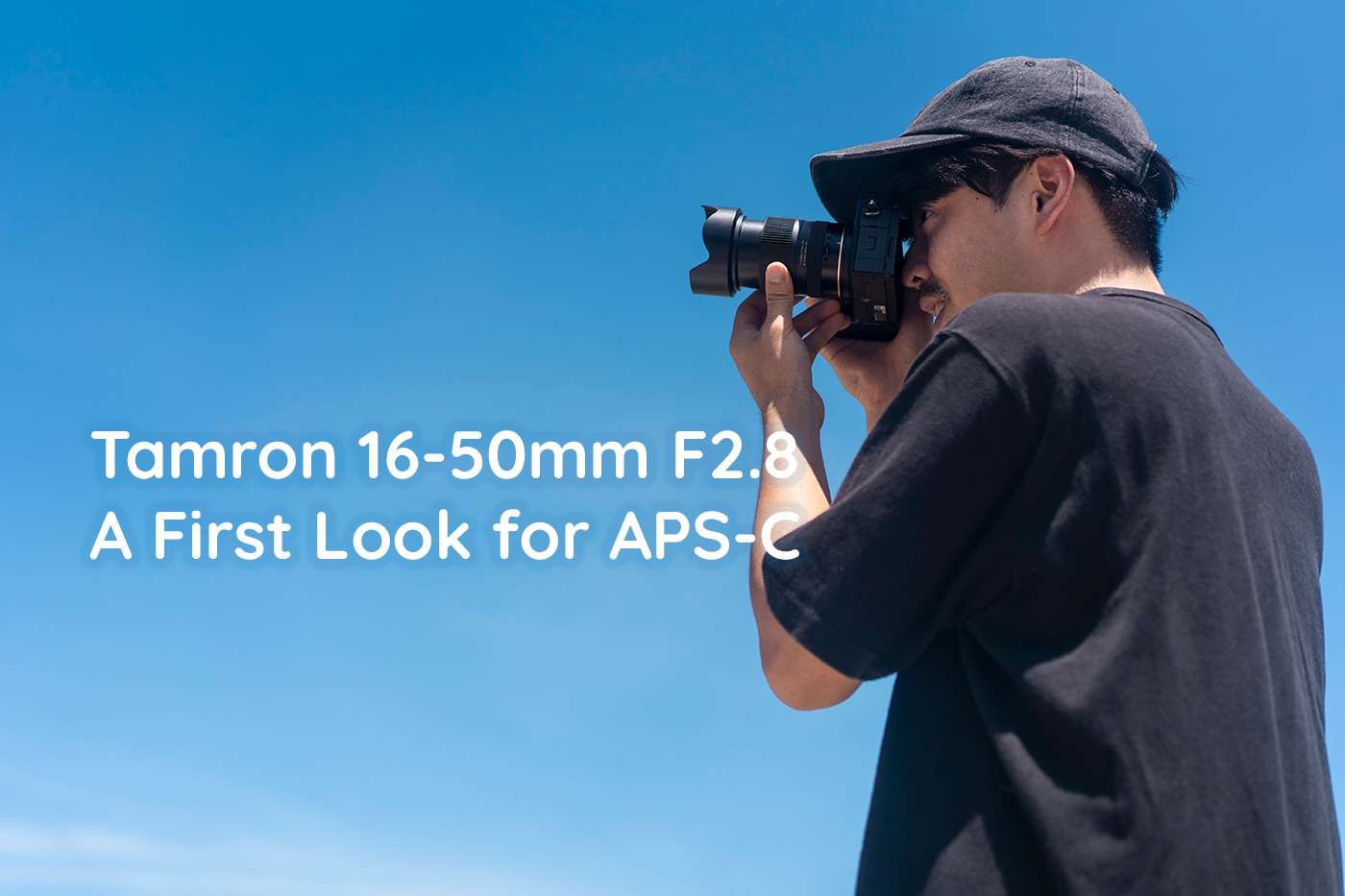
With a constant F2.8 aperture, the latest VXD autofocus and a starting price of just £399.00, it looks like it will make a superb alternative to traditional kit lenses that many photographers often start out with.
The zoom covers a versatile 24-75mm equivalent range (or 25.6-80mm on a Canon RF-S camera). That makes it the right sort of lens for all sorts of everyday subjects like landscapes, city, portraits and travel, while the low weight is also nice for photographers who like to travel as light as possible.
Join us as we take a closer look at what this APS-C zoom offers, how it compares with the Tamron 17-70mm F2.8 Di III-A VC RXD and when you can get your hands on one. Let’s start with mount options, release dates and price.

How much does it cost, and when can you get one?
This release is being phased in between October and December 2026. The table below has all of the dates and prices for each version.
|
Model |
UK Price |
Release Date |
|
£399.00 |
29 October 2026 |
|
|
£419.00 |
29 October 2026 |
|
|
£419.00 |
19 November 2026 |
|
|
£399.00 |
17 December 2026 |

A Wider Option for Everyday
One of the main attractions of the focal range is the wide end, which starts at 16mm. This allows you to capture more in the frame than the typical 18mm starting point that many alternative standard kit lenses have.
The additional coverage is useful when you shoot certain subjects, which might include group photos, vlogging and video, especially when holding out at arms length, or there isn’t room to step backwards.
At the other end, 50mm is useful for portraits, details and similar types of compositions. When you combine this with the wide, constant F2.8 maximum aperture, you’ll get greater creative control over background blur, as well as being able to shoot at faster shutter speeds in lower light.
We compare this with an established existing lens later on, but let’s look at the size and handling next.

Size, Weight and Handling; Is it easy to shoot with?
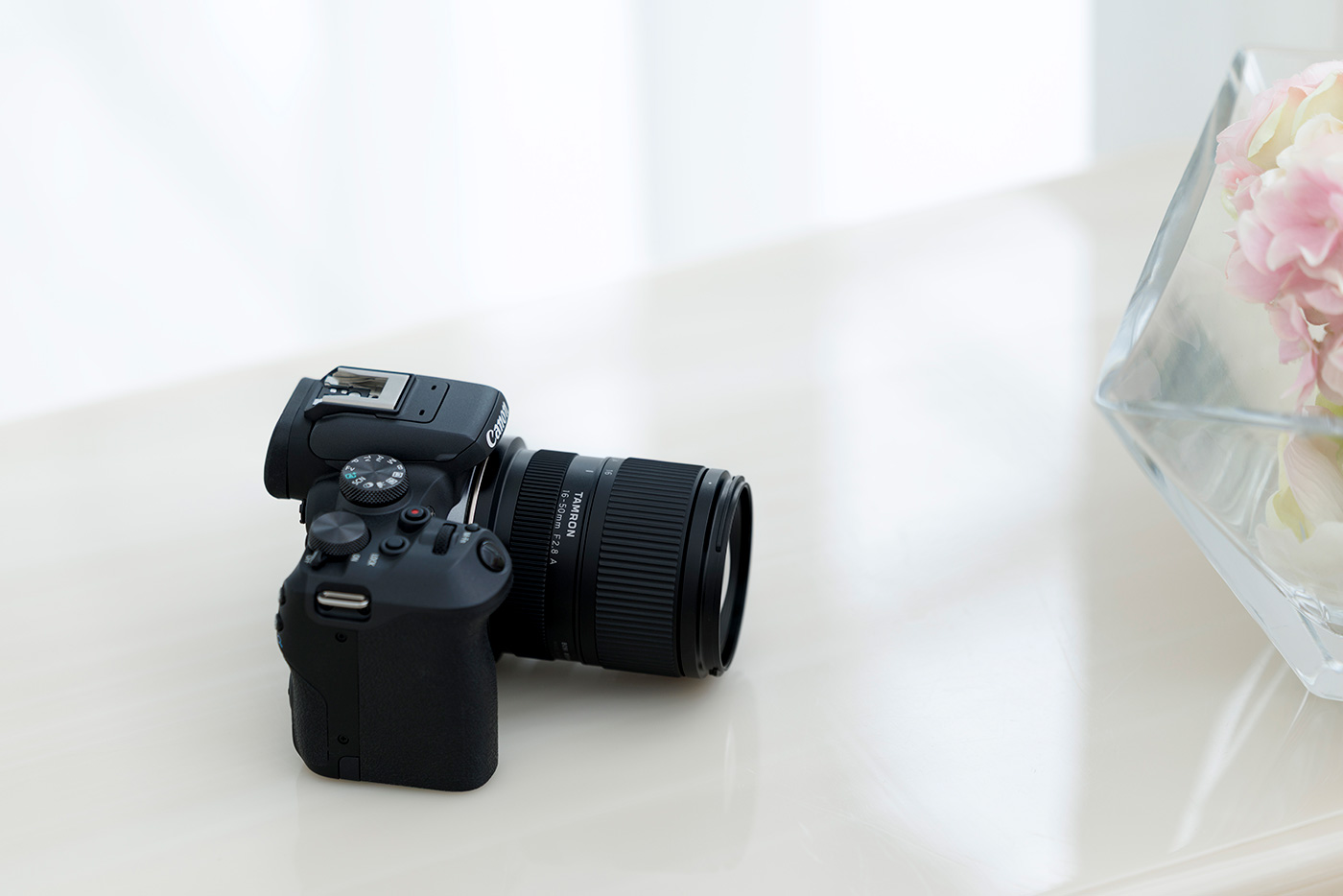
Despite the bright, constant F2.8 aperture, the Sony version weighs just 305 g and is only 79.6 mm long. This is precisely what you want on a smaller APS-C camera such as an A6400 or A6700 series, providing good balance and easy manoeuvrability.
It’s small enough to be discreet during street photography, but tough enough for landscapes in poorer weather, thanks to the moisture-resistant construction, and a fluorine coating, which makes it easier to clean the front element.
A novel new strap-hole in the front cap makes it harder to lose (who hasn’t done that!), and it has a simple barrel layout. A ribbed zoom ring features focal length markings, and there’s also a narrower focus ring closer to the body. There are no other controls to distract you, aside from a port for firmware updates.
A VXD linear motor provides fast, accurate and quiet focusing for both photography and video. This system is well known for its ability to track moving subjects quickly and quietly, improving on the RXD system used across many other Tamron lenses.
Close focusing is another useful feature that affects everyday use, and it has a minimum distance of just 15 cm at 16mm and 29 cm at the telephoto end. Maximum magnification goes up to 1:4.5 and 1:4.8 respectively, opening up opportunities for close-up photographs of flowers, food, textures and nature.
Lastly, the compact 55 mm filter thread is well worth a mention, as it allows you to add cost-effective lens filters such as a polariser or variable ND for filming.

Comparison with the 17-70mm
The 17-70mm F2.8 is a viable alternative, offering a similar focal length at the wide end, yet reaching much further. It’s won a TIPA award too, yet it weighs quite a lot more, costs more and has an older autofocus system, so great things are expected from the newer release.
|
|
16-50mm F2.8 A |
17-70mm F2.8 Di III-A VC RXD |
|
Model |
B091 |
B070 |
|
Sensor format |
APS-C |
APS-C |
|
Focal length |
16-50mm |
17-70mm |
|
Full-frame equivalent |
24-75mm |
25.5-105mm |
|
Maximum aperture |
Constant F2.8 |
Constant F2.8 |
|
Minimum aperture |
F16 |
F22 |
|
Optical construction |
14 elements in 10 groups |
16 elements in 12 groups |
|
Aperture blades |
7, circular |
9, circular |
|
Autofocus motor |
VXD linear motor |
RXD stepping motor |
|
Optical stabilisation |
No |
Yes, VC |
|
Minimum focus distance |
15 cm wide / 29 cm telephoto |
19 cm wide / 39 cm telephoto |
|
Maximum magnification |
1:4.5 wide / 1:4.8 telephoto |
1:4.8 wide / 1:5.2 telephoto |
|
Filter diameter |
55 mm |
67 mm |
|
Length (Sony E) |
79.6 mm |
119.3 mm |
|
Weight (Sony E) |
305 g |
525 g |
|
Moisture-resistant construction |
Yes |
Yes |
|
Fluorine front coating |
Yes |
Yes |
|
Mount options |
Sony E, Canon RF, Nikon Z, Fujifilm X |
Sony E, Canon RF, Nikon Z, Fujifilm X |
|
Original release |
October 2026 |
January 2021 |

What Does the ‘A’ in the name Stand For?
The 16-50mm F2.8 A arrives with a simpler naming convention, replacing combinations of letters used to identify lens technology with just an ‘A’ that signifies it belongs to the APS-C range. Technical details such as the VXD autofocus system are now omitted from the simplified product name.
Optical Quality
The optical design features 14 elements in 10 groups, with the aim of delivering sharp, detailed images throughout the zoom range. Although we’ll need to test performance ourselves, expectations are high for a modern F2.8 standard zoom. You can see from the close-up samples how fine details are rendered.
It also has a seven-blade circular aperture that promises to render attractive background blur, which is particularly noticeable when shooting portraits, close-ups and subjects at wider apertures.
Final Thoughts
This 16-50mm lens is a really exciting addition for APS-C users, combining a bright constant aperture, compact size and VXD autofocus at an appealing starting price of £399.00.
It makes a good choice for leaving on your camera all day, as well as more specifically for portraits, pets or travel, while the close-focusing capabilities add more creative possibilities than many standard options.
We can’t wait to try one in person, but on paper, this looks like a fantastic upgrade that’s suitable for many users, especially if you’re on Nikon Z, where there are very few alternatives.
Share this post:
on 14/10/2026
Trade in your old equipment
Fast and easy trade in service ensures your old gear is collected efficiently and you are paid quickly! It's very simple to trade in your unwanted photography gear. Just head over to our dedicated Sell or Part Exchange page, fill out the details, and we'll get back to you with an offer for your old gear. Take the cash, or put it towards the cost of your new gear. It's up to you! Find out more
sign up to the newsletter
Keep up to date on the latest photography news, events and offers. Sign up now