- Call us 01444 237070

-
- Back
- Used Cameras
- Used Accessories
- Used Lenses
- Back
- Used Canon Lenses
- Used Nikon Lenses
- Used Fujifilm Lenses
- Used Sony Lenses
- Used Micro 4/3rds Lenses
- Used Leica Lenses
- Used Panasonic Lenses
- Used Pentax Lenses
- Used Samyang Lenses
- Used Sigma Lenses
- Used Tamron Lenses
- Used Tokina Lenses
- Used Voigtlander Lenses
- Used Zeiss Lenses
- Used Hasselblad Lenses
- Used Video
- Used Film Equipment
- Used Stock Alert
- Used Blank Test
- Sell or Part Exchange
- Used Clearance
- Recently Added Used Equipment
- Park Picks
- Faulty
- Trade-In
- Blog
- New in
- Call us
- Contact us
- Stores
- Sign in
- Categories
- Tips & Inspiration
- Reviews
- News
- Events
- Features
- Buying Guides
- Competitions
Lunar Eclipse Photography Tips
Just two weeks after the highly anticipated 2026 solar eclipse, a partial eclipse of the Moon will be visible from the UK during the early hours of 28th August. Around 90% of the Moon will pass through Earth's shadow, offering one of the best opportunities in recent years for enthusiasts to photograph a lunar eclipse.
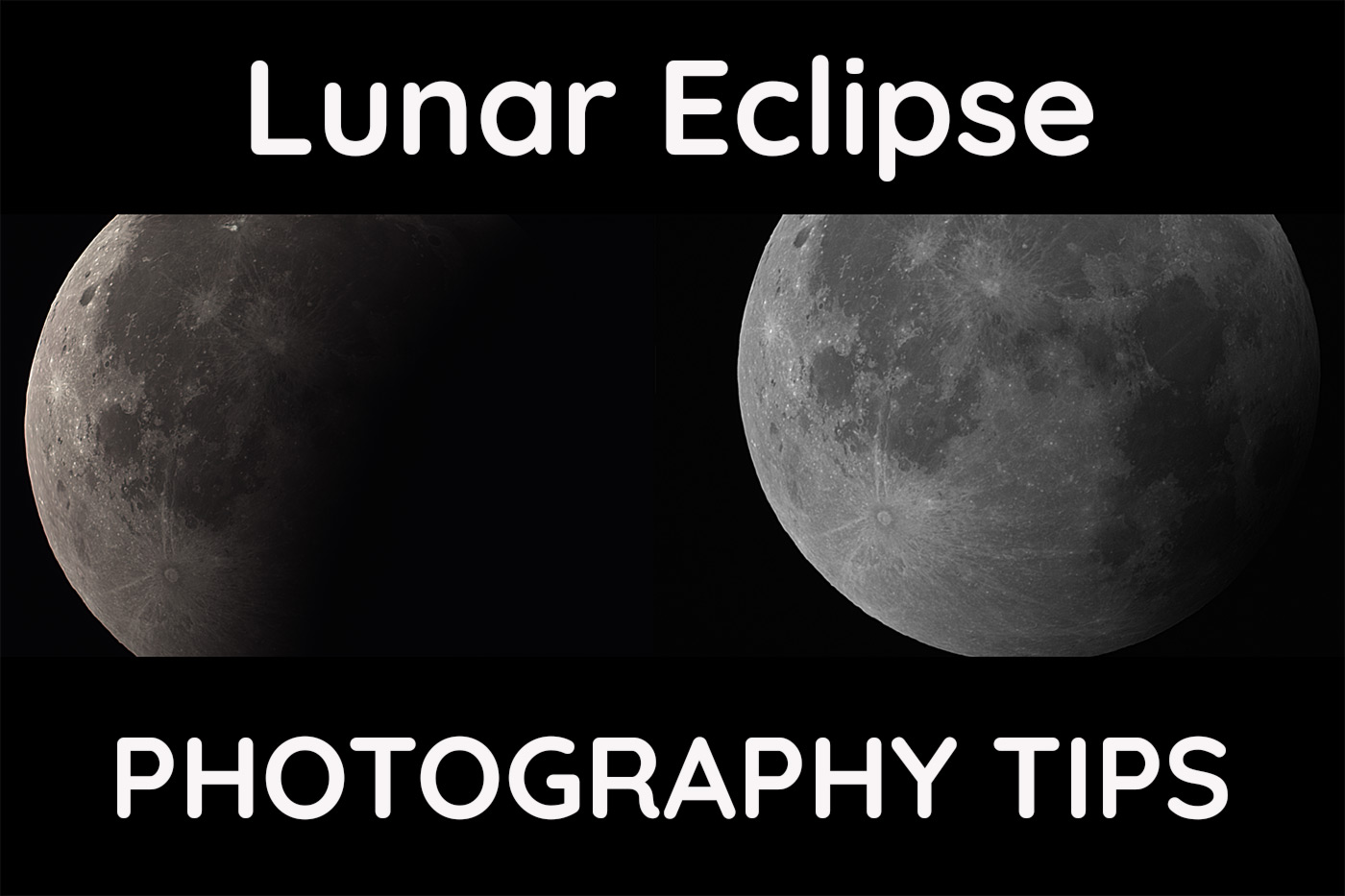
ℹ️ Cover image by Jonathan Penberthy
In this guide updated for 2026 you’ll find lunar eclipse photography tips, including the best camera settings for photographing the Moon, recommended lenses, and useful accessories that will help beginners and more experienced photographers come away with memorable images.
Before diving in, let’s find out more about this quite rare and interesting event.
What is a lunar eclipse?
A lunar eclipse occurs when the Earth passes directly between the Sun and the Moon, causing Earth's shadow to fall across the moon’s surface. The interactive animation below lets you slide to move the Moon's orbit, or you can press the play button to animate why a lunar eclipse happens.
Interactive diagram showing the Moon orbiting Earth and passing through Earth's shadow during a lunar eclipse
180°
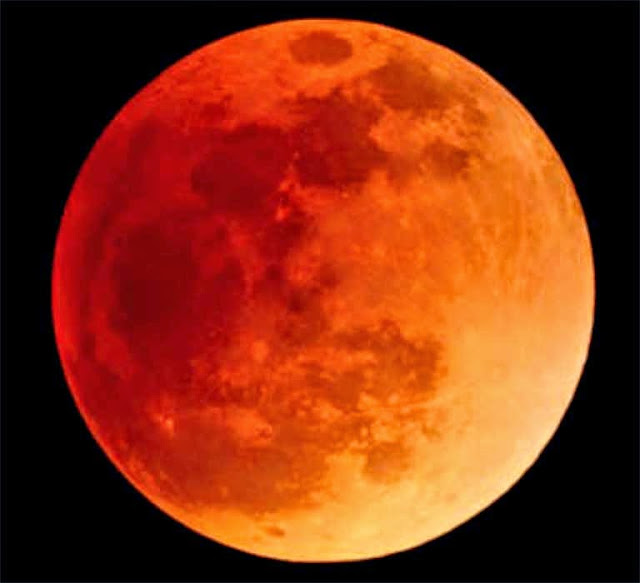
During the deepest eclipse phase, the shadowed portion of the moon may become orange, copper, or reddish, creating contrast with the rest of the surface, which should look great in images.
When Is The Next Lunar Eclipse In The UK?
The next notable lunar eclipse visible from the UK will be on Friday 28th August 2026. According to Timeanddate, the penumbral eclipse begins at 2:23am BST, the partial eclipse begins at 4:12am, and the eclipse reaches peak at around 5:12am, so best prepare for some sleep deprivation.
The partial phase ends just after 6:13am, although exact visibility will vary depending on your location in Britain, and on the horizon.
Royal Museums Greenwich mentions that around 90% of the Moon will be in Earth's umbra at maximum eclipse, which creates a very good opportunity for photographers, assuming we have clear skies.
ℹ️ Unlike a solar eclipse it's completely safe to observe a lunar eclipse without eye protection!
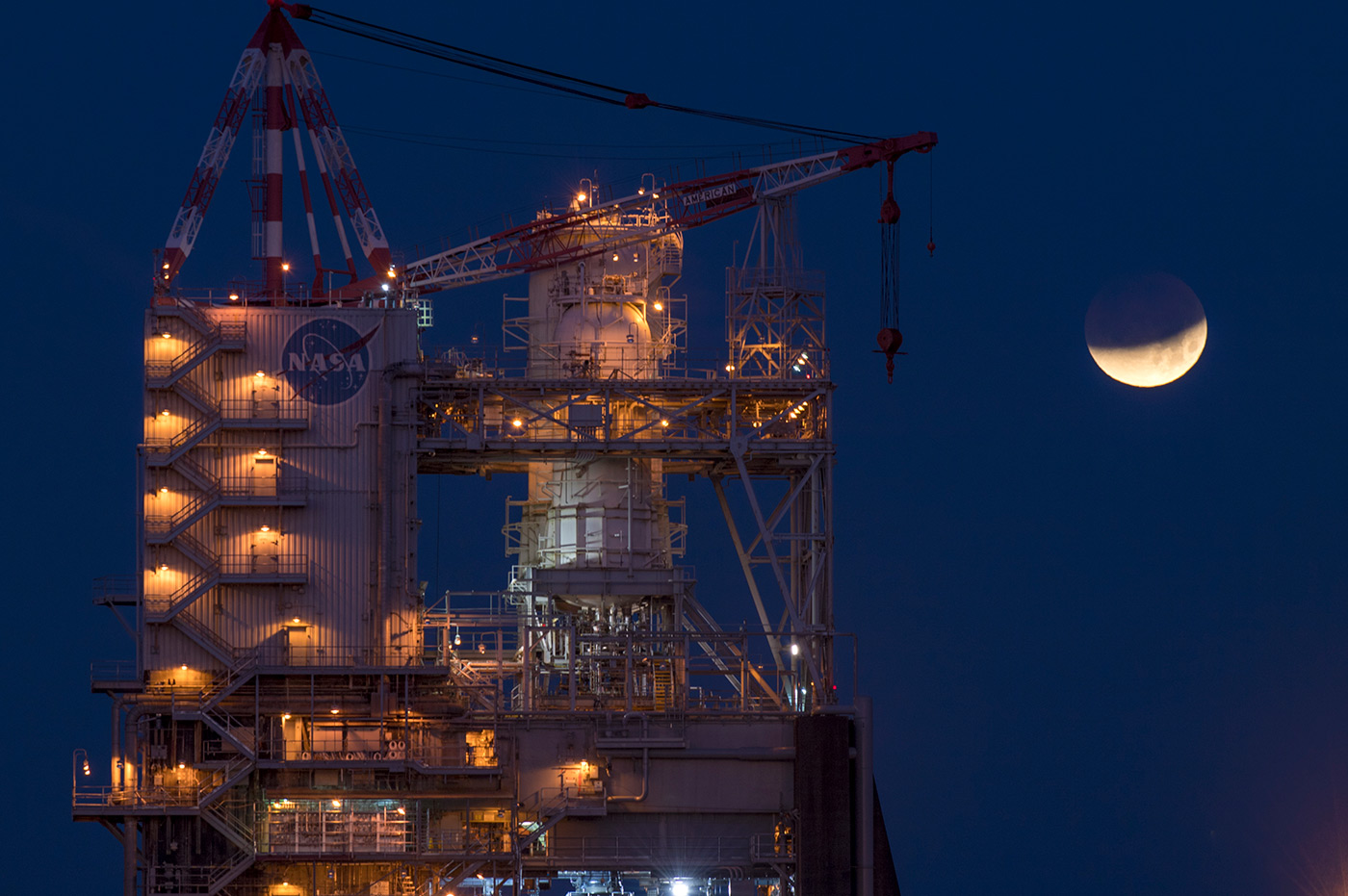
Lunar Eclipse Over A-1 Test Stand ©NASA 2018.
Captured with Nikon D5 and 300mm lens. Camera settings: 1/8 sec. f/6.3. ISO 200
What Is The Best Lunar Eclipse Camera?
Although there are dedicated astro cameras like the OM System OM-3 Astro Camera, which features a modified infrared cut filter, you don't have to have specialist equipment to photograph a lunar eclipse. Any relatively modern mirrorless or DSLR with manual exposure controls can produce excellent results during nighttime.
Mirrorless cameras may have a few advantages when it comes specifically to lunar eclipse photography, thanks to features such as in-body image stabilisation (IBIS), electronic viewfinders and in some cases, a built-in interval timer. These can make it easier to compose, focus and capture shots during an eclipse, with less camera shake or blur to think about when not using a tripod.
DSLRs are also perfectly capable of taking fantastic pictures, especially with features such as an optical viewfinder that uses no battery, and extensive weather sealing to avoid condensation.
ℹ️ You can capture lunar eclipse photos regardless of whether you have a full-frame, APS-C or Micro Four Thirds camera, so sensor size shouldn't put you off getting outside for the event. In fact, smaller sensors will actually work in your favour due to having a crop factor.
For example, Micro Four Thirds cameras have a 2x crop factor and APS-C around 1.5x, which means a 300mm Micro Four Thirds lens provides a field of view similar to a 600mm lens on full-frame. This extra reach helps the Moon fill more of the frame, and you won’t need an extremely large, heavy, or expensive lens.
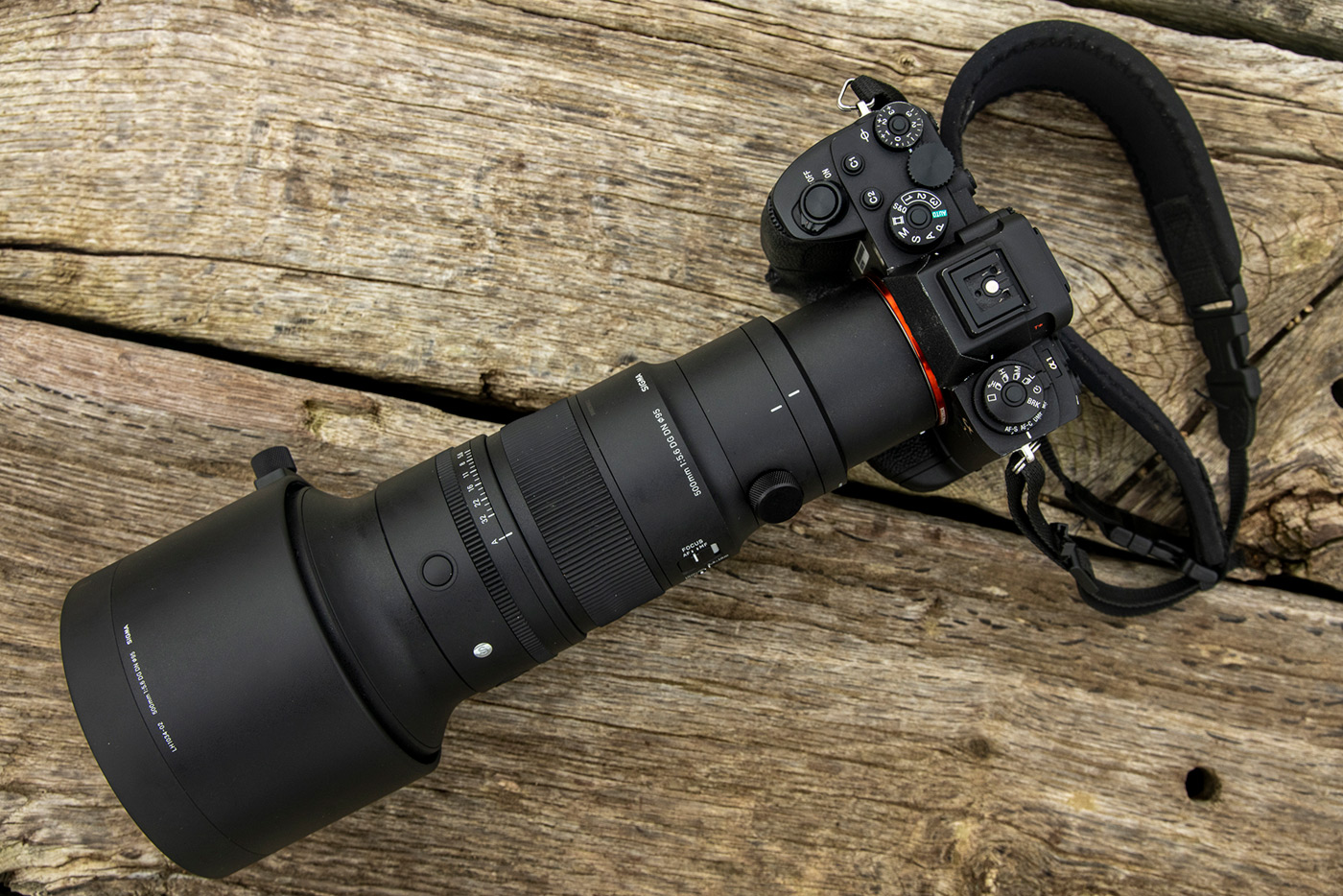
The Sigma 500mm F/5.6 DG DN OS Sports Lens For Sony E would make a great choice
While a sturdy tripod is usually recommended for astrophotography, with some practice most modern mirrorless systems can make handheld lunar photography perfectly achievable. A selection of current cameras and lenses offer up to eight stops of combined stabilisation (sometimes referred to as Sync IS).
To put that into context, eight stops of stabilisation means you can shoot at around 1/2 second shutter speed, while still achieving sharp results with a 500mm super telephoto lens. In practice however, photographing the Moon generally needs faster shutter speeds to freeze the movement as it circles the earth, so stabilisation gives you the ability to shoot handheld, rather than allowing for very slow exposures.
ℹ️ If you'd rather not use a tripod, shooting a continuous burst is a good way to increase your chances of getting at least one or two sharp frames. My shot of the last relatively minor lunar eclipse was shot handheld using a micro four thirds system, and it came out stellar.
The best lens to choose, really depends on the shot you’re after.
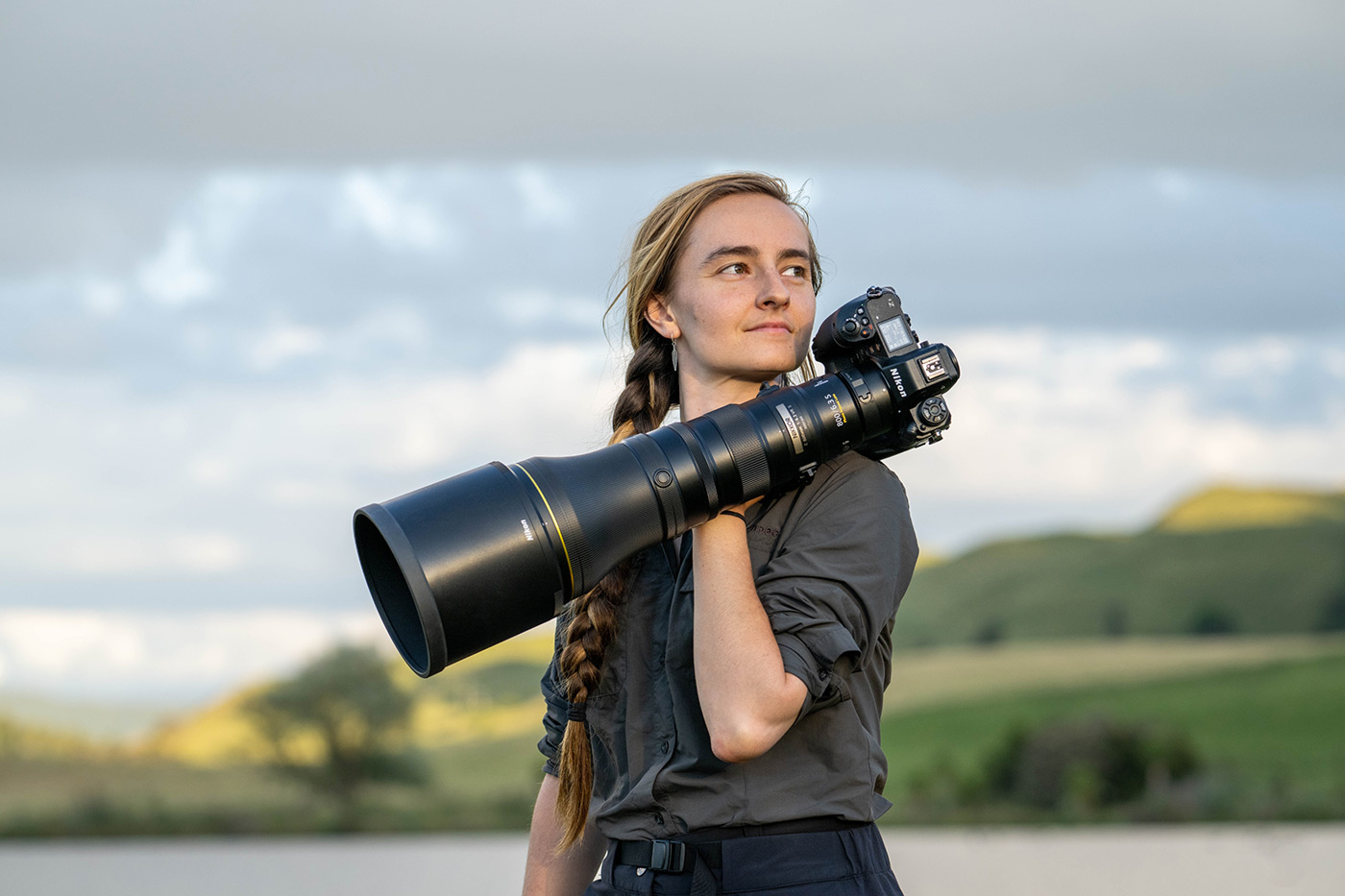
Super, super telephoto Nikon Z 800mm F/6.3 VR S Lens
What is the best lens for photographing the lunar eclipse?
If you want to fill the frame with the Moon, a focal length of around 600mm for a full-frame camera would be ideal. This equates to 400mm on APS-C and 300mm on Micro Four Thirds. Longer focal lengths will generally reveal more surface detail, particularly during the darkest stages of the eclipse.
ℹ️ Not every lunar eclipse image needs to be a close-up though, and you can produce striking landscape or city shots with a wide angle zoom lens. Aim to bring at least two lens options if you are able, so you can mix up your compositions like the examples shown here.
Look for landmarks like a church spire, lighthouse, solo tree or a skyline that can differentiate your image from the crowd.
A few accessories can also make a difference, which we explore next.
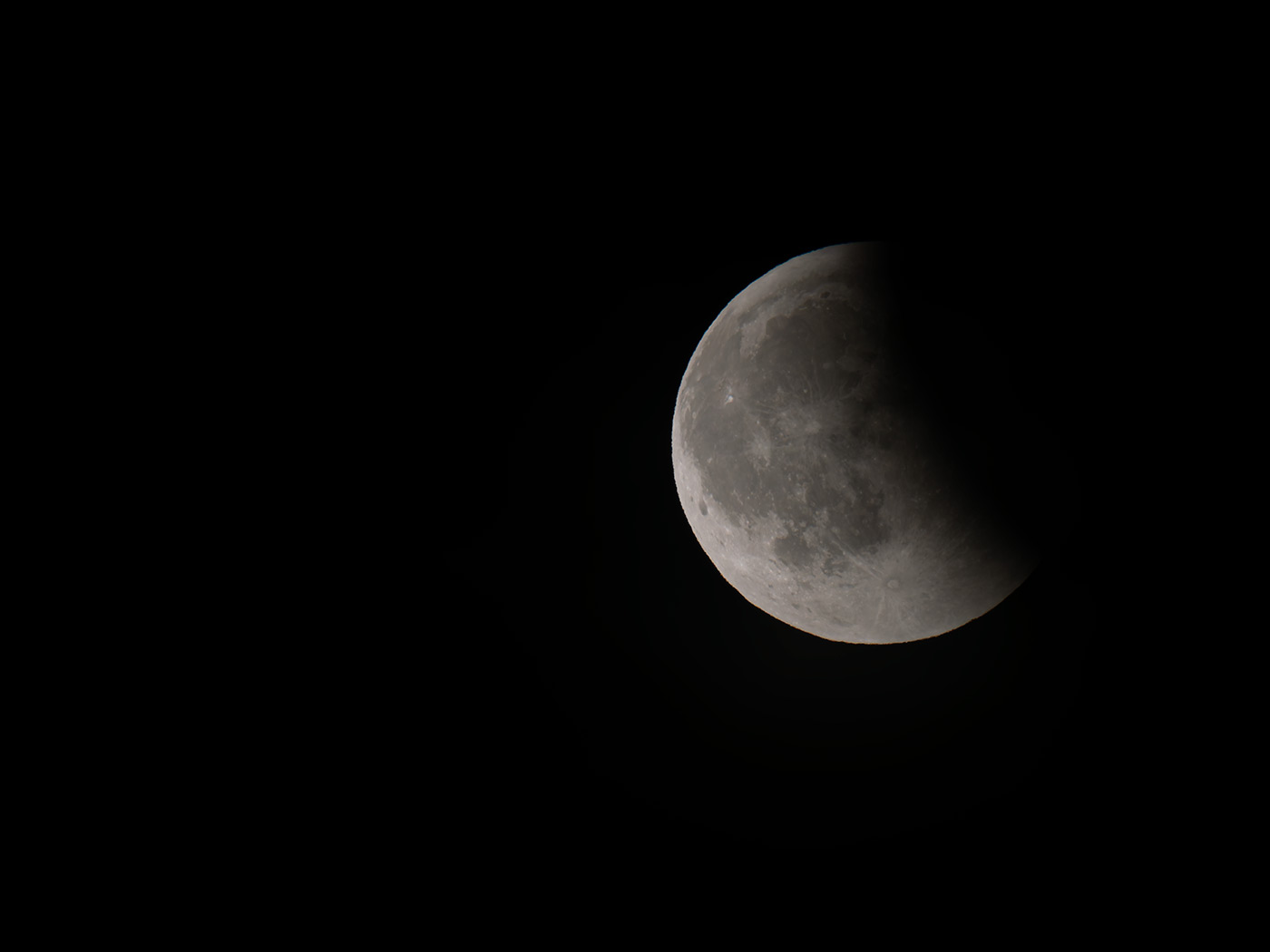
Partial Eclipse of the moon from September 2025 by Nick Dautlich. Shot on OM 1 Mark II with OM System 150-600mm F/5.0-6.3 IS M.Zuiko at 600mm. Camera settings: 1/640 sec. f/6.3. ISO 640
What accessories help for night photography?
As mentioned earlier in this guide, a tripod is deemed essential by many lunar photographers, and we recommend bringing one along even if you end up not using it. A camera remote control will help to eliminate blur from shake when tripod mounted, or you can use a self timer, or intervalometer as some brands call it.
Aside from these, all of the usual camera accessories apply, such as spare batteries, one our two memory cards and a Walkstool Comfort 65 if you enjoy a more relaxing approach to night photography.
Now that you have all of your gear sorted, let’s see how we can capture the best images possible.
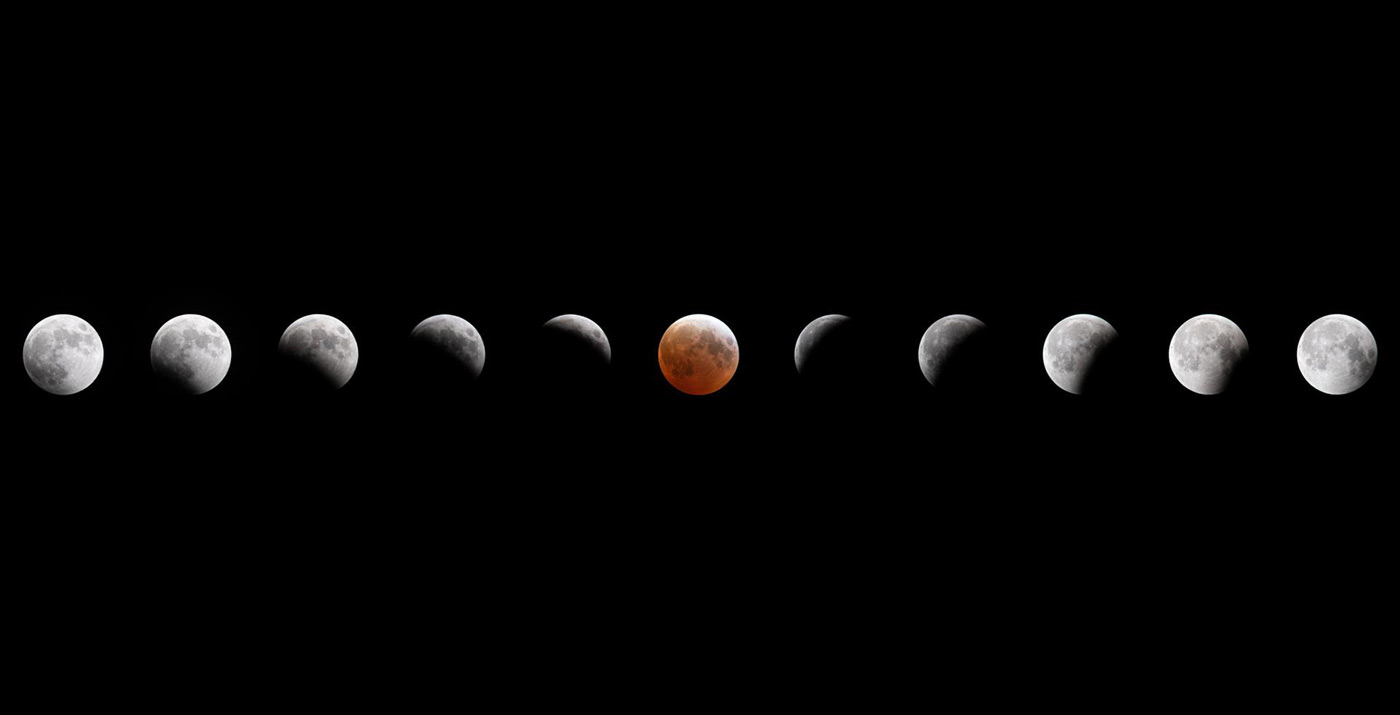
Composite image of total eclipse.
Total Lunar Eclipse & Blood Moon 2025 © NASA = no metadata
What are the best camera settings for a lunar eclipse?
One of the biggest challenges when photographing a lunar eclipse is that the Moon gets considerably darker as it moves into shadow, so don't expect to set your exposure once and forget about it. You'll need to keep adjusting exposure and composition throughout.
Ideally you will turn up early and are able to take a few test shots while the moon is fully illuminated prior to eclipse, in order to establish a good baseline for the best camera settings to capture the lunar eclipse.
A good starting point to try is:
- ISO 100 (or your camera’s base ISO)
- f/8
- 1/125 sec
As the Moon darkens, you'll need to gradually open up your exposure, whether by slowing your shutter speed, raising the ISO, or a combination of both. By the time the eclipse reaches its peak, you may find yourself shooting at something closer to:
- ISO 800 or 1600
- f/5.6 to f/8
- 1/15sec to 1sec
Every eclipse happens slightly differently, so it’s worth checking your images regularly and tweaking your exposure as conditions change. Shooting in Manual mode is usually your best bet too. It stops the camera's metering system from getting confused as the Moon dims, which can lead to inconsistent results from one frame to the next.
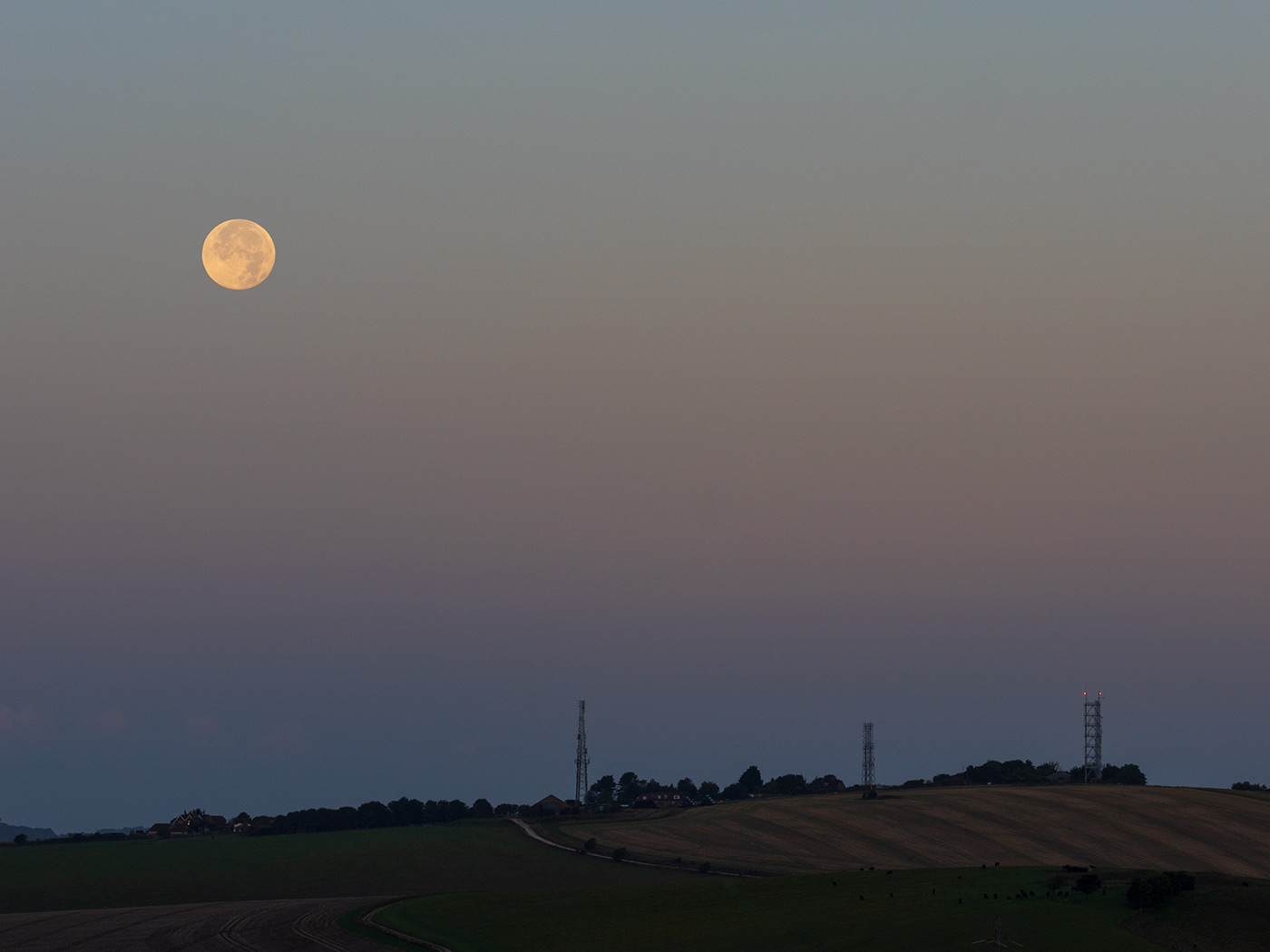
Capturing a full moon within a landscape September 2025 by Nick Dautlich. Shot on OM 1 Mark II with OM System M.Zuiko Digital ED 40-150mm F/2.8 PRO lens at 100mm. Camera settings: 1/160 sec. f/8. ISO 200.
Focus Settings
Most camera Autofocus will be able to handle the Moon while it’s bright, but AF can start to hunt and struggle as the eclipse deepens. The safest approach is to nail your focus early, then switch to manual focus (MF) so focus doesn't drift or hunt later on. Most lenses or the camera body itself will feature an MF/AF switch.
Shoot in RAW
Shooting RAW gives you much more room when it comes to recovering shadow detail and making adjustments like white balance later on. RAW will also provide the best chance of capturing any subtle orange, copper and reddish colours that may appear. If you have a picture profile you particularly like, capture a combination of RAW + JPG to shoot and share without any editing. For my own Moon shots included here, I barely touched the editing, as my usual contrast, shadow and highlight tweaks changed the result far too much.
It's worth bracketing your exposures throughout an eclipse. Taking frames slightly over and under exposed provides a safety net, increasing your chances of holding onto detail in both bright and dark elements.
If your camera has an interval timer or timelapse mode, put it to use and create a record of how the Moon changes as it travels through Earth's shadow. You may end up with amazing results, which you can turn into a timelapse or animation afterwards.
By stitching together a sequence of images into a single frame, you can show the Moon's full journey as a composite image, like the NASA example included.
ℹ️ Jonathan, our resident astrophotographer has written a detailed guide on Lunar imaging, which you can read here, together with an explanation of a trio of Moon images captured in September 2025.
Next up we answer some FAQs that we get from customers.
Frequently Asked Questions
Why Does The Moon Turn Red During An Eclipse?
Although the Moon sits in Earth's shadow during a lunar eclipse, some sunlight still reaches it after passing through Earth's atmosphere. Shorter blue wavelengths are scattered away, while longer red and orange wavelengths bend towards the Moon, giving it the copper or reddish appearance often associated with a lunar eclipse. The exact colour varies from one eclipse to another, depending on atmospheric conditions around the Earth.
Do I Need A Telescope To Photograph A Lunar Eclipse?
No. A telescope can reveal additional detail, but it isn’t necessary to capture a lunar eclipse. Most photographers can achieve excellent results using a DSLR or mirrorless camera paired with a telephoto lens. Even a 300mm lens can produce detailed images, while wider lenses can be used creatively to include the landscape and surroundings.
Can I Photograph A Lunar Eclipse With A 200mm Lens?
Yes. A 200mm lens won’t fill the frame with the Moon, but it can still produce excellent results. The Moon will appear smaller in the frame, which can work particularly well when combined with a landscape, building or foreground subject.
Is A Lunar Eclipse Safe To Photograph?
Yes. Unlike a solar eclipse, a lunar eclipse is completely safe to observe and photograph with the naked eye, binoculars, telescopes and cameras. No specialist solar filters are required because you are photographing reflected sunlight from the Moon rather than looking directly at the Sun.
Clear skies, good luck, and don’t forget to look up from the camera every now and then. If you capture a photograph you’re proud of, we’d love to see it on our socials.
Share this post:
By Nick Dautlich on 17/06/2026

Nick Dautlich
Senior Content Writer and Product Reviewer
Nick Dautlich is the Senior Content Writer and Product Reviewer at Park Cameras, with over 15 years of photography experience. A Sony Imaging Professional and expert reviewer, Nick has worked with major brands such as Canon, Sony and Nikon. His work is also featured on Vanguard World UK’s website, Capture Landscapes, and Shutter Evolve. Nick’s photography includes National Trust projects and magazine covers and he is passionate about landscapes and storytelling. Nick also enjoys hiking and teaching his children about nature. Learn more on his profile page.
Trade in your old equipment
Fast and easy trade in service ensures your old gear is collected efficiently and you are paid quickly! It's very simple to trade in your unwanted photography gear. Just head over to our dedicated Sell or Part Exchange page, fill out the details, and we'll get back to you with an offer for your old gear. Take the cash, or put it towards the cost of your new gear. It's up to you! Find out more
sign up to the newsletter
Keep up to date on the latest photography news, events and offers. Sign up now