- Call us 01444 237070

-
- Back
- Used Cameras
- Used Accessories
- Used Lenses
- Back
- Used Canon Lenses
- Used Nikon Lenses
- Used Fujifilm Lenses
- Used Sony Lenses
- Used Micro 4/3rds Lenses
- Used Leica Lenses
- Used Panasonic Lenses
- Used Pentax Lenses
- Used Samyang Lenses
- Used Sigma Lenses
- Used Tamron Lenses
- Used Tokina Lenses
- Used Voigtlander Lenses
- Used Zeiss Lenses
- Used Hasselblad Lenses
- Used Video
- Used Film Equipment
- Used Stock Alert
- Used Blank Test
- Sell or Part Exchange
- Used Clearance
- Recently Added Used Equipment
- Park Picks
- Faulty
- Trade-In
- Blog
- New in
- Call us
- Contact us
- Stores
- Sign in
- Categories
- Tips & Inspiration
- Reviews
- News
- Events
- Features
- Buying Guides
- Competitions
Is the Nikon D750 the Best Value Full-Frame DSLR
Although mirrorless systems continue to dominate the camera market, many photographers are sticking with, or even returning to, DSLRs. This trend is especially true for beginners, students, and anyone looking to get into photography without breaking the bank.
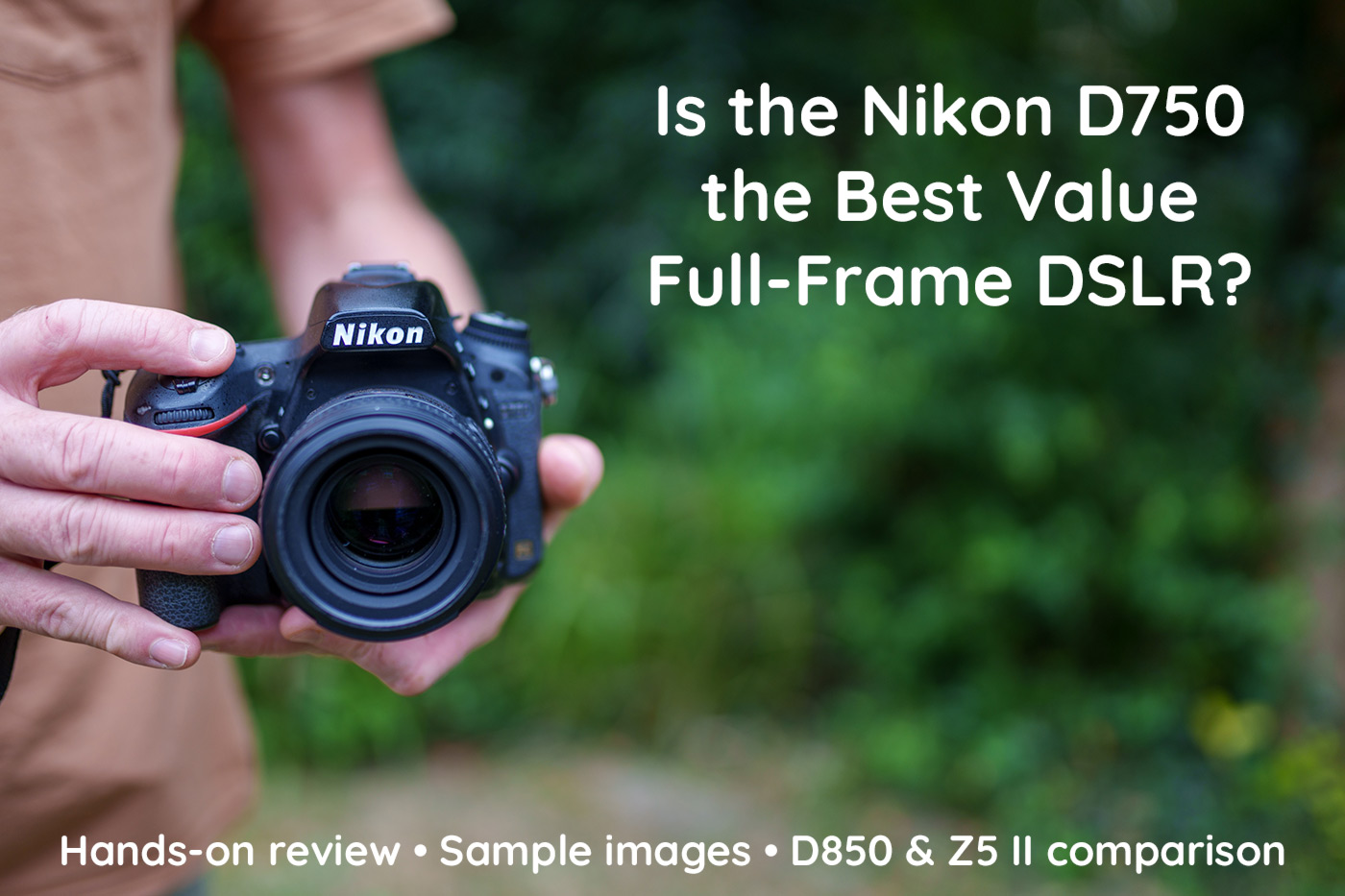
Mirrorless cameras and lenses keep getting pricier, while adding features that not everyone needs. Full-frame DSLRs, meanwhile, have held their appeal, which is why I embarked on this Nikon D750 review, to discover if it is the best value full-frame DSLR in 2026.
The camera checks a lot of boxes that photographers think about. It has a full-frame 24MP sensor with excellent dynamic range, solid ergonomics and handling, as well as pro-level features, inherited from the D810.
Whether you're a beginner after a budget-friendly first camera, ready to move to a full-frame system, or just interested in why DSLRs hold their value so well, this hands-on review explores how it handles subjects such as landscapes, sunsets, wildlife, and everyday photography.
ℹ️ Right click to enlarge images
Pros and cons
Pros
- Excellent value, used from around £299.00, versus £1,799.00 RRP new
- Full-frame 24.3MP sensor with strong dynamic range and colour rendering
- Solid, weather-resistant build with premium feel
- Outstanding battery life, around 1,230 shots per charge
- Comfortable, well-balanced handling with comprehensive physical controls
- 51-point AF system, capable with faster subjects when used correctly
- Bright, lag-free optical viewfinder
- Access to a huge, affordable native F-mount lens system
- All used stock graded and warrantied when bought from a specialist retailer
Cons
- Limited buffer capacity for fast-paced genres like sport and wildlife
- AF points clustered towards the centre of the frame
- No 4K video, and relatively slow Live View autofocus
- Larger and heavier than a comparable mirrorless body
- Discontinued, so only available second-hand, requiring careful buying checks
Let’s continue with some background about this popular Nikon DSLR camera.
A Brief History
Announced in September 2014, the D750 rapidly became a very popular mid-range model for Nikon, bridging a gap between the entry-level D610 and professional D810. It also brought firsts to Nikon cameras of the era, including its tilting LCD, which we subsequently know makes it far easier to compose difficult high and low shooting angles.
Additionally, the camera included an advanced 51-point Multi-CAM 3500 FX II AF system derived from the D810, allowing even beginner photographers to capture tricky subjects more easily. I talk about this later, but in the meantime, let's look at how much it costs.

Sample 01 low light close-up during sunset with AF-S Nikkor 24-70mm f/2.8E ED VR at 70mm. Camera settings: 1/200 sec. f/2.8. ISO 100
How much Does it Cost?
You can buy a used Nikon D750 from just £299.00, which is excellent value considering in 2014 it launched with an RRP of £1,799.00. By comparison, the Z5 II is the current equivalent mid-range mirrorless camera, which has an RRP of £1,599.00 new, or from about £1100.00 for a used model.
You also have to factor in the cost of lenses. For this review I shot with a used Nikon AF-S Nikkor 24-70mm f/2.8E ED VR lens (from around £399.00), and a Used Nikon AF-S Nikkor 50mm f/1.4G (from £100.00). This gives you a full-frame body, with a standard zoom, and a fast prime lens for under £1000.00, making even better value. But should you buy used cameras?
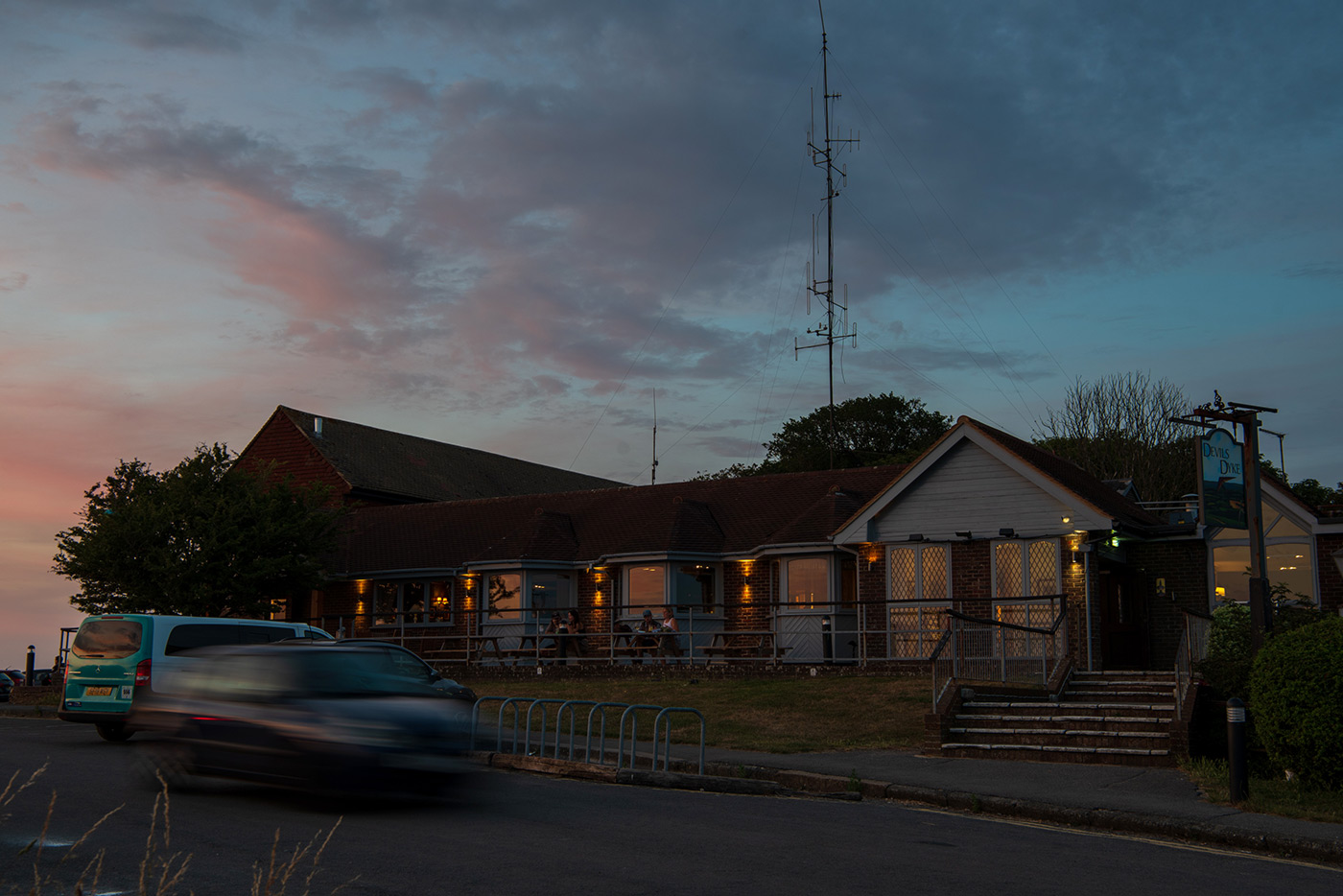
Sample 02 low light motion blur with AF-S Nikkor 24-70mm f/2.8E ED VR at 44mm (tripod mounted) Camera settings: 1/5 sec. f/8. ISO 100
Should you buy a used camera?
Since it is discontinued, it's only available to buy second-hand. However, before buying one, be sure to check the serial number against the D750 Service Advisory to see whether the shutter unit needs servicing. If it does, it will be repaired free of charge, even if the warranty has expired.
This is one of the benefits of shopping from a retailer like Park Cameras. All second-hand equipment is checked, serviced if necessary, and comes with a warranty. It's all graded too, so you know exactly what you're getting, whether that's like new, well used, or somewhere in between. You can even trade in your unwanted camera gear and use the money to offset against a purchase. It's really easy, but back to the review…
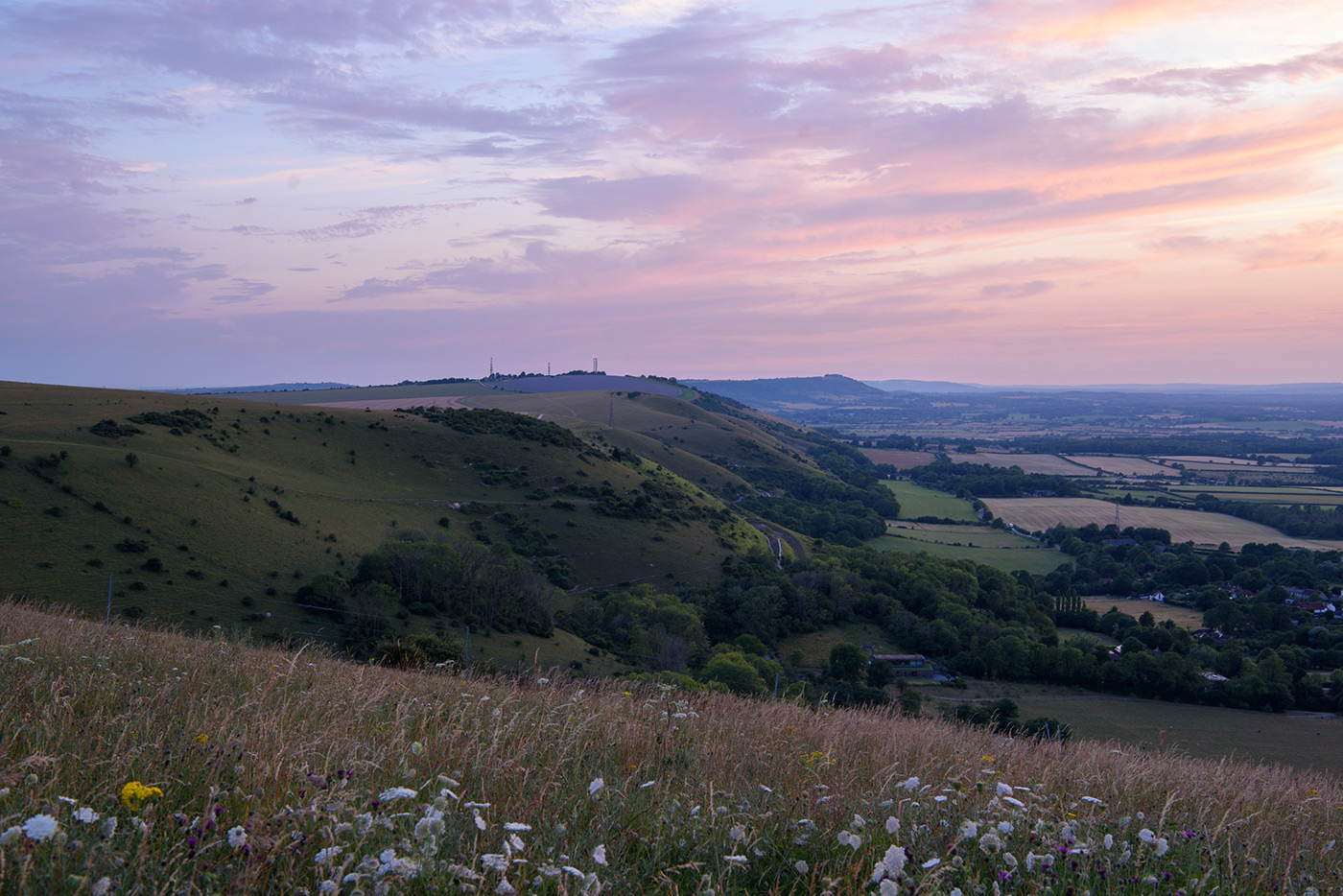
Sample 03 landscape scene at sunset with AF-S Nikkor 24-70mm f/2.8E ED VR at 42mm (tripod mounted) Camera settings: 1/6 sec. f/8. ISO 100
DSLR vs Mirrorless
This enduring debate continues without any real conclusion. DSLRs offer some advantages that include great ergonomics, durable battery life and more reasonable prices, whereas mirrorless cameras come with the latest technology, particularly for video recording.
While DSLRs like this one offer excellent value, you do lose out on sensor-based autofocus and AI subject detection, along with a real-time exposure preview. In exchange, you gain an optical viewfinder, which is lag-free and feels more natural to many photographers.
We explored this question in more detail in the mirrorless camera vs DSLR buying guide to help your decision making. Suffice to say that this camera is popular for several reasons, which we look at next.

Sample 04 close-up of a chicken for dreamy background separation with AF-S Nikkor 50mm f/1.4G Camera settings: 1/800 sec. f/1.4. ISO 100
Is the Nikon D750 still good in 2026?
As mentioned earlier, this camera checks a lot of boxes for beginners and enthusiasts. To begin with, it's quite affordable for a full-frame camera with 24 megapixels. It has outstanding battery life of around 1,230 shots per charge, which means you won't need multiple spare camera batteries, unlike with some smaller mirrorless bodies. You can complement the included battery with a Hahnel HL-EL15 Replacement for EN-EL15 Battery for £49.00 and that should be all that's needed.
While not considered a true professional camera, it's definitely capable of capturing professional images. Additionally, the body is made with tough, lightweight, and weather-resistant materials, including carbon-fibre-reinforced polymer and magnesium alloy.
The components are also durable, such as the shutter unit, which has a life expectancy of 150,000 actuations, although many users have racked up far higher shutter counts over years of service. By comparison, the pro-level Nikon D850 shutter is officially rated for 200,000 actuations. To check, upload an unedited picture to Camera Shutter Count and it will let you know how many shots your camera has taken.
You can learn more and weigh up whether the D750 or the D850 suits you better in our hands-on review, where we explore is the D850 is still worth buying? Back to the smaller model, where we look at the key features next.
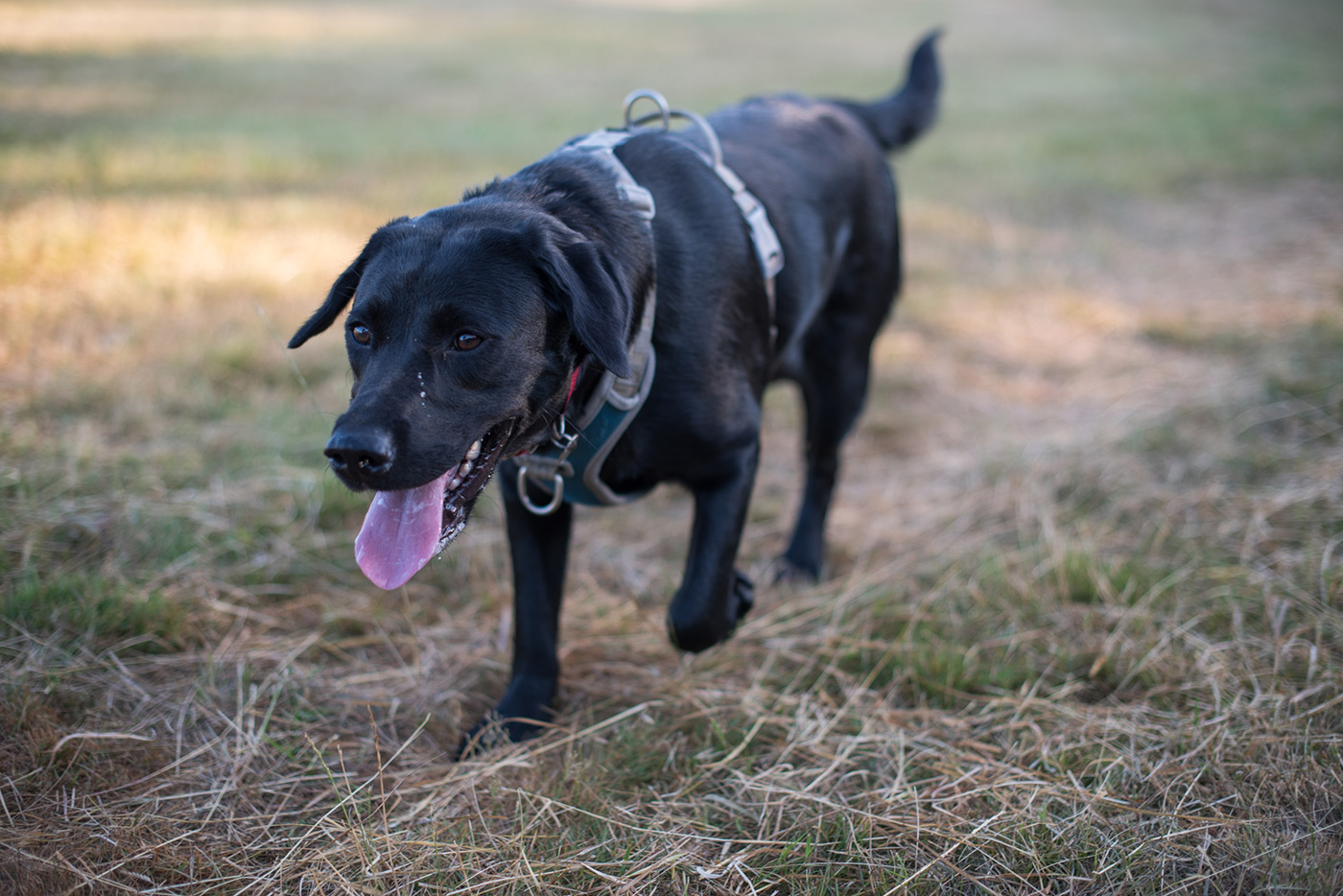
Sample 05 autofocus kept this moving dog sharp with AF-S Nikkor 50mm f/1.4G Camera settings: 1/800 sec. f/2.0 ISO 200
Key features
Despite being over a decade old, it has a lot of contemporary technology, uses SD memory cards, and records video. In summary, key features include:
- 24.3MP FX (Full-Frame) CMOS sensor paired with the EXPEED 4 image processor
- Multi-CAM 3500 FX II 51-point AF system (with 15 cross-type points) with low-light AF to -3EV
- Burst shooting to 6.5fps at 24MP
- 3.2-inch tilting Vari-angle LCD monitor
- Full HD 1080p video at up to 60fps with simultaneous uncompressed HDMI output
- Dedicated headphone and mic jacks
- Shooting features such as in-camera time-lapse
- Solid build quality with good handling, which we explore next
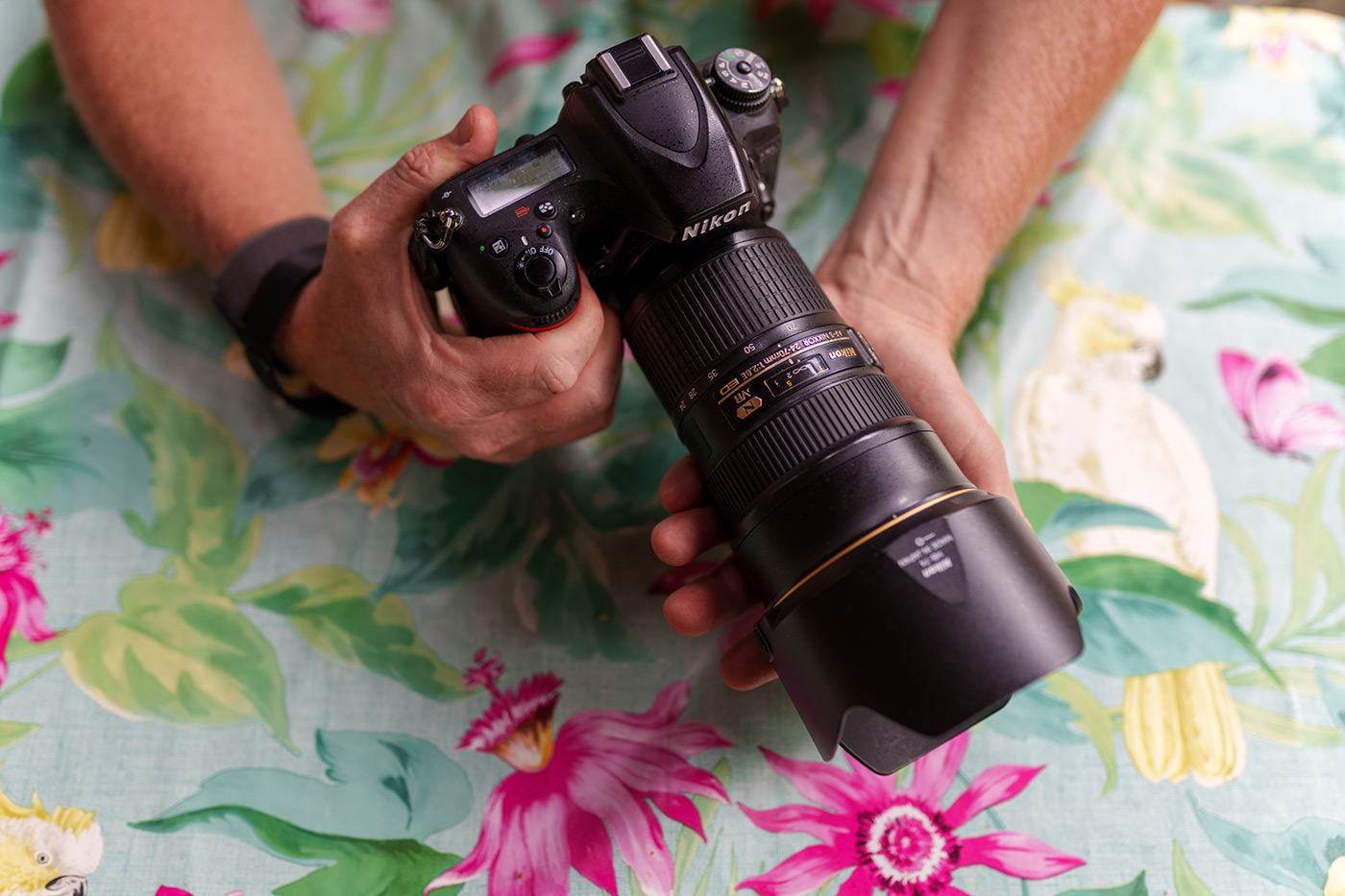
Real-World Handling: Is it Really That Good?
When picking up the camera for the first time, you immediately feel the heft, which equates to about 840 grams. Despite this weight, it doesn't feel heavy, but instead feels very well balanced. The solid body and rubberised texture on the deep grip sit comfortably in the hand, with plenty of room between the lens and your fingers. This is one of my biggest gripes with some smaller mirrorless bodies, which can cause your fingers to bump into the lens.
Aside from how it feels, there are comprehensive and easy-to-navigate controls. Front and rear command dials allow for shutter speed and aperture adjustment, and there are dedicated buttons for functions like ISO, white balance, and AF modes. There's also a dedicated exposure compensation button, although it requires pressing as well as rotating the rear dial, which is nearly, but not quite, perfect!
The rear panel feels similar to modern Nikon mirrorless cameras, with an info button for quick menu access, and various other controls, including the multi-selector pad for AF point selection and menu navigation. This means you can hone your skills while developing muscle memory that can be carried across to newer cameras when needed.
Overall, it handles exceptionally well, with a bright optical viewfinder experience that shows you the unprocessed, real-time view of a scene, without refresh rates or noise.
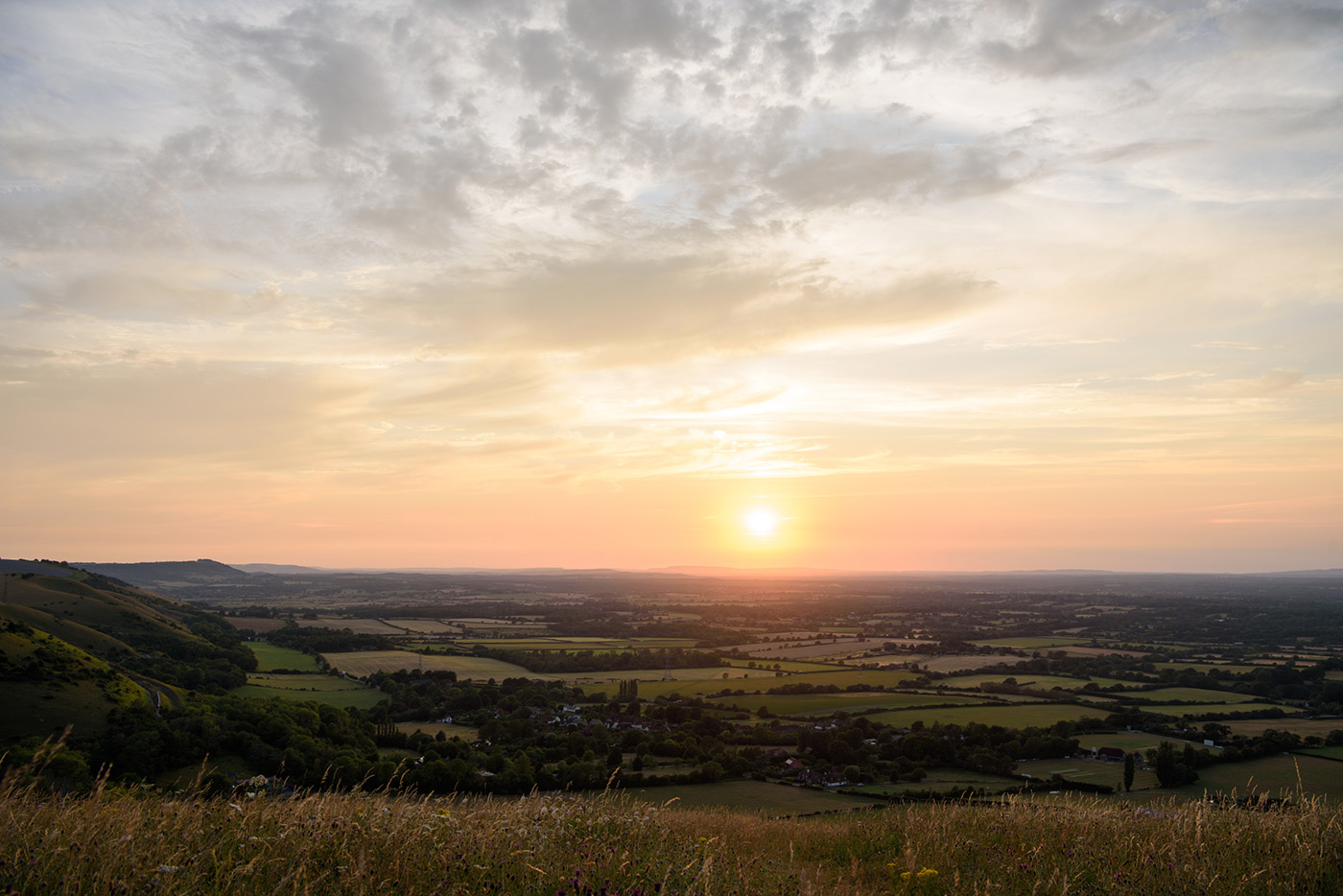
Sample 06 natural colour reproduction and wide dynamic range landscape image with AF-S Nikkor 24-70mm f/2.8E ED VR at 30mm (tripod mounted) Camera settings: 1/60 sec. f/8. ISO 100
Shooting Experience
As an evolved Nikon DSLR, it offers a completely different shooting experience from a smartphone or compact camera. It quickly becomes intuitive to raise it up to your eye to shoot, which is helped by the comfortable handling and easy controls. You hear the mirror flipping up and down, combined with the click of the shutter curtain, which will appeal to some, but does make silent shooting impossible.
Although the rear LCD articulates, with an optical viewfinder and quite slow Live View AF, this is a camera that's better when shot through the viewfinder, not the rear screen, except for slow, considered subjects like landscapes, interiors, or city skylines, for example.
Menus are similar to newer Nikon cameras and will be familiar to existing users, while being relatively quick to learn for newcomers. I shot mainly in Manual mode with Auto ISO, which is an excellent way to hand off some control to the camera while still being able to make key exposure choices.
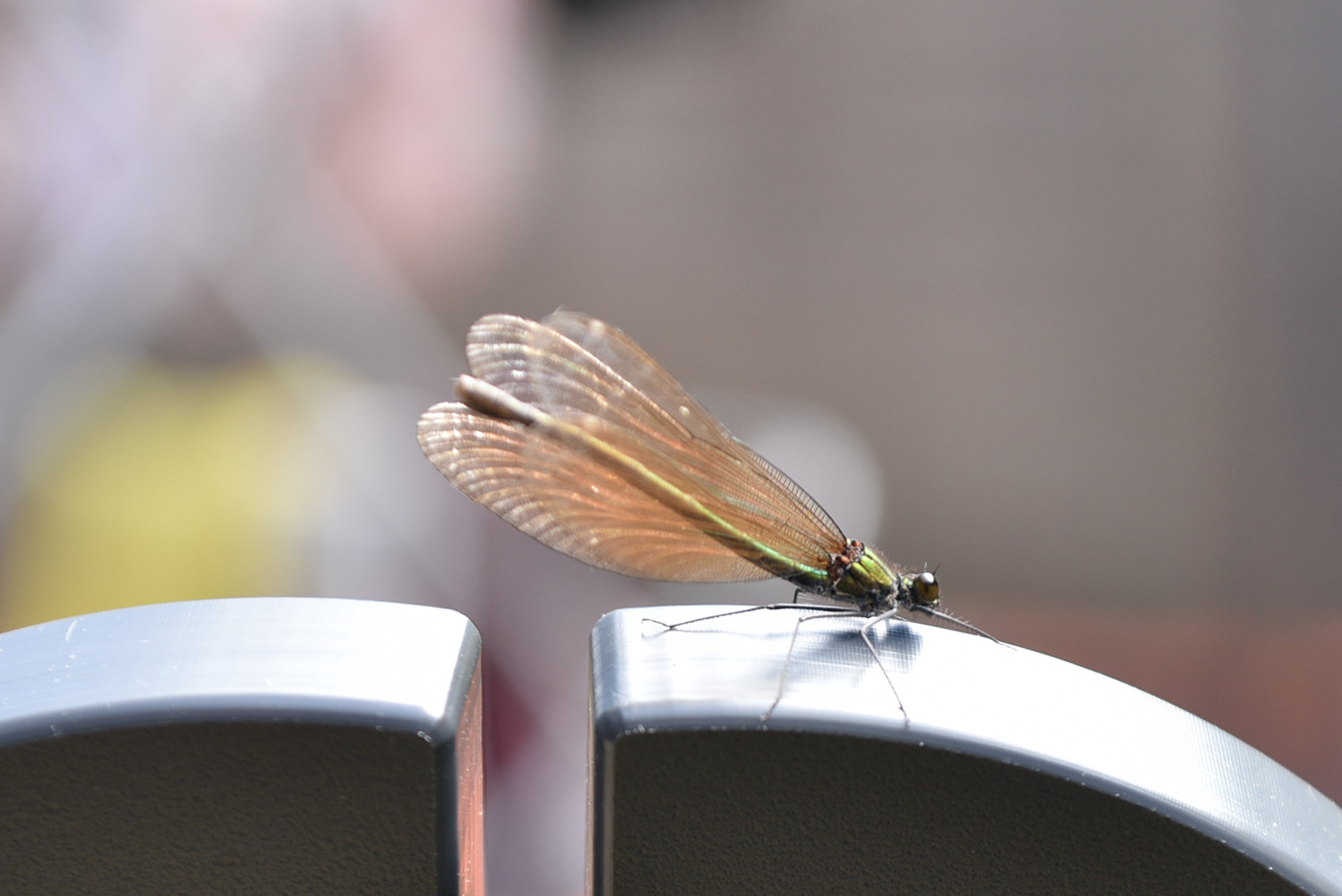
Sample 07 fine detail and natural colour show the camera is capable of close-up photography. with AF-S Nikkor 24-70mm f/2.8E ED VR at 70mm. Camera settings: 1/200 sec. f/4. ISO 400
Burst Shooting and Buffer Performance
This DSLR can shoot at up to 6.5fps, which is perfectly usable for most subjects. However, a consideration for fast-paced genres such as wildlife and sports is the slightly limited buffer capacity.
The buffer tops out at 40 frames for Large/Fine JPEG and about 14 shots for 14-bit RAW. In practice, you can still capture decisive moments, but will need to stay in the moment more than when using modern aids such as pre-buffering or faster burst rates.
If you need raw shooting power, the D850 is a better option, capturing 51 frames when shooting 14-bit lossless compressed RAW, and up to 170 frames when shooting 12-bit lossless compressed RAW.
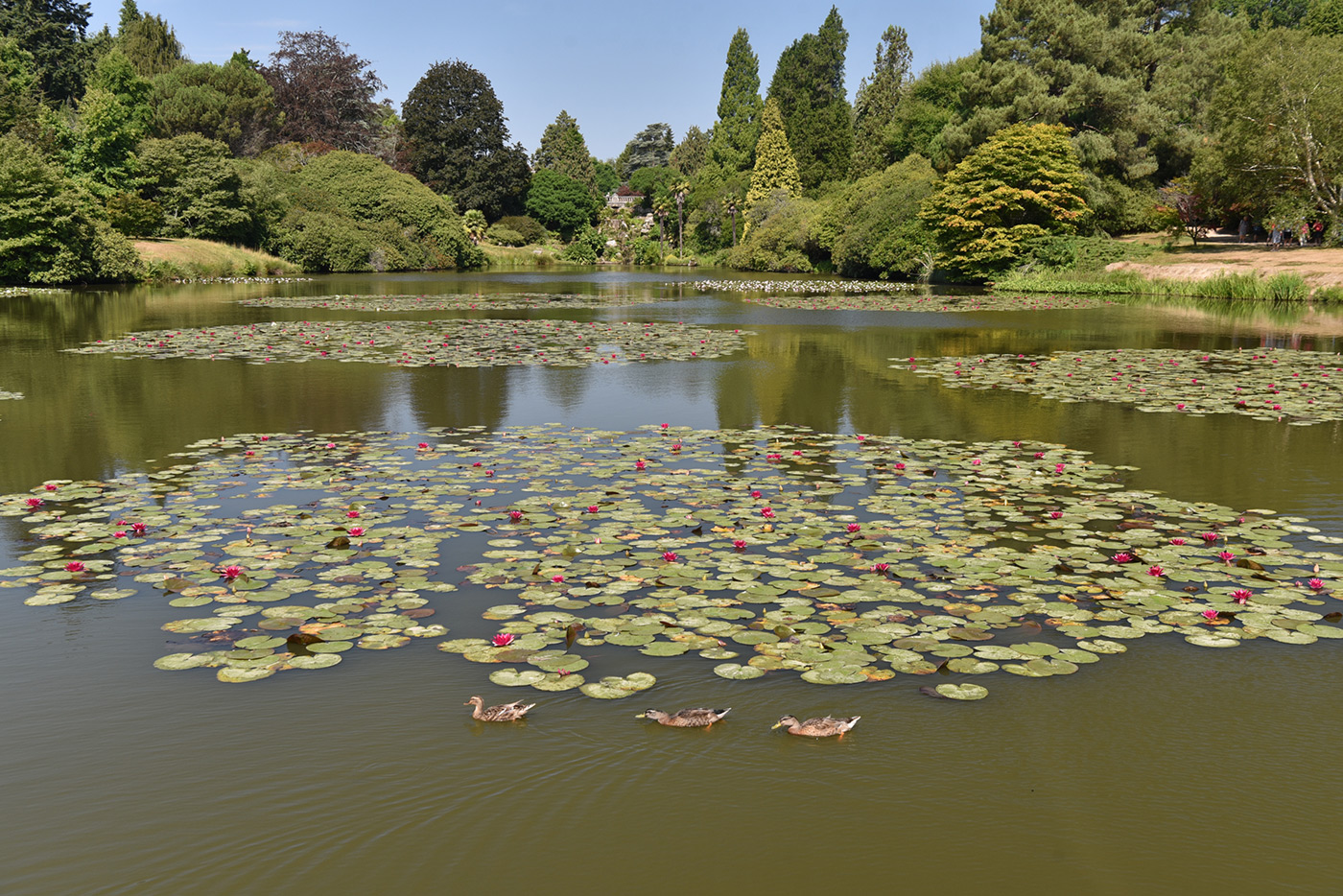
Sample 08 high-contrast scene, retaining detail in bright water lilies and shaded trees with AF-S Nikkor 24-70mm f/2.8E ED VR at 38mm. Camera settings: 1/250 sec. f/8. ISO 200
How is Autofocus?
As an older camera, you might expect AF to be lacking, but there is a variety of autofocus modes to choose from, including an early iteration of Nikon's now well-established 3D tracking. While none of the AF modes are quite as effective as cutting-edge focus systems from the Z range, I was able to get sharp results of various faster subjects, like running dogs, geese, and ducks.
The AF points are clustered towards the centre of the frame, unlike modern mirrorless cameras, which can cover virtually the entire sensor. This is worth bearing in mind, but it's overcome by using single-point AF in single-shot mode, focusing then recomposing before you shoot.
If you're coming from a smartphone or modern mirrorless camera, there is a learning curve, but after refining your skills and learning techniques such as moving a focus point manually, it quickly becomes second nature. Once mastered, if you move to a mirrorless system, you'll be quicker at focusing and recomposing, which is a useful skill for lots of subjects.
This leads nicely to image quality, another of the camera's strengths.

Sample 09 colour science is rich, with accurate colours while retaining detail in the flower petals with AF-S Nikkor 50mm f/1.4G Camera settings: 1/100 sec. f/2.2. ISO 100
What is image quality like?
At base ISO 100, the sensor captures around 14 stops of dynamic range, giving you plenty of room to push or pull shadow and highlight detail in post. Most of the sample images in this review are straight-out-of-camera JPEGs, giving you an idea of how the camera performs naturally, however, the low-light landscapes and sunset photographs are processed from RAW files. I found the RAW files very easy to work with and was able to raise shadows by around 3-4 stops without introducing lots of unwanted noise.
A useful feature aiding image quality is Highlight-Weighted Metering, which is also inherited from Nikon's professional DSLRs. This retains more highlight detail when shooting high-contrast scenes by exposing towards the brightest areas of the scene, which is especially useful for things like wedding dresses, white subjects, or bright skies.
Generally you can expect rich, accurate colours, and fine detail in a variety of lighting conditions and scenes. Nikon's colour science from this era is well developed, and despite rendering being slightly cooler than Canon DSLRs of this time, it does produce lovely sunset tones and varied natural greens.
Skin tones are also accurate, making it an excellent all-rounder for anything from landscapes to portraits, with results that are detailed enough for large prints and cropping.
To get the most from it, you should shoot in RAW and pair it with high-quality Nikon F-mount lenses. Do that, and this camera is perfectly capable of producing punchy, pleasing images that hold their own against contemporary bodies.
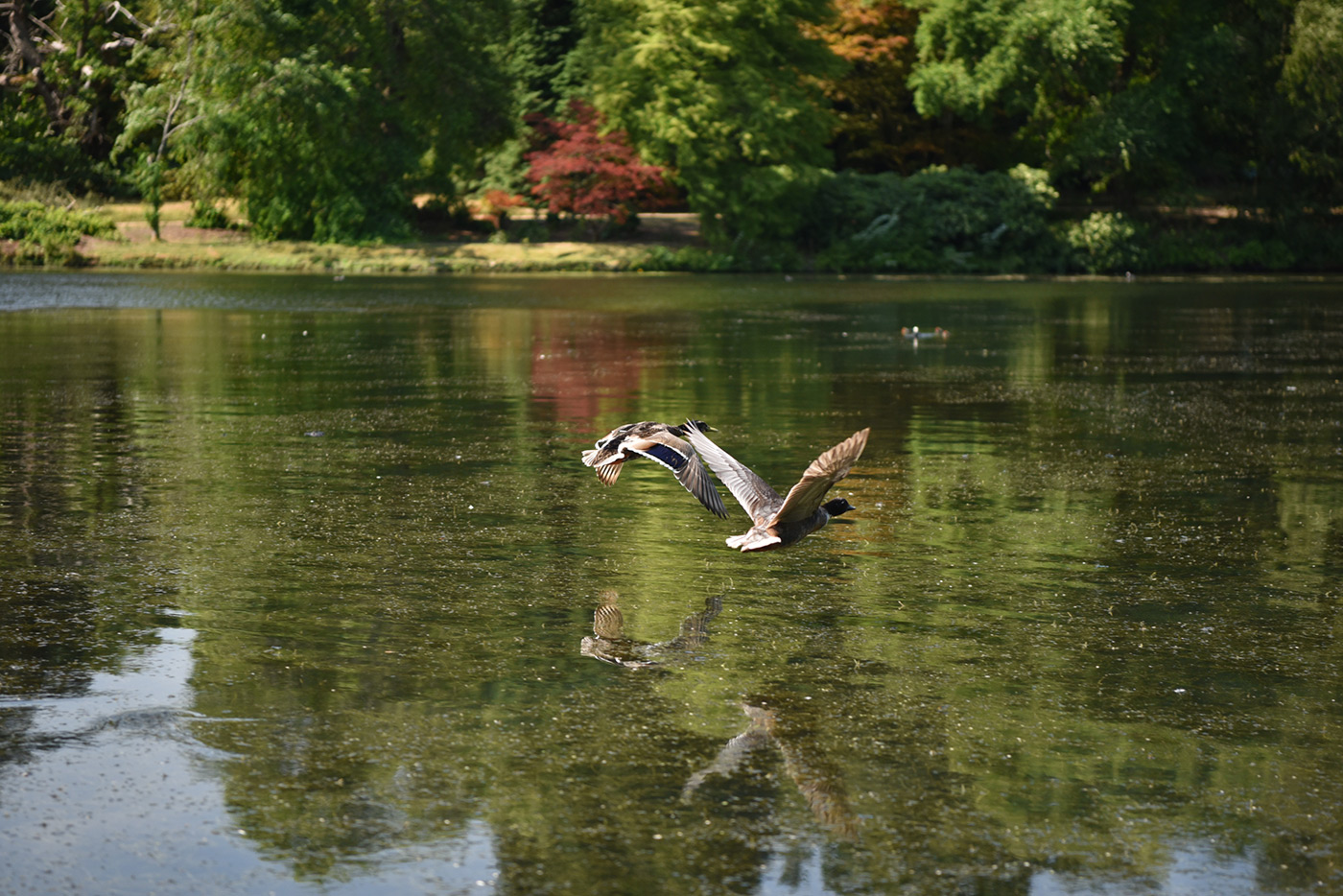
Sample 10 trying to capture birds in flight, where timing and technique are as important as AI-assisted autofocus with AF-S Nikkor 24-70mm f/2.8E ED VR at 70mm. Camera settings: 1/1600 sec. f/2.8. ISO 450
Which Full-Frame Nikon Camera Offers the Best Value?
Compare the Nikon D750 with the D850 and Z5 II to see how they differ in price, performance, and key features.
|
|
D750 |
D850 |
Z5 II |
|
Used body price (Very Good Boxed) |
£499.00 |
£1,150.00 |
£1,247.00 |
|
Sensor |
24.3MP Full-frame CMOS |
45.7MP Full-frame BSI CMOS |
24.5MP Full-frame BSI CMOS |
|
Image processor |
EXPEED 4 |
EXPEED 5 |
EXPEED 7 |
|
Native ISO |
100–12,800 |
64–25,600 |
100–64,000 |
|
Dynamic range |
Excellent |
Outstanding |
Excellent |
|
Continuous shooting |
6.5fps |
7fps (9fps with grip) |
14fps RAW / 30fps JPEG (electronic) |
|
RAW buffer |
Approx. 14 x 14-bit RAW |
51 x 14-bit RAW (170 x 12-bit) |
Hundreds (depending on card/settings) |
|
Autofocus |
51-point DSLR AF |
153-point DSLR AF |
299 focus points in auto-area AF with AI subject detection (9 subjects) including Eye AF |
|
Low-light AF |
-3EV |
-4EV |
-4EV |
|
In-body stabilisation |
No |
No |
7.5-stop IBIS |
|
Viewfinder |
Optical pentaprism |
Optical pentaprism |
3.69 M-dot electronic EVF |
|
Rear screen |
3.2” tilting LCD |
3.2” tilting touchscreen |
3.2” fully articulating touchscreen |
|
Video |
Full HD 1080p 60fps |
4K UHD 30p |
4K UHD 60p (crop) / 4K 30p full-width |
|
Memory cards |
Dual SD (UHS-I) |
XQD/CFexpress + SD |
Dual SD UHS-II |
|
Battery life (CIPA) |
Approx. 1,230 shots |
Approx. 1,840 shots |
Approx. 380 shots |
|
Weight (with battery/card) |
840g |
1,005g |
700g |
|
Weather sealing |
Yes |
Professional level |
Yes |
|
Lens ecosystem |
Extensive Native F-mount options |
Extensive Native F-mount options |
Growing Z-mount + FTZ II compatible with F-mount |
|
Best for |
Beginners, enthusiasts, students, value hunters |
Professionals, wildlife, landscape |
Hybrid stills/video, travel, creators |
|
Biggest strength |
All-rounder offering incredible value |
Resolution and performance |
Modern AF, burst rates, video and stabilisation |
|
Biggest compromise |
Older AF and video |
Cost and weight |
Battery life and EVF |
|
Value for money |
★★★★★ |
★★★★☆ |
★★★★☆ |
Lens Choice and Compatibility
One of the biggest advantages of buying a DSLR of this kind is the access it provides to Nikon’s extensive F-mount lens system. There are decades worth of older F-mount lenses on the used market, including everything from inexpensive AI and AI-S manual-focus options to professional telephoto zooms with stabilisation for wildlife.
Most can be found at a fraction of the original cost, and while DSLR lenses can be adapted to Z-mount camera bodies, native compatibility is one of the easiest and most budget-friendly ways into such an accomplished full-frame system.
A great example is the Nikon AF-S Nikkor 50mm f/1.4G, which I used for this review. It's a used bargain that punches well above its price tag, and you can read our full hands-on thoughts in the dedicated lens review.
Video capabilities
I didn’t shoot any video, but it is a good choice if you’re getting started with moviemaking, offering simultaneous clean, uncompressed HDMI output to an external recorder. The body also includes dedicated headphone and microphone jacks, and records Full HD 1080p video at up to 60fps. However, the lack of 4K recording and relatively slow Live View autofocus may steer aspiring content creators towards a modern Nikon Z-series camera instead.

Sample 11 pleasing background blur and subtle colour transitions isolate subjects with AF-S Nikkor 24-70mm f/2.8E ED VR at 70mm. Camera settings: 1/250 sec. f/2.8. ISO 280
Verdict
So, after spending a few days with this popular camera, is it the best value full-frame DSLR you can buy in 2026? Yes, quite possibly. What was maybe most noticeable was just how premium it feels, and not at all like a sub-£500 camera.
There are, of course, some shortcomings to weigh up, including a limited buffer, no 4K video, older focus technology, and the size and weight associated with DSLRs. If value matters less to you than these features, you could consider one of Nikon's mirrorless bodies instead, which are pricier but offer more contemporary features.
For photographers who are keen to capture high image quality, far better than any phone offers, and enjoy good handling as well as affordability rather than needing the latest technology, it's one of the best ways into full-frame photography with Nikon.
Feeling tempted? Take a look at our used Nikon D750 options or explore the full range of second-hand Nikon cameras, which are all graded, warrantied, and ready to shoot.
Share this post:
By Nick Dautlich on 20/08/2026

Nick Dautlich
Senior Content Writer and Product Reviewer
Nick Dautlich is the Senior Content Writer and Product Reviewer at Park Cameras, with over 15 years of photography experience. A Sony Imaging Professional and expert reviewer, Nick has worked with major brands such as Canon, Sony and Nikon. His work is also featured on Vanguard World UK’s website, Capture Landscapes, and Shutter Evolve. Nick’s photography includes National Trust projects and magazine covers and he is passionate about landscapes and storytelling. Nick also enjoys hiking and teaching his children about nature. Learn more on his profile page.
Trade in your old equipment
Fast and easy trade in service ensures your old gear is collected efficiently and you are paid quickly! It's very simple to trade in your unwanted photography gear. Just head over to our dedicated Sell or Part Exchange page, fill out the details, and we'll get back to you with an offer for your old gear. Take the cash, or put it towards the cost of your new gear. It's up to you! Find out more
sign up to the newsletter
Keep up to date on the latest photography news, events and offers. Sign up now