- Call us 01444 237070

-
- Back
- Used Cameras
- Used Accessories
- Used Lenses
- Back
- Used Canon Lenses
- Used Nikon Lenses
- Used Fujifilm Lenses
- Used Sony Lenses
- Used Micro 4/3rds Lenses
- Used Leica Lenses
- Used Panasonic Lenses
- Used Pentax Lenses
- Used Samyang Lenses
- Used Sigma Lenses
- Used Tamron Lenses
- Used Tokina Lenses
- Used Voigtlander Lenses
- Used Zeiss Lenses
- Used Hasselblad Lenses
- Used Video
- Used Film Equipment
- Used Stock Alert
- Used Blank Test
- Sell or Part Exchange
- Used Clearance
- Recently Added Used Equipment
- Park Picks
- Faulty
- Trade-In
- Blog
- New in
- Call us
- Contact us
- Stores
- Sign in
- Categories
- Tips & Inspiration
- Reviews
- News
- Events
- Features
- Buying Guides
- Competitions
Nikon AF-S NIKKOR 24-70mm f/2.8E ED VR Review
The Nikon AF-S NIKKOR 24-70mm f/2.8E ED VR has been Nikon's workhorse F-mount standard zoom for the best part of a decade. Today, it's still an option that a lot of Nikon DSLR users go for when they need a single zoom lens to cover everything from portraits to landscapes.
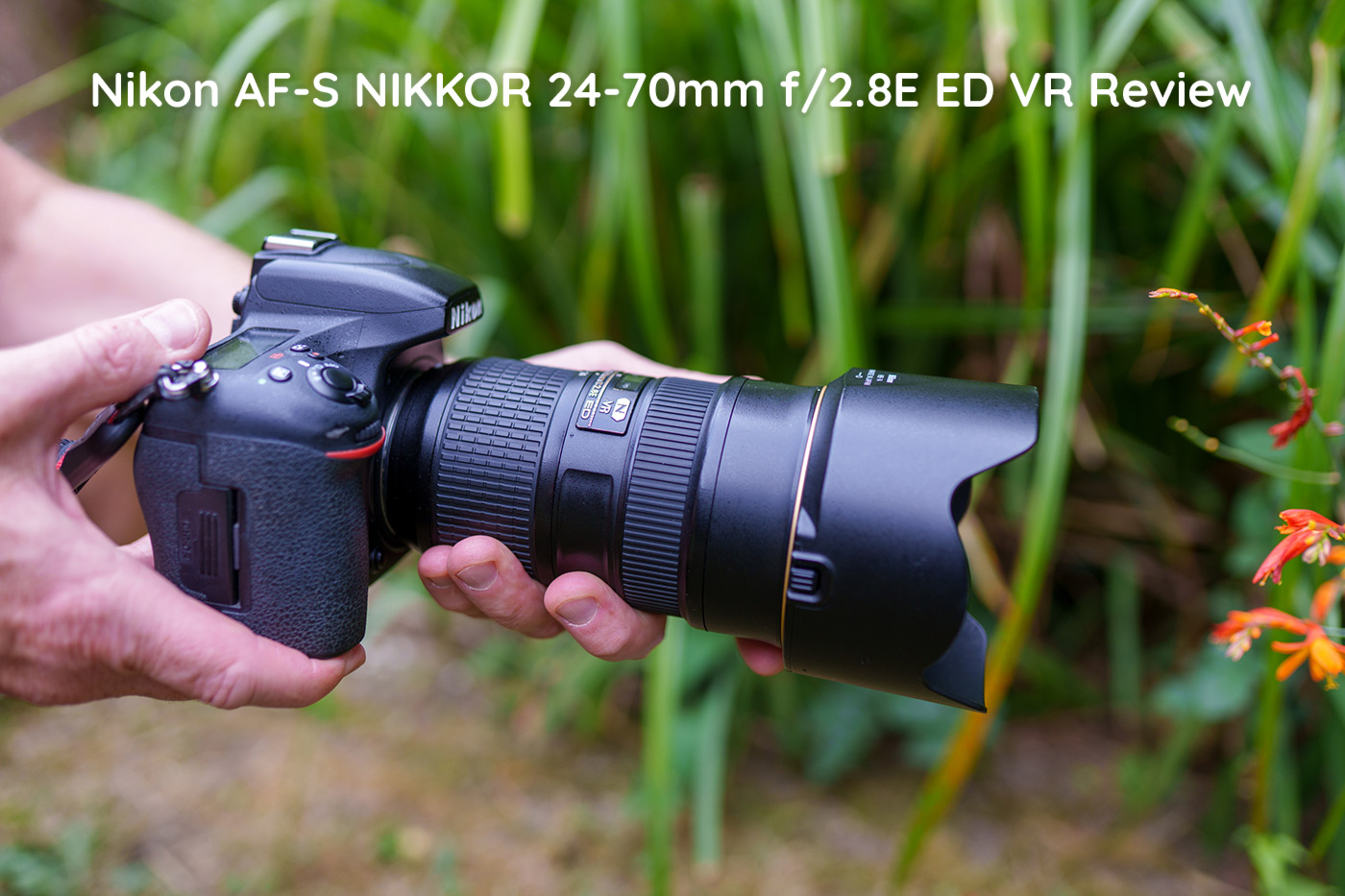
I’ve been shooting with a used one mounted on a Nikon D750 that I reviewed here. This Nikon AF-S NIKKOR 24-70mm f/2.8E ED VR review discusses what it's like to use for a variety of everyday subjects.
Continue reading for help deciding whether this might be your next Nikon DSLR lens. Or you might simply want to know what's good and not so good about it. Whatever your reason, join us for this hands-on review with plenty of real-world sample images.

Sample 01 low light close-up during sunset at 70mm. Camera settings: 1/200 sec. f/2.8. ISO 100
Pros and Cons
Pros
- Excellent value, from around £339.00 used vs £2,099.00 new
- Sharp results wide open from f/2.8
- Constant aperture for portraits, events and low light
- Excellent control of chromatic aberration
- Built-in VR for slower shutter speeds in low light
- Solid, reassuring build with well-damped, textured rings
- Fast, reliable autofocus that keeps pace with DSLR AF modes
- Versatile all-rounder for everyday shooting
- Native F-mount compatibility, with FTZ adapter option for mirrorless users
Cons
- Large and heavy at around 1,070g, notably more than the Z-mount II equivalent
- Slight softness at close range and in the corners
- Some distortion at the wide end, pin cushion distortion at the zoom end
- Some vignetting when shooting wide open
- Audible motor noise during autofocus, a consideration for video
- Extending barrel design rather than internal zoom
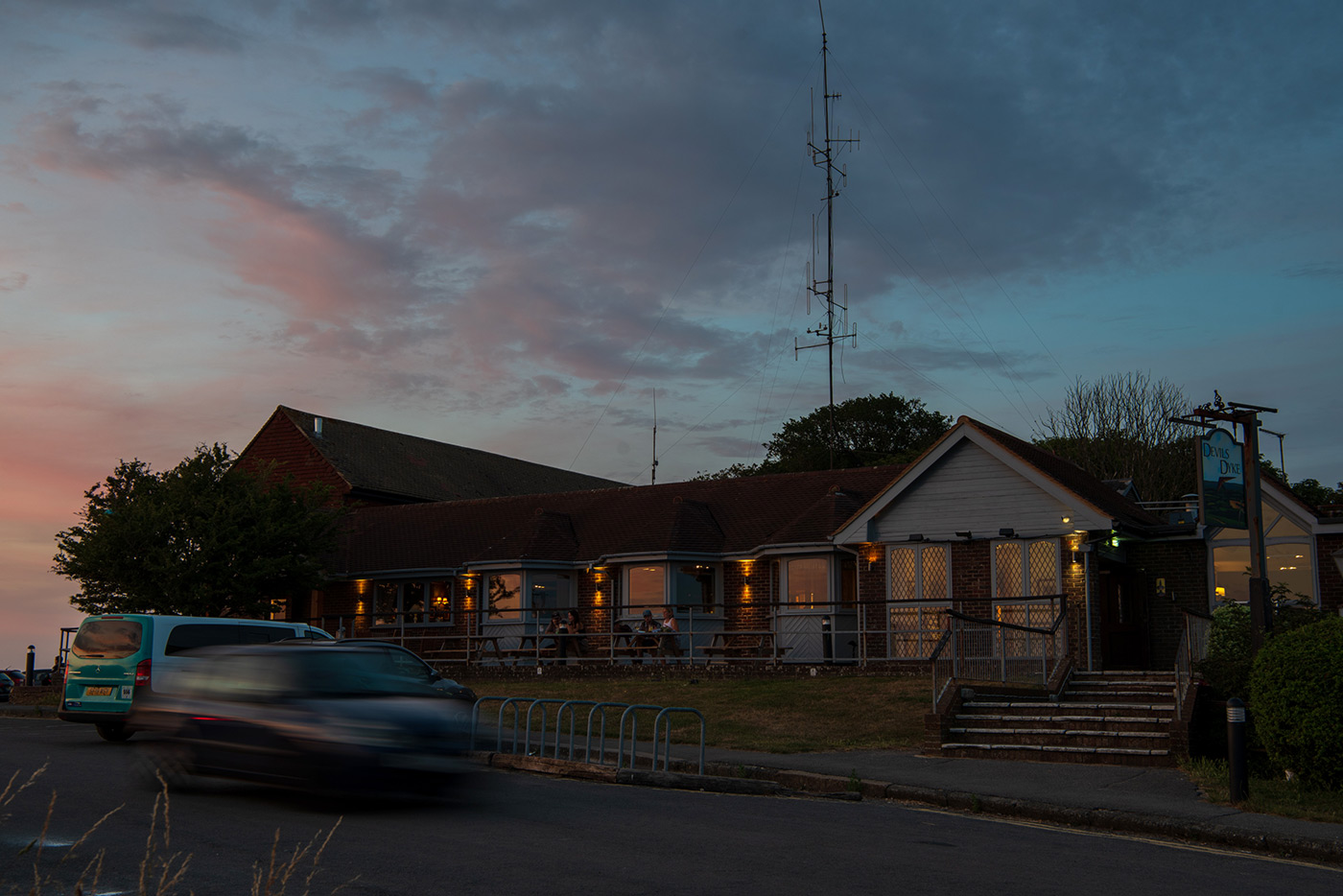
Sample 02 low light motion blur at 44mm (tripod mounted) Camera settings: 1/5 sec. f/8. ISO 100
How much does it cost?
Although no longer the most popular standard zoom, you can still get a Nikon 24-70mm f/2.8E ED VR brand new for £2,099.00. Where it gets more compelling is on the used market as they turn up quite frequently as people move to the newer mirrorless Z system.
This is excellent news for DSLR users, as a used Nikon 24-70mm f/2.8E ED VR starts from around £339.00 for a well-used copy, through to £750.00 for a "like new" example. For a lens that is over £2,000 new, that's a serious drop in price. Enthusiasts and professional photographers might want to look closely at this versatile zoom lens.
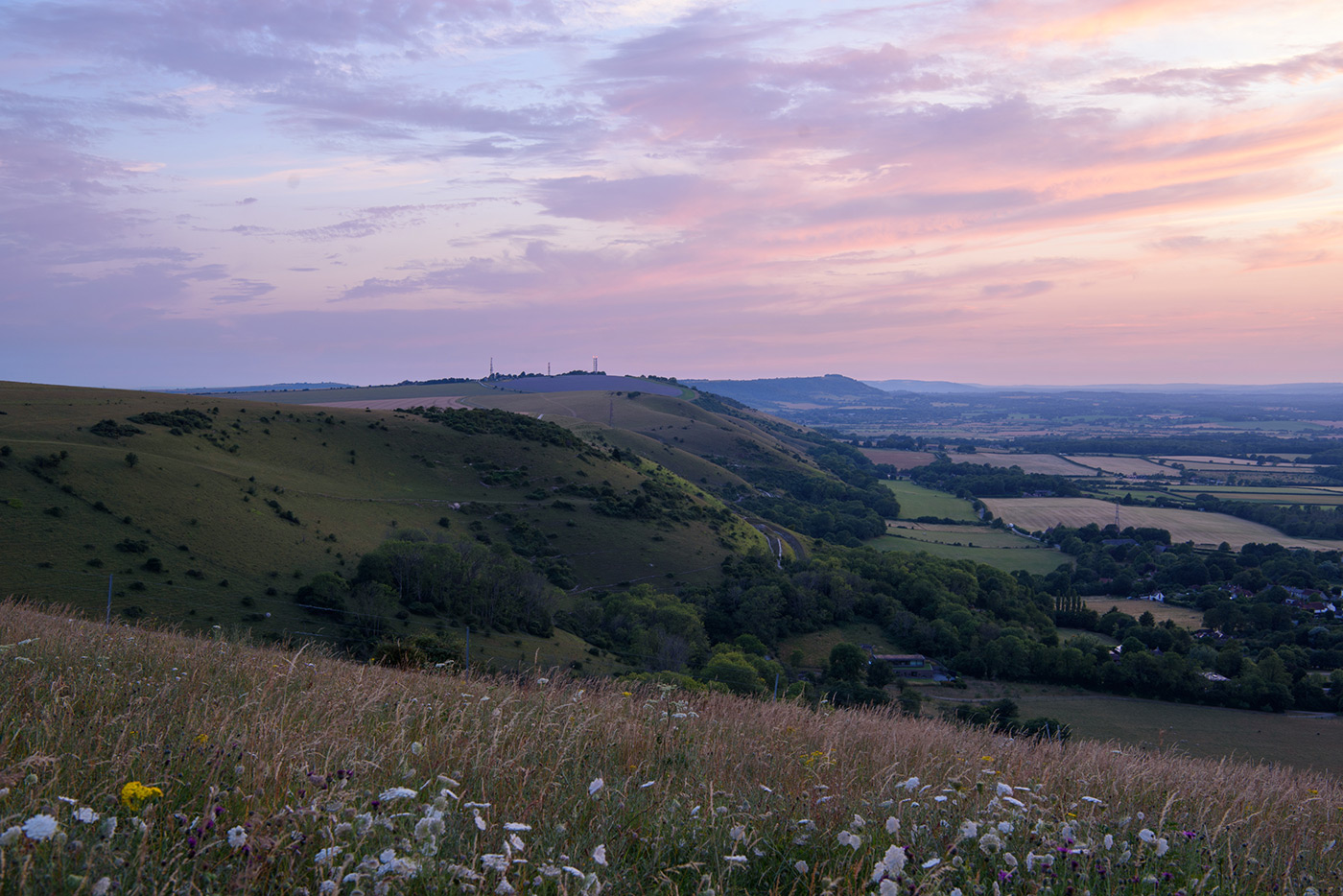
Sample 03 landscape scene at sunset at 42mm (tripod mounted) Camera settings: 1/6 sec. f/8. ISO 100
How does it compare to the equivalent Z-mount lens?
If you're weighing up whether to make the jump to Z-mount lenses, the direct equivalent is the original Nikkor Z 24-70mm f/2.8 S. These are discontinued now, and a used one generally costs around £1,000.00, if you can find one.
The Z 24-70mm f/2.8 S II is the new equivalent, which retails at £2,599.00. One however that you'll be hard-pressed to find used as this is still relatively new and extremely popular, so they get snapped up.
So on price alone, the F-mount version costs notably less than both the outgoing and new one.
If you're shooting with a Z-mount camera via an FTZ II adapter, a used F-mount version is a very approachable way into a traditional f/2.8 zoom. Shooting with DSLR lenses on mirrorless works perfectly well, but you do give up some of the native handling refinements. These include a customisable control ring, and, potentially, image quality, which we explore later. But first, let's look more closely at how well made this is.

Sample 04 Weigela Florida with rounded bokeh highlights at 70mm. Camera settings: 1/500 sec. f/3.2 ISO 220
Build quality and handling
At around 1,070g, this is a fairly large and heavy ‘standard’ Nikon DSLR camera lens. That's certainly true compared to the equivalent second-gen Z-mount lens, which weighs just 675 grams. It makes the D750 camera slightly front-heavy. However, it would balance perfectly well on a slightly larger body like the D850 that I tested to find out is the Nikon D850 Still Worth Buying?
Weight is a real-world trade-off for shooting with a DSLR system, as mirrorless cameras and lenses tend to weigh a bit less. That aside, this lens really feels reassuringly solid in the hand.
The zoom and focus rings are well damped with distinct textures so you know which you're gripping without looking up from the viewfinder. Although made of plastic, it feels like it will survive plenty of shooting sessions, and is not delicate by any means. Additionally, it’s got extensive rubber gaskets and seals around the mount, as well as a fluorine coat on the front.
The barrel extends when zooming in, which is fairly typical of these types of lenses. Notably, the Z-mount version II was the world's first internally zooming model. Back to this lens…
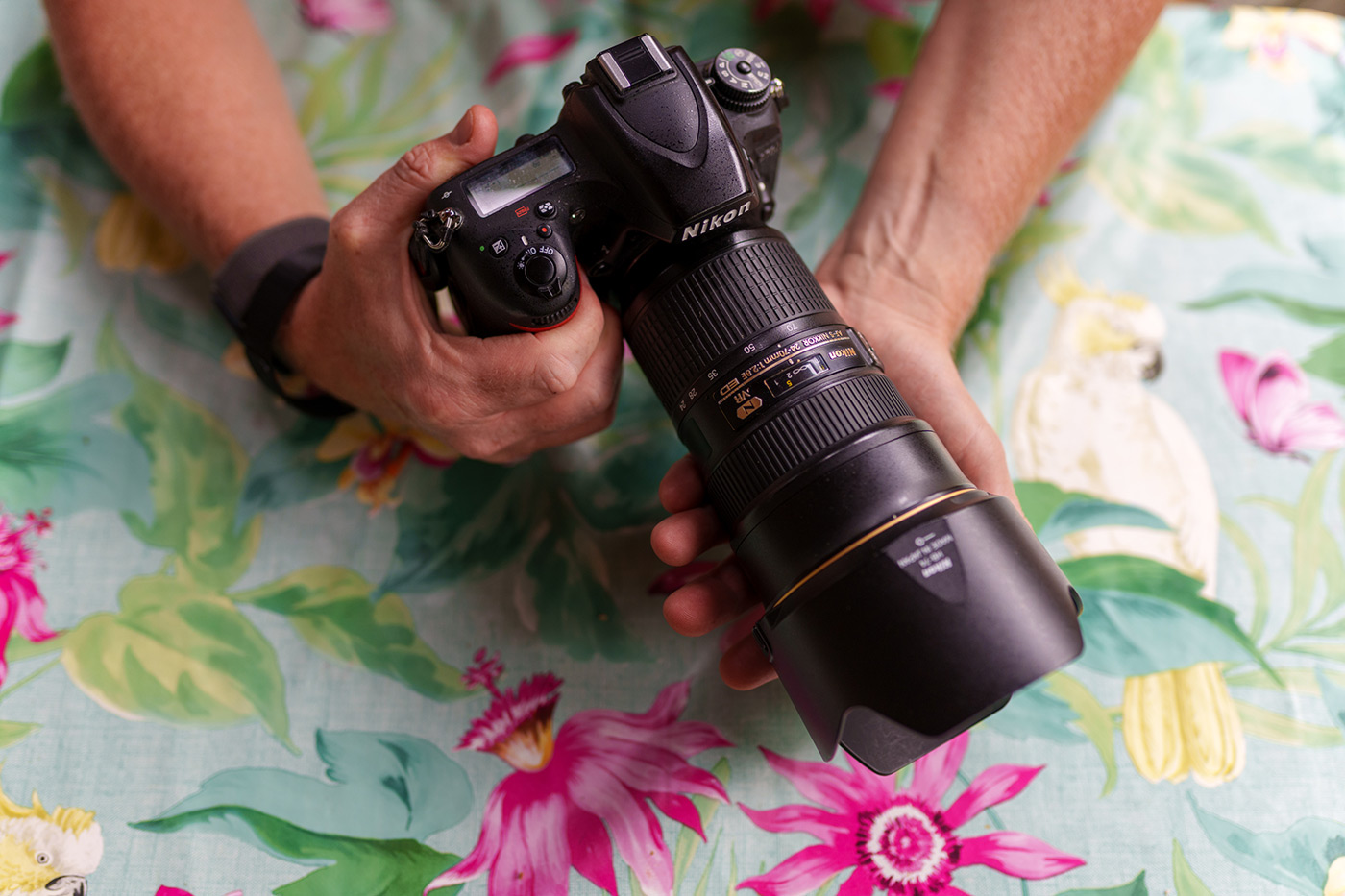
The front filter thread is 82mm, which is also fairly standard for an f/2.8 zoom of this type.
Autofocus speed is fast, if not as blindingly quick as the very latest dual motor Z-mount options. It kept up with various D750 AF modes very well. I did notice a little motor noise from the focus mechanism. If you shoot video, watch out for this; however, for most photographic subjects the noise level is acceptable.
All in all, this is an easy lens to shoot with, but isn't a lightweight travel option. The built-in VR allows for slower shutter speeds, although there's no Synchro VR with a DSLR or mirrorless body.
That leads onto image quality, which is the main reason for getting this lens.
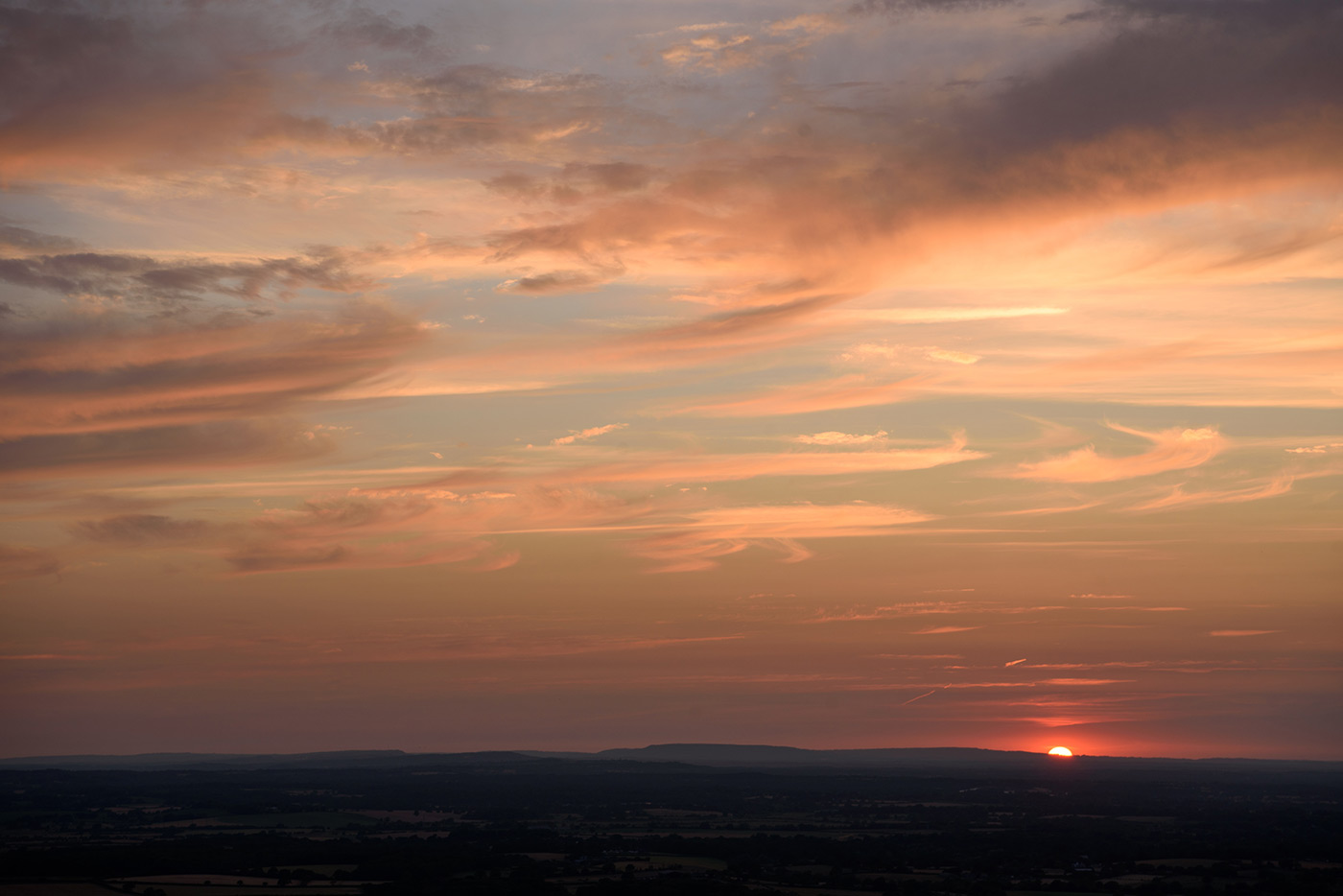
Sample 05 Setting sun at 70mm. Camera settings: 1/80 sec. f/8 ISO 100
Image quality
When shooting wide open at f/2.8, this lens is already sharp. It renders good levels of detail right from the widest aperture, which is exactly what you want from a workhorse zoom like this. To my eye, sharpness is apparent across most of the zoom range. I did notice a little drop at very close range, especially in the corners. The same was true when zoomed to 70mm. Stopping down to f/5.6 seems to optimise edge-to-edge clarity anywhere in the range.
There was almost no colour fringing to be seen, and colours are bright, saturated and accurate when shooting with the D750 camera.
This lens isn't perfect of course. You can see a little distortion at the very widest end, and pin cushion at the zoom end. There's some vignetting wide open, but chromatic aberrations are excellently controlled. The optical flaws are modest compared to the image quality it delivers.
This is definitely a pro-level lens that's capable of being shot wide open. It's also very good in low-light, especially thanks to the VR. You can capture shallow depth-of-field subjects with it too, which I find really appealing.
This is a model capable of capturing premium quality results, yet is very well priced when buying second-hand. But is it for you and what are the alternatives?
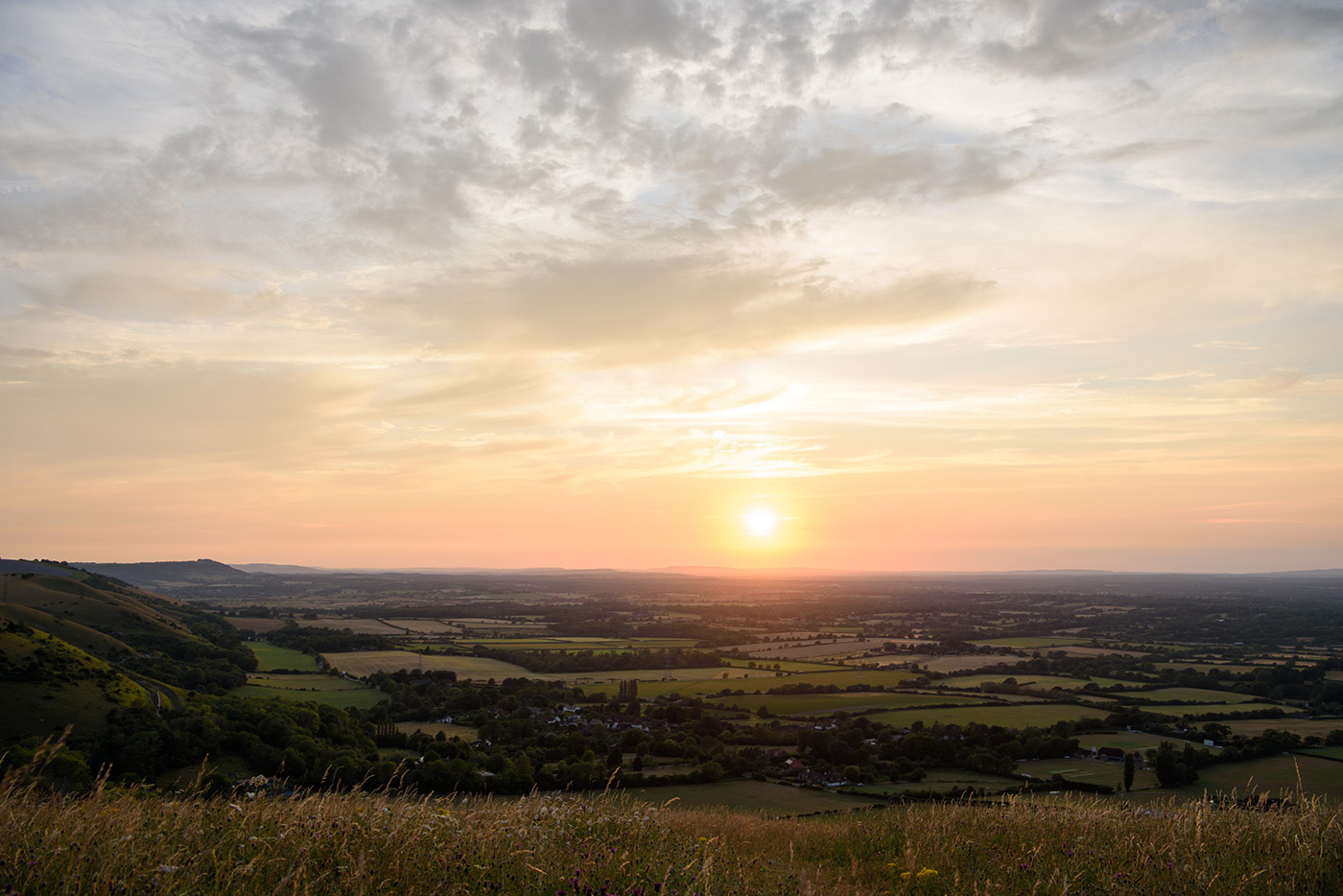
Sample 06 natural colour reproduction during landscape sunset at 30mm (tripod mounted). Camera settings: 1/60 sec. f/8. ISO 100
Who is this lens for and what could you get instead?
The lens is the middle of the 'holy trinity' lenses. That means it's one of three f/2.8 zooms, along with a 14-24mm f/2.8 and 70-200mm f/2.8. The middle 'standard' zoom is best for Nikon DSLR photographers who want one lens for lots of everyday subjects.
If you have a D750, D850, D780 or similar and want a pro-level zoom that covers portraits, events, landscapes and low light, this is probably the most versatile F-Mount all-rounder.
It's also a good option for wedding and event photographers on a budget. The constant f/2.8 aperture and VR are suited to unpredictable lighting, and buying second-hand cuts the cost of entry dramatically compared to buying new or going with the Z-mount equivalent.
Mirrorless camera users who have an FTZ adapter may want to try this too. It's a legitimate alternative to mirrorless lenses, and far cheaper. You can always sell it to us when you're ready to move to the Z-Mount alternative!
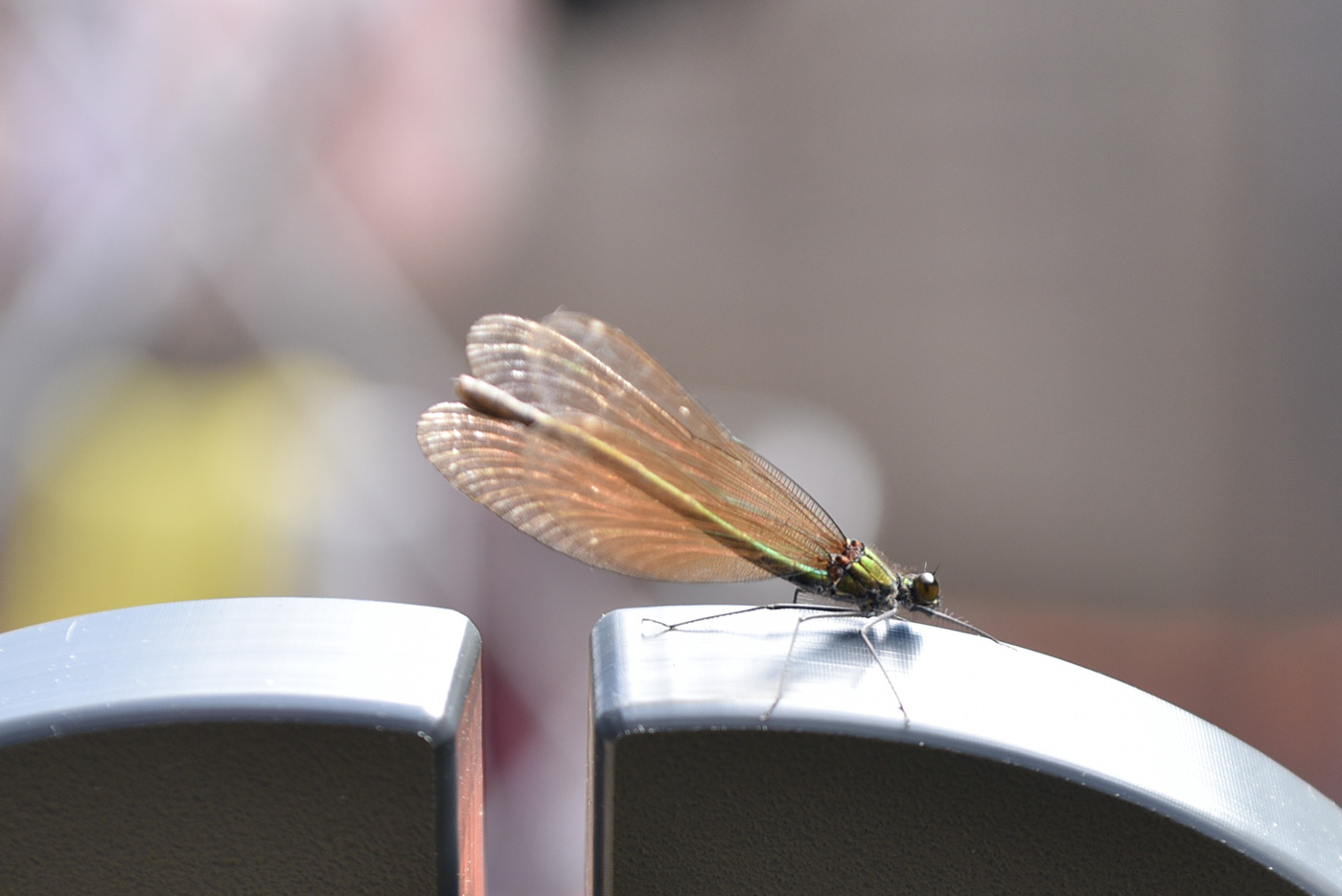
Sample 07 fine detail and natural colour show close-up detail at 70mm. Camera settings: 1/200 sec. f/4. ISO 400
Verdict
If you need the lightest kit for travel, or shoot lots of close-ups you might want to consider alternatives. A used Tamron 24-70mm F/2.8 Di VC USD G2 weighs 905g and offers comparable performance. Used prices are typically around £450.00–£550.00.
A Sigma 24-70mm f/2.8 DG OS HSM Art is another to consider. Although it weighs around 1,020g, you get excellent image quality and fast autofocus from a renowned design. These are popular used Nikon lenses, typically costing around £500-£650.00, or £1,149.00 when new.
If you're after something smaller and faster that’s also for portraits and low light, it's worth checking out a prime. My Nikon AF-S Nikkor 50mm f/1.4G review was made alongside this review, and may be of interest.
This lens shows that you don't need the latest mirrorless kit to get professional results. It's heavier than its Z-mount counterpart, and you'll hear some motor noise, but those are minor trade-offs considering the sharpness, colour rendition and workhorse reliability.

Sample Background blur and subtle colour transitions at 70mm. Camera settings: 1/250 sec. f/2.8. ISO 280
What stood out to me was how few compromises there are. This is a lens designed as a professional tool, and it still performs like one 10 years later, just at a fraction of the original cost when bought used. It's hard to ignore this as the standard zoom to have for any heavyweight DSLR shooter.
Ready to look more closely at this lens? Browse the new AF-S Nikkor 24-70mm f/2.8E ED VR, or grab a used AF-S Nikkor 24-70mm f/2.8E ED VR and get pro-level performance for a fraction of the price.
Share this post:
By Nick Dautlich on 20/08/2026

Nick Dautlich
Senior Content Writer and Product Reviewer
Nick Dautlich is the Senior Content Writer and Product Reviewer at Park Cameras, with over 15 years of photography experience. A Sony Imaging Professional and expert reviewer, Nick has worked with major brands such as Canon, Sony and Nikon. His work is also featured on Vanguard World UK’s website, Capture Landscapes, and Shutter Evolve. Nick’s photography includes National Trust projects and magazine covers and he is passionate about landscapes and storytelling. Nick also enjoys hiking and teaching his children about nature. Learn more on his profile page.
Trade in your old equipment
Fast and easy trade in service ensures your old gear is collected efficiently and you are paid quickly! It's very simple to trade in your unwanted photography gear. Just head over to our dedicated Sell or Part Exchange page, fill out the details, and we'll get back to you with an offer for your old gear. Take the cash, or put it towards the cost of your new gear. It's up to you! Find out more
sign up to the newsletter
Keep up to date on the latest photography news, events and offers. Sign up now