- Call us 01444 237070

-
- Back
- Used Cameras
- Used Accessories
- Used Lenses
- Back
- Used Canon Lenses
- Used Nikon Lenses
- Used Fujifilm Lenses
- Used Sony Lenses
- Used Micro 4/3rds Lenses
- Used Leica Lenses
- Used Panasonic Lenses
- Used Pentax Lenses
- Used Samyang Lenses
- Used Sigma Lenses
- Used Tamron Lenses
- Used Tokina Lenses
- Used Voigtlander Lenses
- Used Zeiss Lenses
- Used Hasselblad Lenses
- Used Video
- Used Film Equipment
- Used Stock Alert
- Used Blank Test
- Sell or Part Exchange
- Used Clearance
- Recently Added Used Equipment
- Park Picks
- Faulty
- Trade-In
- Blog
- New in
- Call us
- Contact us
- Stores
- Sign in
product
NZ12
Call us: 01444 237070
Search terms
Brands
Category
Products
[[{name}]]
[[{attributes.Price}]]
- Categories
- Tips & Inspiration
- Reviews
- News
- Events
- Features
- Buying Guides
- Competitions
Nikon Z 120-300mm F2.8 TC VR S First Look
Nikon’s mirrorless super-telephoto line-up is already impressive, but the Z 120-300mm F2.8 TC VR S adds something new, as the first constant-aperture zoom of its kind with a built-in teleconverter. At £13,999.00 it is clearly aimed at professionals, but can one lens really cover all the action?
Our first look explores handling, S-Line optics and the advantages over an external teleconverter, so you can decide whether to upgrade from the F-mount version, or any other model for that matter.
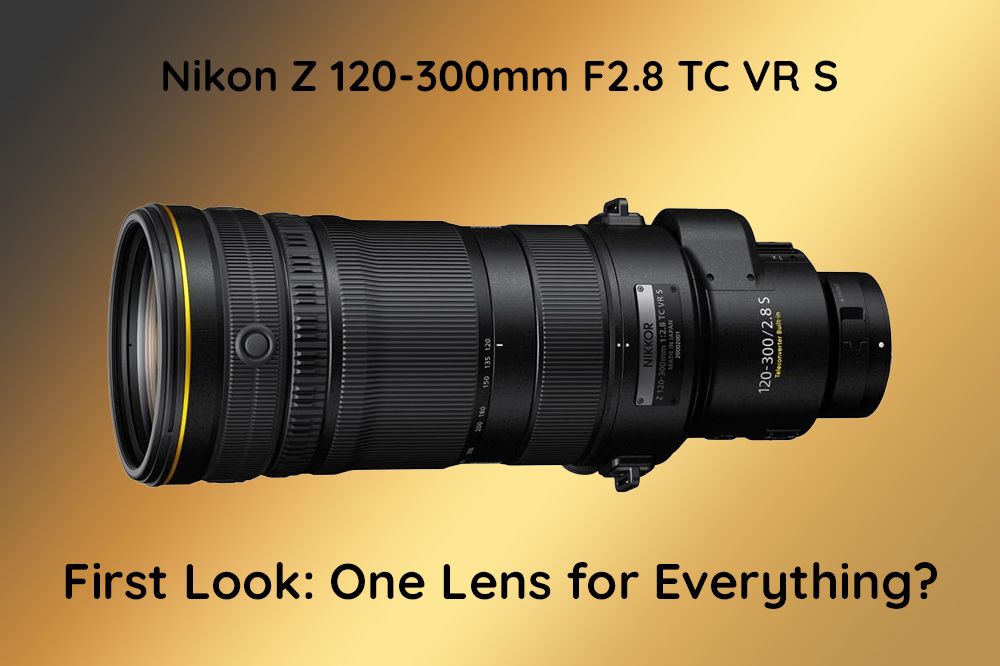
Why 120-300mm F2.8 Is Such a Versatile Range?
A constant F2.8 maximum aperture across this zoom range is suitable for both indoor and outdoor subjects. It allows you to reframe from a full-length shot to a tighter composition without changing your position, which may be crucial in certain situations.
Because of the constant aperture, exposure stays consistent while you zoom, leaving you free to concentrate on the action, rather than settings. It also provides a beautifully shallow depth of field, especially at longer focal lengths, helping to separate the subject from distracting backgrounds.
It allows for faster shutter speeds and lower ISO values, helping to freeze moments while keeping noise under control.
While a prime such as the Z 400mm F/2.8 TC VR S may offer advantages for particular assignments, the Z 120-300mm F2.8 TC VR S is clearly going to be more versatile when subject distances change and you have little freedom to move.
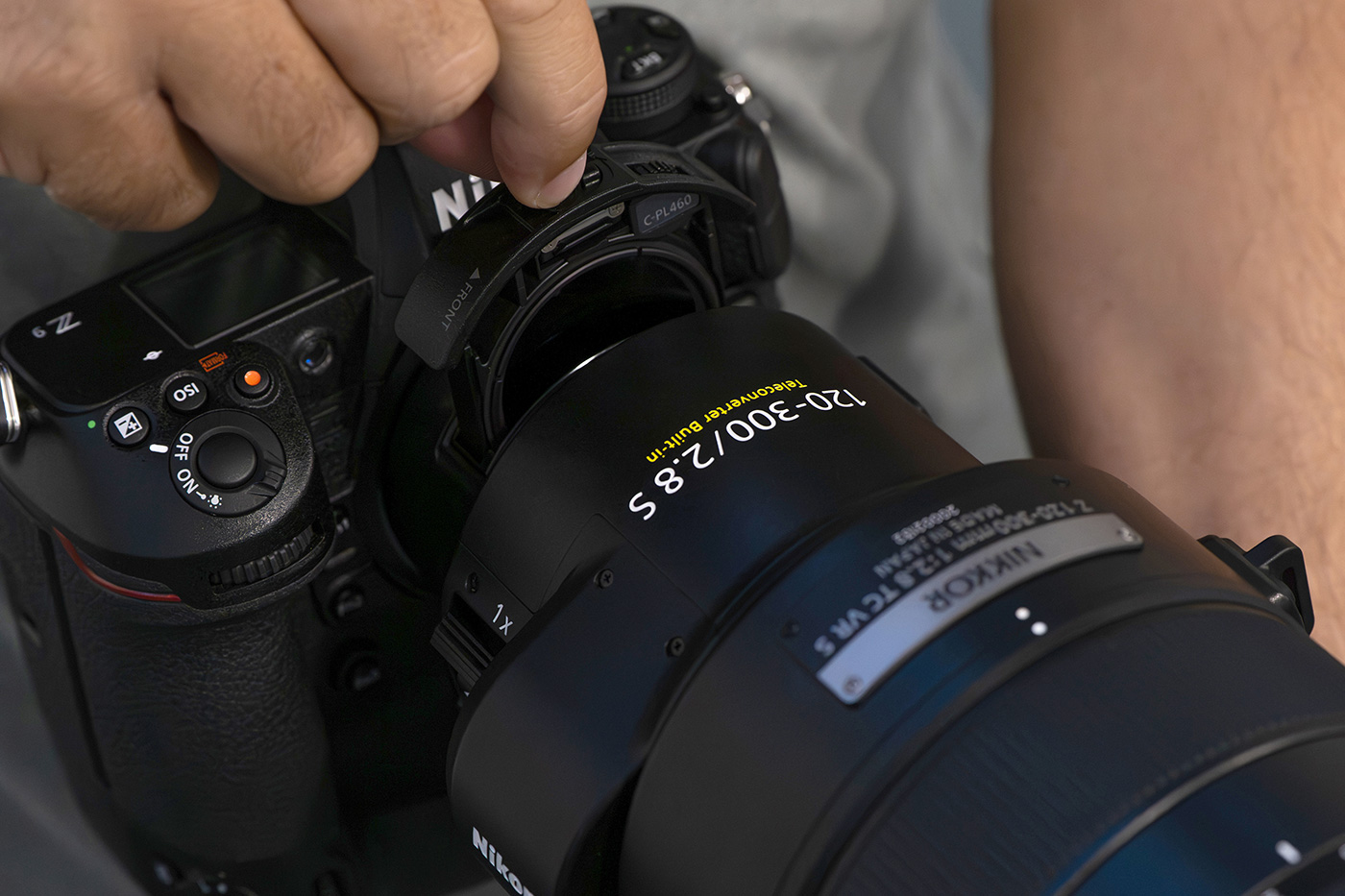
Extend to 420mm anytime
Notably, this is the first and only constant-aperture mirrorless zoom with a built-in teleconverter (TC), extending the focal range to 168-420mm F4. Having the TC built-in provides several advantages compared to using a separate TC:
- Extends the focal length instantly with a switch, without needing to remove it, or interrupt shooting while mounting or unmounting the accessory.
- React immediately when a subject moves further away, which is particularly useful for unpredictable motion.
- Better protection from the elements due to there being no exposed mount during changes, reducing the risk of dust, moisture and debris.
- Optimised optical performance as the converter is engineered specifically for the lens rather than accommodating multiple optics.
- Consistent handling as the overall length and centre of gravity are unchanged when switching, which could be useful if shooting from a monopod or with a gimbal.
- No separate accessory to carry or fit.
You can engage and disengage the TC at any point in the zoom range, effectively giving you two lenses in one: a 120-300mm F2.8 and a 168-420mm F4.
What Subjects Is This Good For?
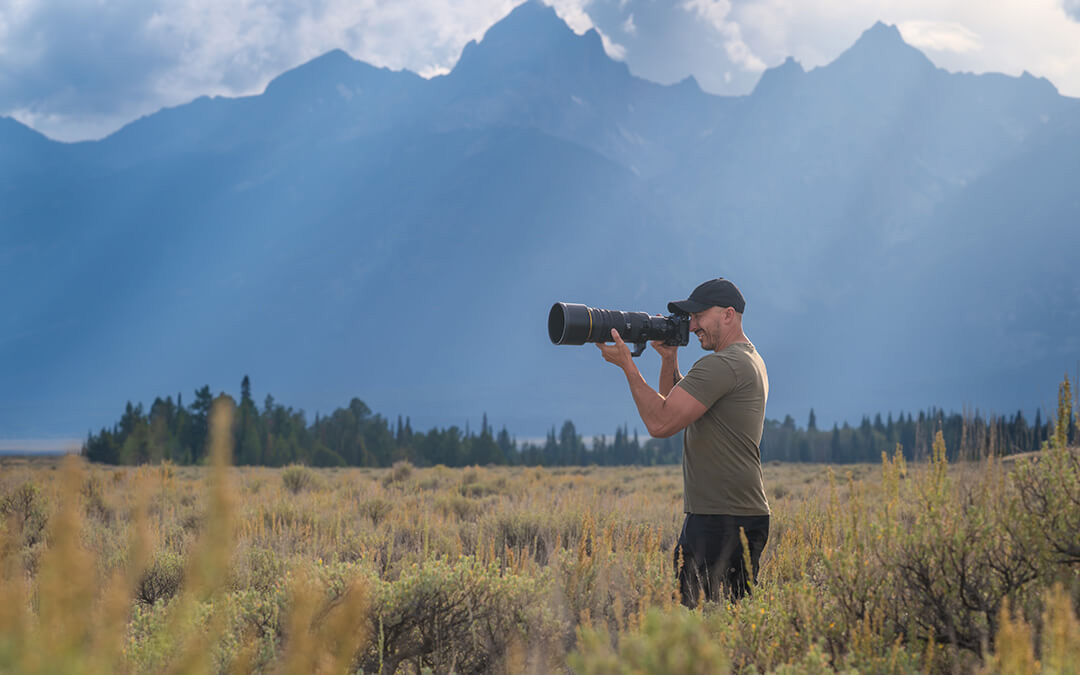
What subjects are suitable for a lens that effectively covers 120-420mm with a variable F2.8 to F4 aperture and vibration reduction? Simple; everything from indoor arenas to outdoor sports and wildlife.
Having a relatively wide and bright F2.8 is suitable for indoor sports and events, covering subjects like basketball, swimming, gymnastics and similar. It’s really handy not only for the light gathering, but the focal range suits closer subjects while also supporting effective background blur.
Moving outdoors and it covers a huge variety of events including track and field, tennis, field sports, motorsports and even closer wildlife. With the built-in TC engaged, adding an external Z 1.4x or Z 2.0x converter provides even more reach for distant subjects. It’s worth considering that the maximum aperture reduces to F5.6 or F8 respectively.
Which Optical Technology is Used?
This lens includes optical technology that promises high image quality while being easy to maintain. It has 30 elements arranged in 24 groups, with a heady collection of special elements including:
- Fluorite: Controls chromatic aberration while reducing the weight.
- Super ED: Stronger chromatic aberration correction than ED glass, preserving detail and colour accuracy.
- SR: Corrects difficult colour fringing.
- ED: Reduces chromatic aberration.
- Aspherical: Corrects optical aberrations such as distortion and spherical aberration.
Additionally, a Meso Amorphous Coat and ARNEO Coat suppress flare and ghosting, while a fluorine-coated front element makes it easier to clean off dirt and smudges.
How Does It Handle?
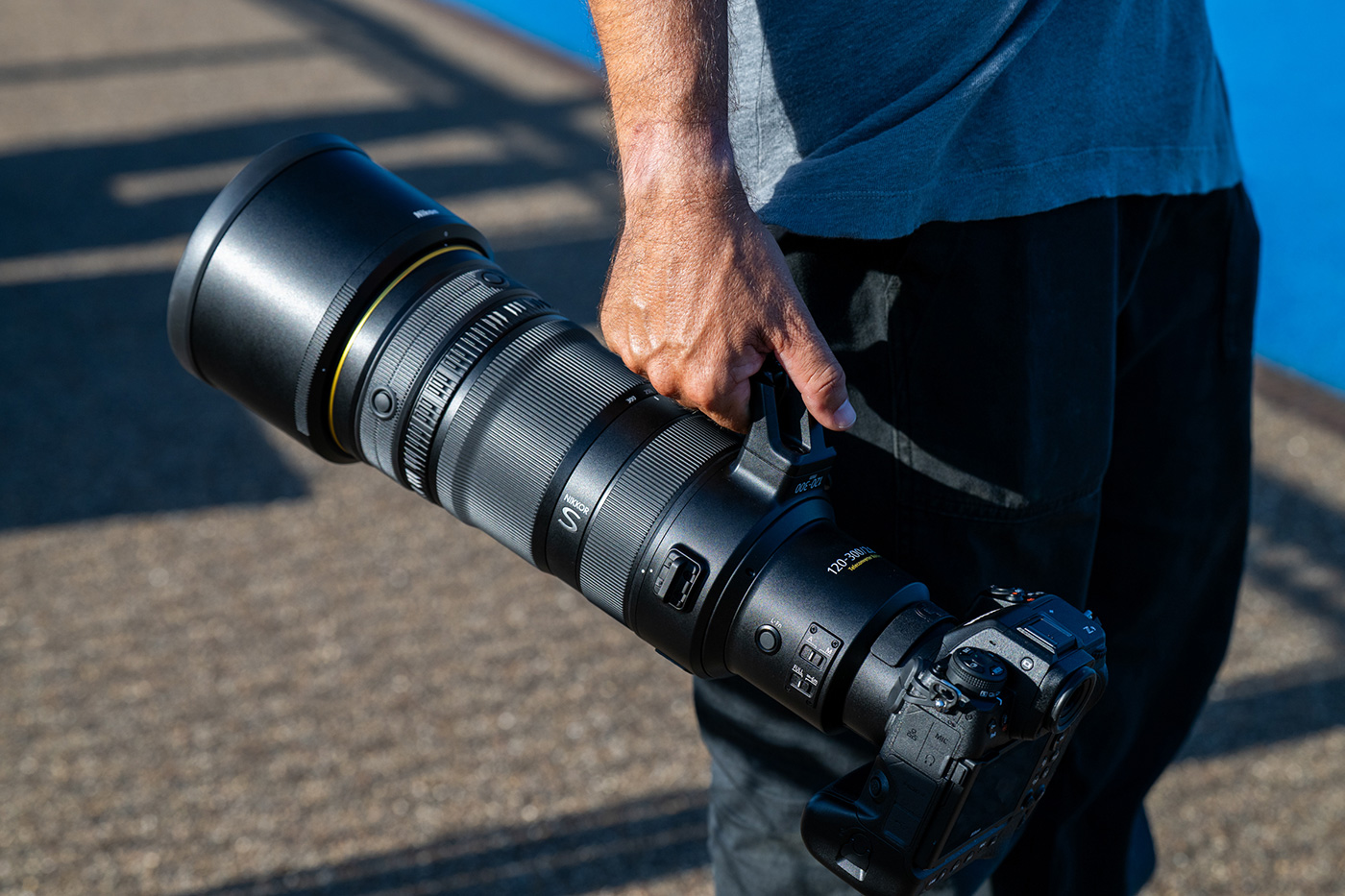
As a professional model, it allows users to customise and shoot with it intuitively, aiming to reduce distractions in the field.
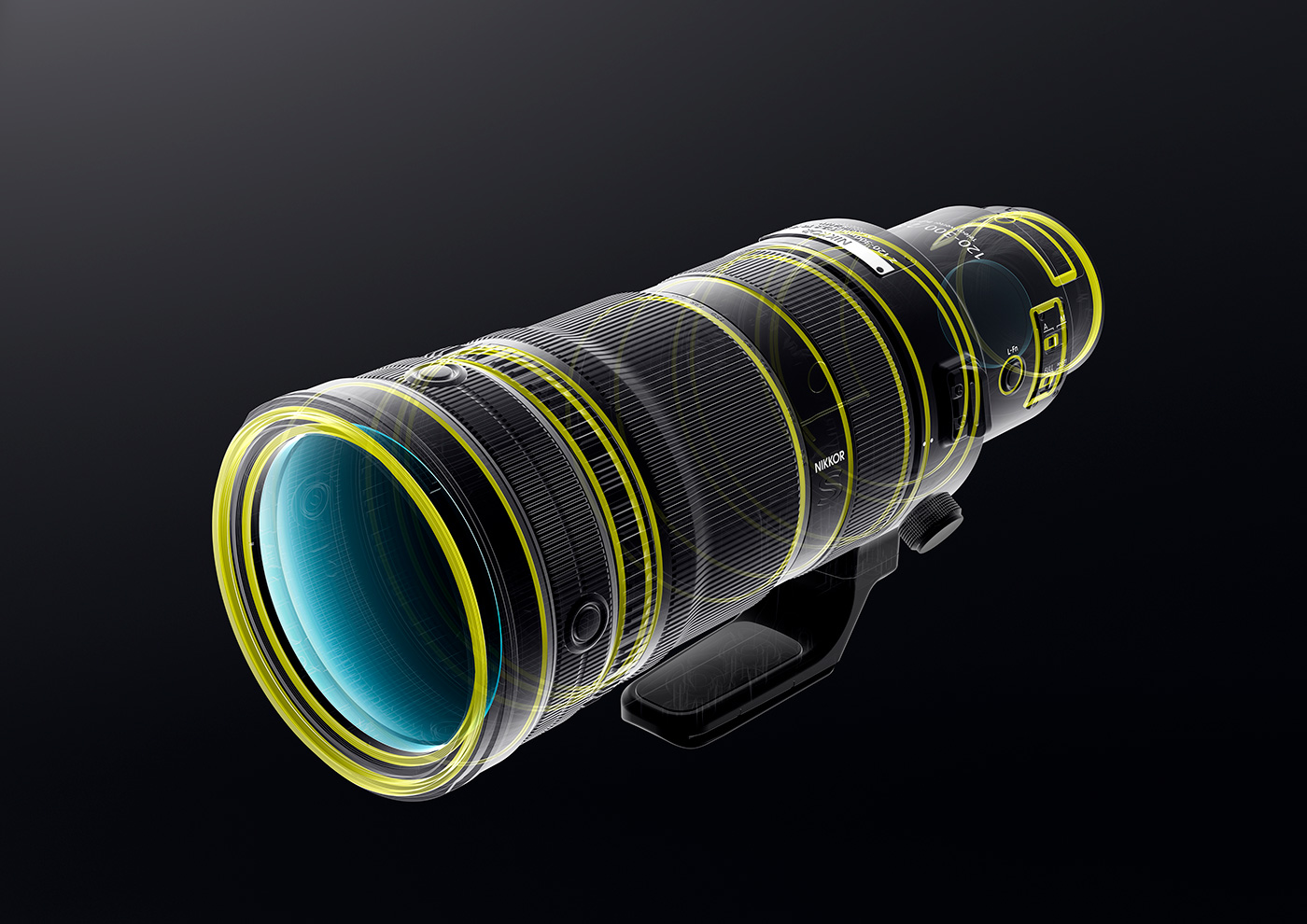
Internal zoom and focusing mechanisms maintain consistent length and balance, while customisable function buttons and a control ring provide instant access to your most frequently used settings. Additionally, dedicated switches allow adjustments to focusing and other functions.
A tripod collar allows attachment to a monopod or tripod, which is useful when shooting for longer as this model weighs around 2,735g. Although 515g lighter than the F-mount predecessor, it is still quite substantial for handheld shooting over long periods.
Comprehensive seals provide protection when working outdoors, which is essential for pros who will often be required to continue shooting through adverse conditions.
Does it Take Filters?
Yes. Despite having a large diameter you have two options for adding filters; including 112mm threaded filters at the front, or 46mm filters via the rear filter holder. This is of course useful for adding polarising, neutral density or UV, depending on the conditions.
Upgrading From the F-Mount?
Upgrading from the F-mount AF-S NIKKOR 120-300mm f/2.8E FL ED SR VR to the mirrorless Z version shifts your kit from DSLR technology to the native ecosystem, with several benefits:
- Built-in 1.4x teleconverter
- Native Z-Mount Performance
- Enhanced AF with Silky Swift VCM technology
- 515g lighter, which can be significant over longer sessions
- Up to 6.5 stops vibration reduction, with Synchro VR available
- Updated optics including the latest coatings mentioned previously
The Z version is the modern successor to the discontinued F-mount model.
What to Consider Before You Buy
This is a significant investment, even for professionals. It’s worth considering whether you need the flexibility of a fast zoom or whether a prime might be better.
The Z 400mm F2.8 TC VR S is the closest native alternative, offering F2.8 at 400mm and extending to 560mm F4 with the built-in teleconverter. That means more reach and a wider aperture at 400mm, whereas the zoom is limited to F4, although the trade-off is of course that you lose zoom flexibility.
Ultimately, the decision comes down to whether you shoot both indoors and outdoors, need a fast zoom and want a built-in TC. If you need all three, this is the only Z-mount option. What an option it is though!
Compare the rest of the range in our Ultimate Guide To Nikon Z Super Telephoto Lenses here.
So, can one lens really cover all the action? This does indeed make a compelling case, combining the benefits of a fast zoom with instant access to 420mm F4.
For professional sports and wildlife photographers, it could replace several lenses and reduce the need to swap at critical moments.
It's an investment, but few alternatives offer this combination of speed, reach and versatility.
Explore the Nikon Z 120-300mm F2.8 TC VR S today, or speak to our team for advice on choosing the right model for your needs.
Share this post:
By Nick Dautlich on 29/10/2026

Nick Dautlich
Senior Content Writer and Product Reviewer
Nick Dautlich is the Senior Content Writer and Product Reviewer at Park Cameras, with over 15 years of photography experience. A Sony Imaging Professional and expert reviewer, Nick has worked with major brands such as Canon, Sony and Nikon. His work is also featured on Vanguard World UK’s website, Capture Landscapes, and Shutter Evolve. Nick’s photography includes National Trust projects and magazine covers and he is passionate about landscapes and storytelling. Nick also enjoys hiking and teaching his children about nature. Learn more on his profile page.
Trade in your old equipment
Fast and easy trade in service ensures your old gear is collected efficiently and you are paid quickly! It's very simple to trade in your unwanted photography gear. Just head over to our dedicated Sell or Part Exchange page, fill out the details, and we'll get back to you with an offer for your old gear. Take the cash, or put it towards the cost of your new gear. It's up to you! Find out more
sign up to the newsletter
Keep up to date on the latest photography news, events and offers. Sign up now