- Call us 01444 237070

-
- Back
- Used Cameras
- Used Accessories
- Used Lenses
- Back
- Used Canon Lenses
- Used Nikon Lenses
- Used Fujifilm Lenses
- Used Sony Lenses
- Used Micro 4/3rds Lenses
- Used Leica Lenses
- Used Panasonic Lenses
- Used Pentax Lenses
- Used Samyang Lenses
- Used Sigma Lenses
- Used Tamron Lenses
- Used Tokina Lenses
- Used Voigtlander Lenses
- Used Zeiss Lenses
- Used Hasselblad Lenses
- Used Video
- Used Film Equipment
- Used Stock Alert
- Used Blank Test
- Sell or Part Exchange
- Used Clearance
- Recently Added Used Equipment
- Park Picks
- Faulty
- Trade-In
- Blog
- New in
- Call us
- Contact us
- Stores
- Sign in
- Categories
- Tips & Inspiration
- Reviews
- News
- Events
- Features
- Buying Guides
- Competitions
Sigma 20-60mm f/2.8-4 DG Contemporary Review
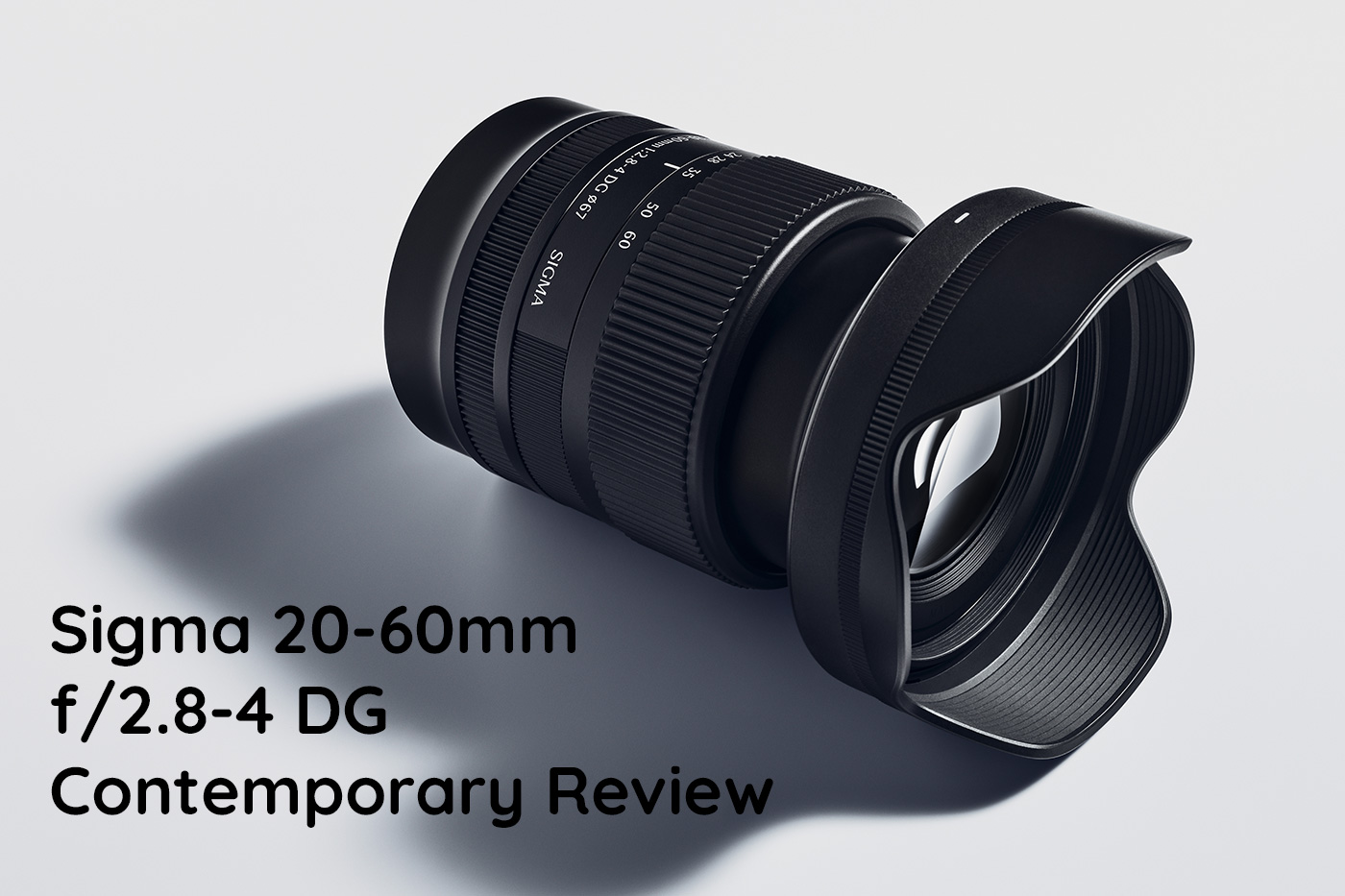
The Sigma 20-60mm F2.8-4 DG Contemporary is a new lens that offers a different take on the “everyday zoom”. It starts a good deal wider than the familiar 24-70mm range, and is incredibly small and light.
Watch the video review here:
Gareth looks at handling and image quality on the all-new compact travel zoom from Sigma.
The compact size makes it a great option as a travel zoom or a discreet lens for street photography, and you can leave it mounted for all-day versatility to capture anything in the ultra-wide to standard focal range.
Gareth has been out shooting and found it a versatile all-rounder, especially when mounted to a compact camera body. In this review we combine his hands-on experience with a collection of street photography from Ulysses Aoki to see what this unusual option brings to the table, how it performs in the real world and who it’s best for.
Price and release date
As is now typical this full-frame mirrorless model has been released for Sony E and Leica L mounts. Both cost £749.00 which is considerably less than the classic 24-70mm f/2.8 workhorse standard zoom, albeit this has a variable aperture, rather than fixed.
Design and handling
The first thing you notice is just how compact it is, which was echoed by Gareth’s initial impressions. It weighs around 375g and measures under 9cm long when the zoom is retracted, extending as you zoom in.
This is all in keeping with the Contemporary range, which provides high image quality without the size or frills of Art-series models.
That means fewer controls, and this model has:
- Focus ring
- Focus mode switch for AF/MF
- Zoom ring
- One customisable AFL button
This particular lens doesn’t have a physical aperture ring, which means you’ll need to use the camera body to adjust F settings. I don’t personally mind that at all, but some users do prefer to use a ring.
Similarly, there’s no image stabilisation, relying on IBIS instead to counter shake. That’s not unusual for a compact standard zoom, but it’s worth noting, especially for moviemaking.
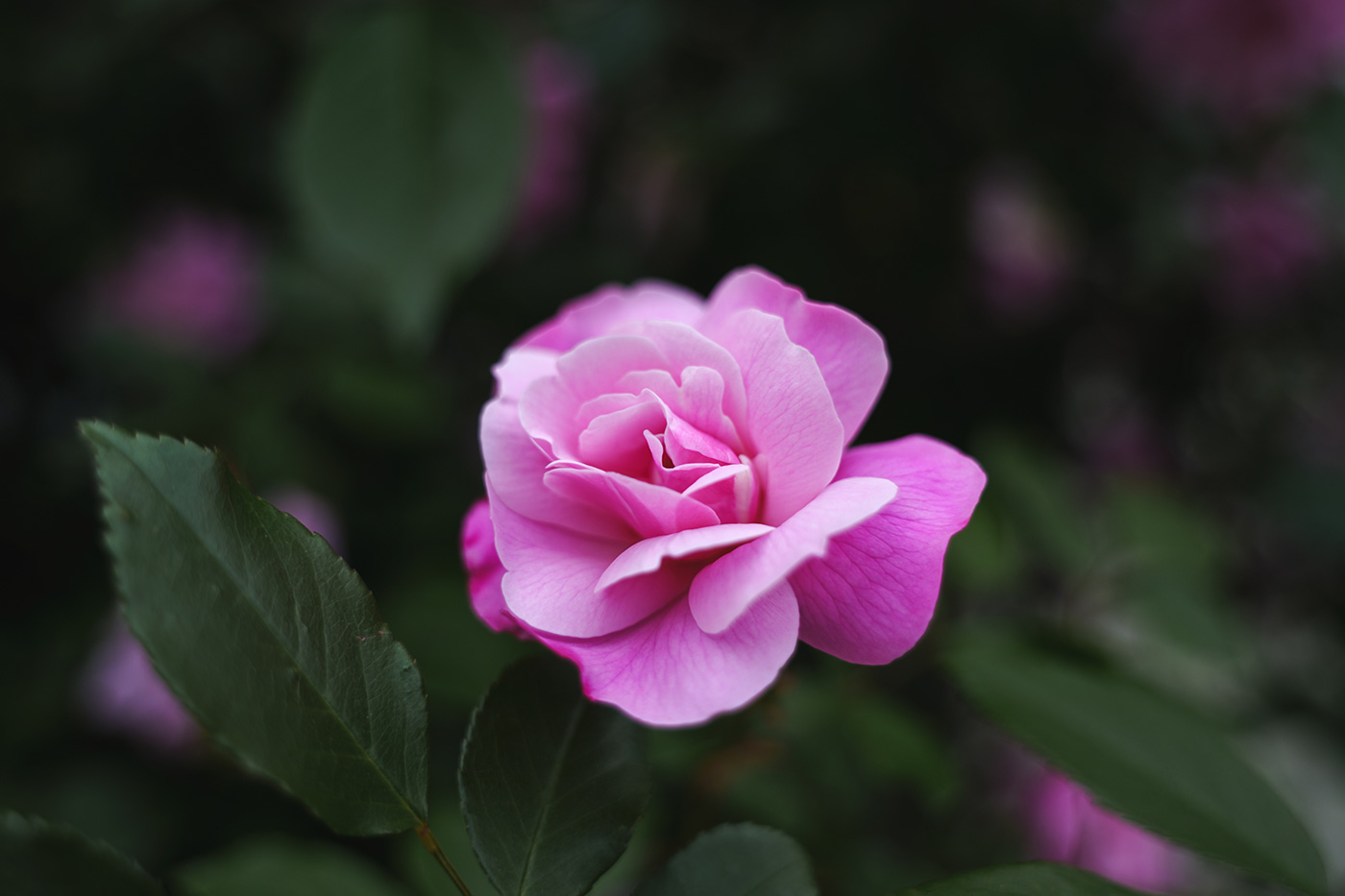
Sample 01 ©Kayoko Nemoto @35mm. Settings: 1/160 sec. f/3.7. ISO 100
What difference does starting at 20mm make?
20mm rather than 24mm captures a much wider field of view, with roughly a 94° diagonal field of view, compared to about 84° at 24mm. That means around 20% more width in the frame, while the total area captured is roughly 44% greater.
This provides the scope for wider landscapes, interiors, group shots and selfies where 24mm may not be wide enough.
Stopping at 60mm rather than 70mm doesn’t make such a dramatic difference. You do give up some reach, but both focal lengths are able to capture portraits and other subjects with background blur to highlight the subject.
Street photography with Ulysses Aoki
Some of the sample images included are taken by Ulysses Aoki, who is a Tokyo-based Japanese-American photographer known for candid colour photography that explores everyday life, people and the urban environment.
learn more at the London Street Photography Festival.
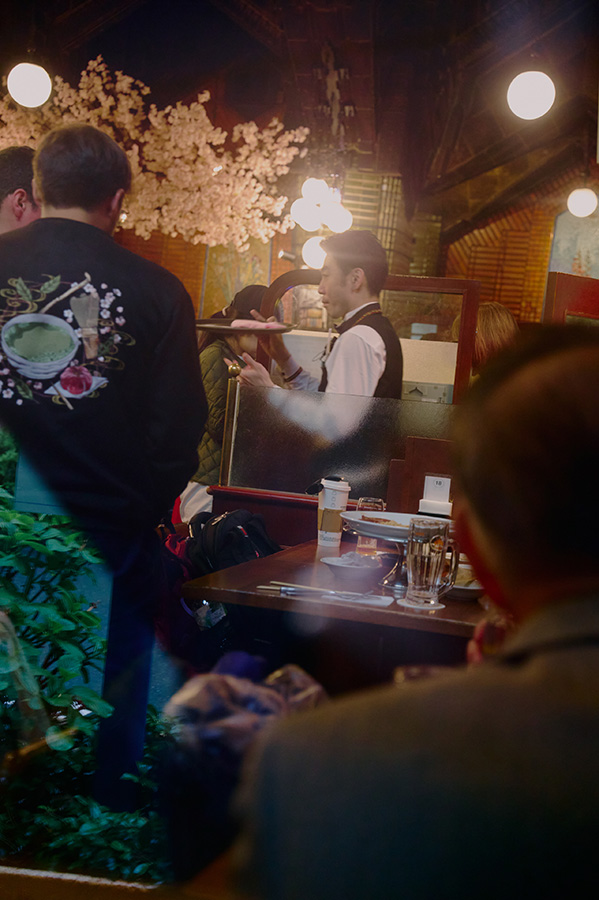
Sample 02 © Ulysses Aoki @58mm. Settings: 1/125 sec. f/4. ISO 5000
Is it good for close-ups?
Yes, surprisingly good. To begin with you can get really close to your subject, as close as 15.8cm when zoomed to 28mm. Perhaps even more impressive is the maximum magnification of 1:2.3 at 35mm.
That allows you to capture high-detail close-ups of subjects such as larger insects (like butterflies or dragonflies), flowers, jewellery and food. You can also include more of the surroundings than you would with a typical telephoto macro optic, which adds another creative option. That’s a valuable addition to the versatility of such a portable option.
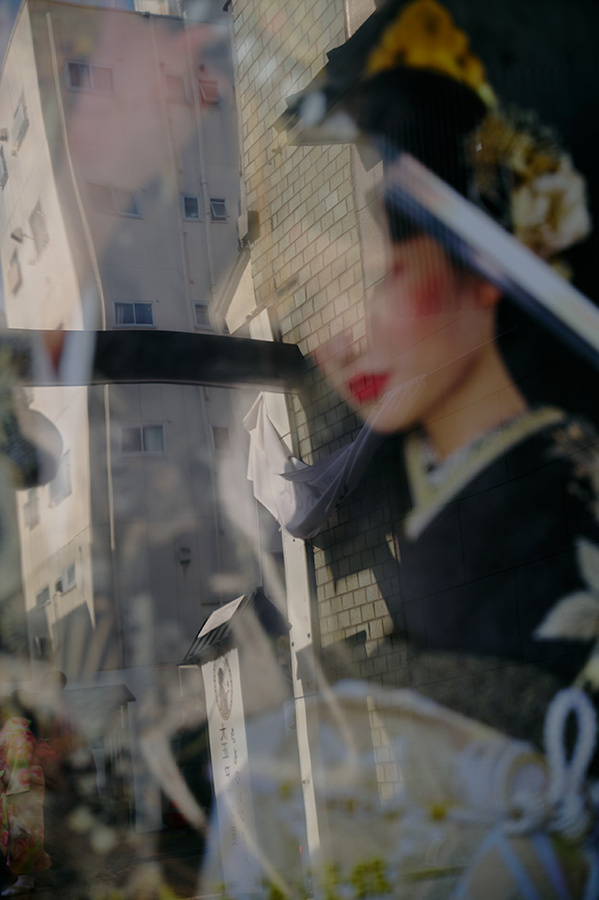
Sample 03 © Ulysses Aoki @60mm. Settings: 1/125 sec. f/4.5. ISO 100
Image quality and autofocus
Ulysses Aoki’s samples aren’t about clinical sharpness, but show how the lens can render complex scenes. He makes use of reflections, foreground elements and defocus to create layers within the frame, while retaining plenty of environmental context.
There are also bright point light sources, where flare and glow become part of the final image. It’s a good reminder that image quality isn’t only about the cleanest possible result.
Aside from the artistic aspect, the optical design includes three SLD and three aspherical elements, which help to control various aberrations while maintaining high levels of detail. It has 9 aperture blades to render defocus smoothly, as well as coatings to maintain contrast when shooting into light sources.
Autofocus is driven by an HLA (High-response Linear Actuator), which provides fast and quiet focusing for stills and video. Focus breathing is also suppressed, helping with focus pulls when recording.
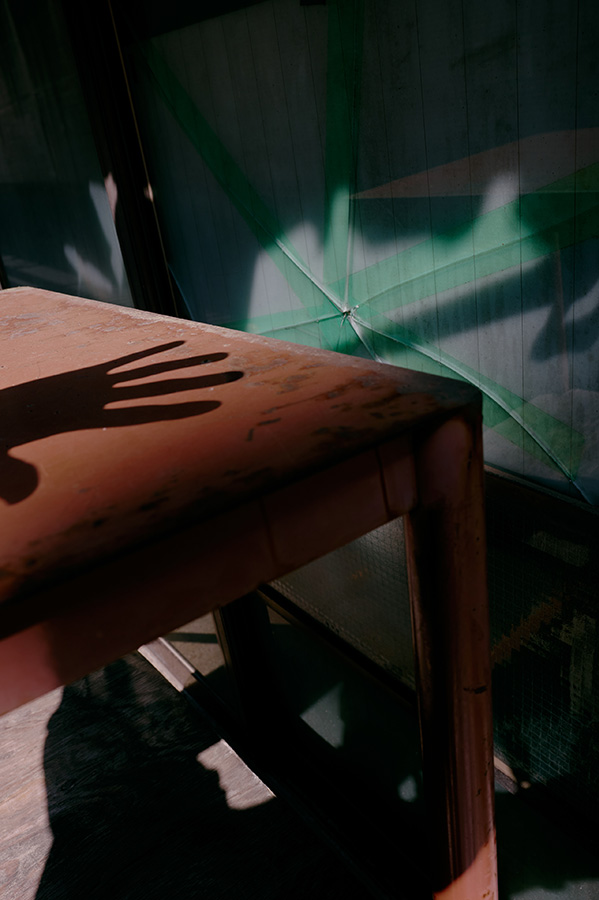
Sample 04 © Ulysses Aoki @30mm. Settings: 1/160 sec. f/9. ISO 100
Does the variable f/2.8-4 affect real-world use?
In order to keep the zoom lens as compact and lightweight as possible, it features a variable F2.8-4 aperture range instead of a constant aperture. That’s a trade-off, but actually in the real world it may not impact your ability to capture stunning images very much at all.
Most photographers will stop down for city and landscape scenes, interiors and shots where depth is beneficial. For portraits and subject photography at the longer end, you can still create isolated subjects with good background separation by getting closer to your subject and increasing the distance between them and the background.
You do lose one stop of light compared to F2.8 at the long end, which may affect some scenes, but on the whole most modern cameras will be able to cope with raised ISO or slower shutter speeds anyway.
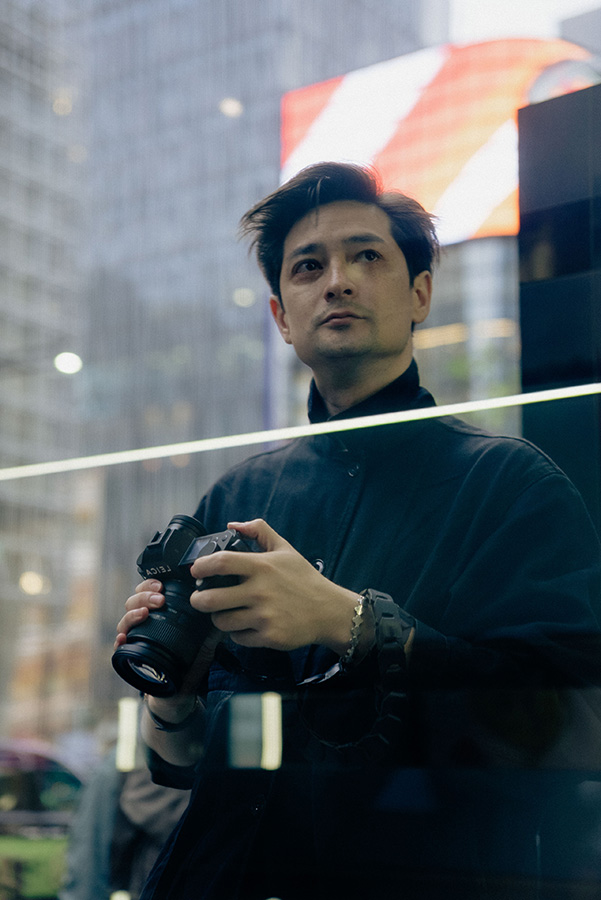
Photographer Ulysses Aoki
Who and what is it for?
The appeal of this lens lies in its lightweight design, combined with the very high image quality associated with the Contemporary range, at a noticeably lower cost than premium Art-series lenses.
It’s a great choice for street photography, allowing for more versatility than a prime. Likewise, for travel, landscapes, city scenes and everyday general photography, this could be the zoom you most often reach for, simply because it’s so conveniently small.
Hybrid creators could well be tempted too, with an ultra-wide end for vlogging and content creation through to a natural perspective that suits portraits and suchlike.
Starting at 20mm is rare, and extends what you can fit into the frame, while 60mm is still long enough for portraits, details and many everyday subjects you come across.
Gareth described it as a nice all-rounder, and that sums it up really well. For street photography, travel content and hybrid stills / video, this could be a very easy one to live with.
Get yours here:
Another model and a whole new range of filters launched at the same time, all of which you can read about in our Sigma 85mm F1.2 DG Art Review.
Share this post:
By Nick Dautlich on 08/09/2026

Nick Dautlich
Senior Content Writer and Product Reviewer
Nick Dautlich is the Senior Content Writer and Product Reviewer at Park Cameras, with over 15 years of photography experience. A Sony Imaging Professional and expert reviewer, Nick has worked with major brands such as Canon, Sony and Nikon. His work is also featured on Vanguard World UK’s website, Capture Landscapes, and Shutter Evolve. Nick’s photography includes National Trust projects and magazine covers and he is passionate about landscapes and storytelling. Nick also enjoys hiking and teaching his children about nature. Learn more on his profile page.
Trade in your old equipment
Fast and easy trade in service ensures your old gear is collected efficiently and you are paid quickly! It's very simple to trade in your unwanted photography gear. Just head over to our dedicated Sell or Part Exchange page, fill out the details, and we'll get back to you with an offer for your old gear. Take the cash, or put it towards the cost of your new gear. It's up to you! Find out more
sign up to the newsletter
Keep up to date on the latest photography news, events and offers. Sign up now