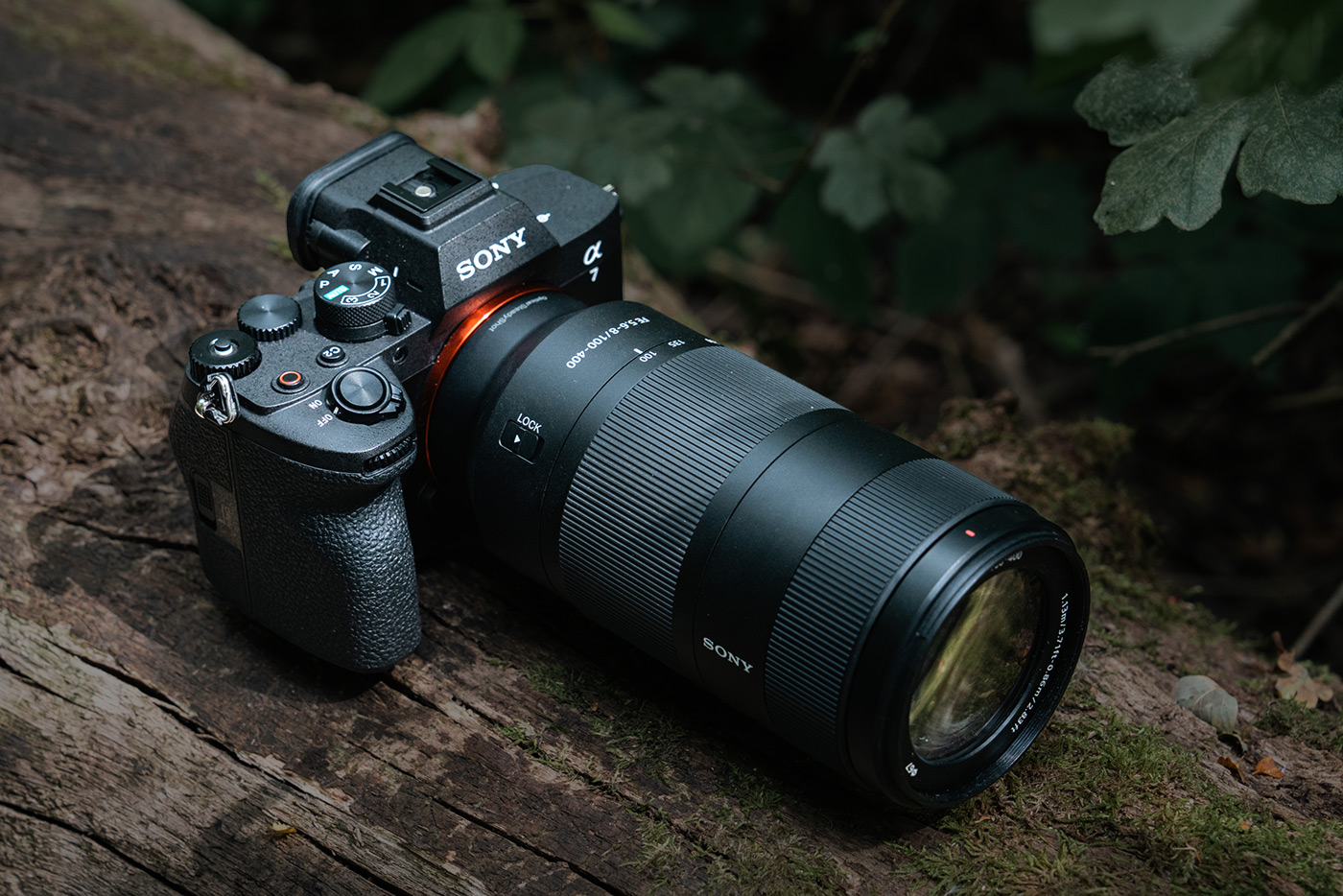
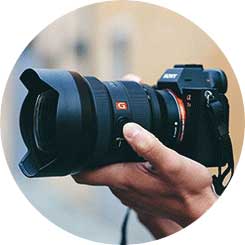
If the price of a Sony E-mount telephoto lens has put wildlife, birds or outdoor sports photography out of reach, the new full-frame FE 100-400mm F5.6-8 OSS could be exactly what you’ve been waiting for. It brings one of the most popular telephoto zoom ranges to Sony cameras in a far lighter, and more affordable package, making distant subjects accessible to more photographers than ever before.
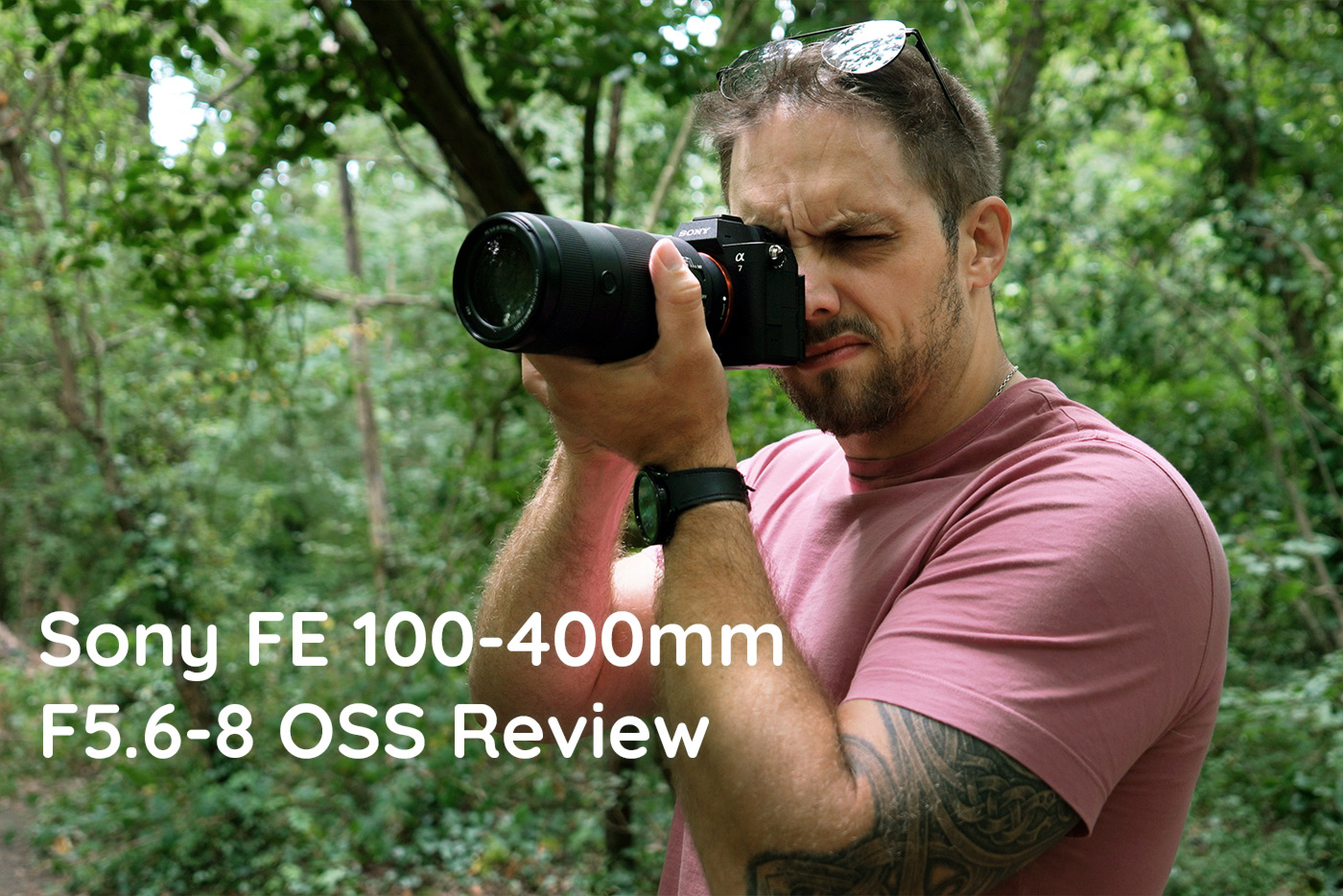
Gareth's hands-on video review
In our Sony FE 100-400mm F5.6-8 OSS review we look at whether this is the best value Sony E zoom lens today, and compare it with both of the GM versions, as well as other wildlife options, so you can decide which is best for your needs.
We’ve also got a hands-on video from Gareth Evans, sample images and even a zoom reach calculator, so let’s get underway, starting with the price and launch date.
How much is this lens?
The newest zoom fills the position as the most affordable option. The comparison below shows that it costs substantially less than either G Master alternative while providing the same versatile zoom range.
Weighing a mere 654g, the new model is the lightest of these three by far. It also delivers the highest magnification (0.41×), which all comes at a fraction of the price of its G Master siblings.
The close focusing and high magnification are great features for shooting close-up images of anything from flowers and insects to details of clothing, buildings or people.
We’ve established it has a lot to offer, but before exploring features in more detail, let’s look at which camera is best for it.
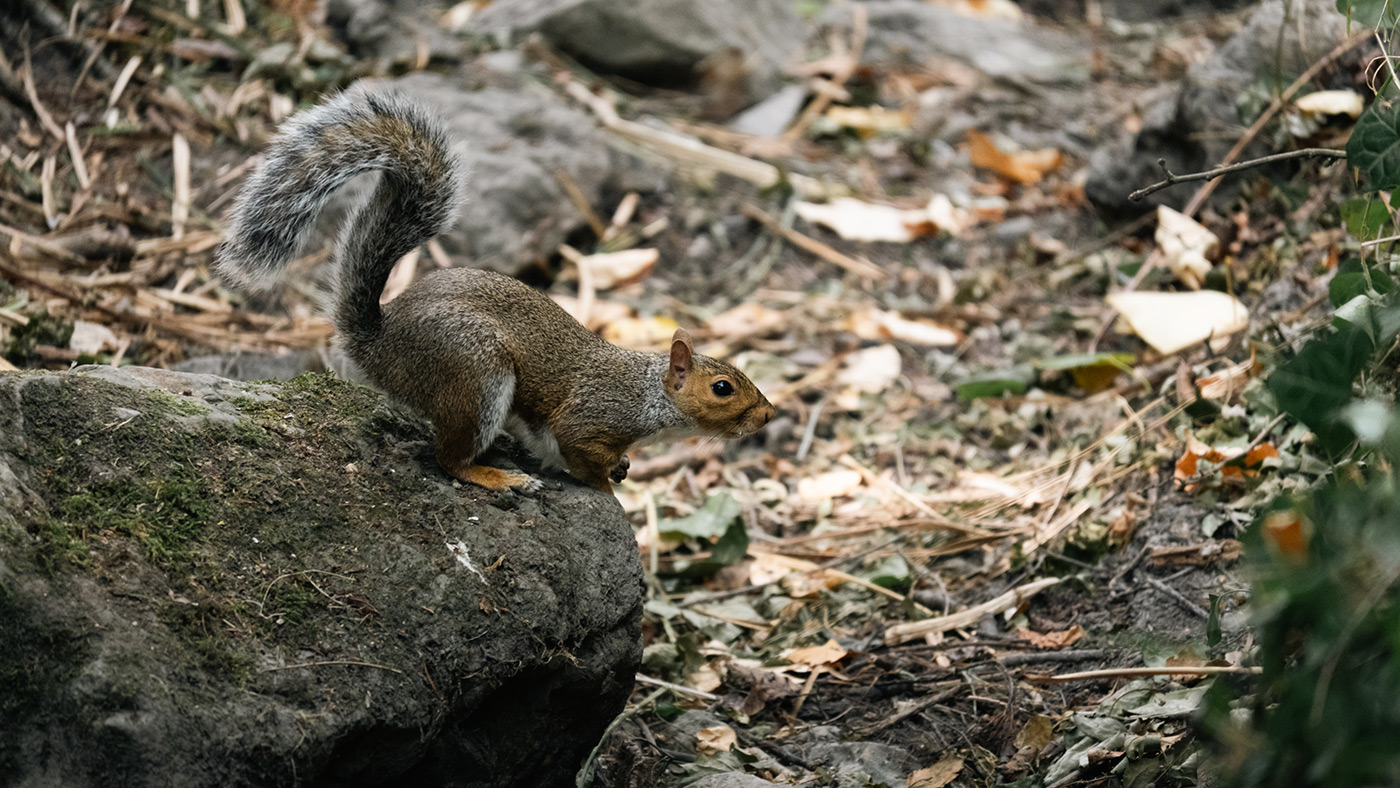
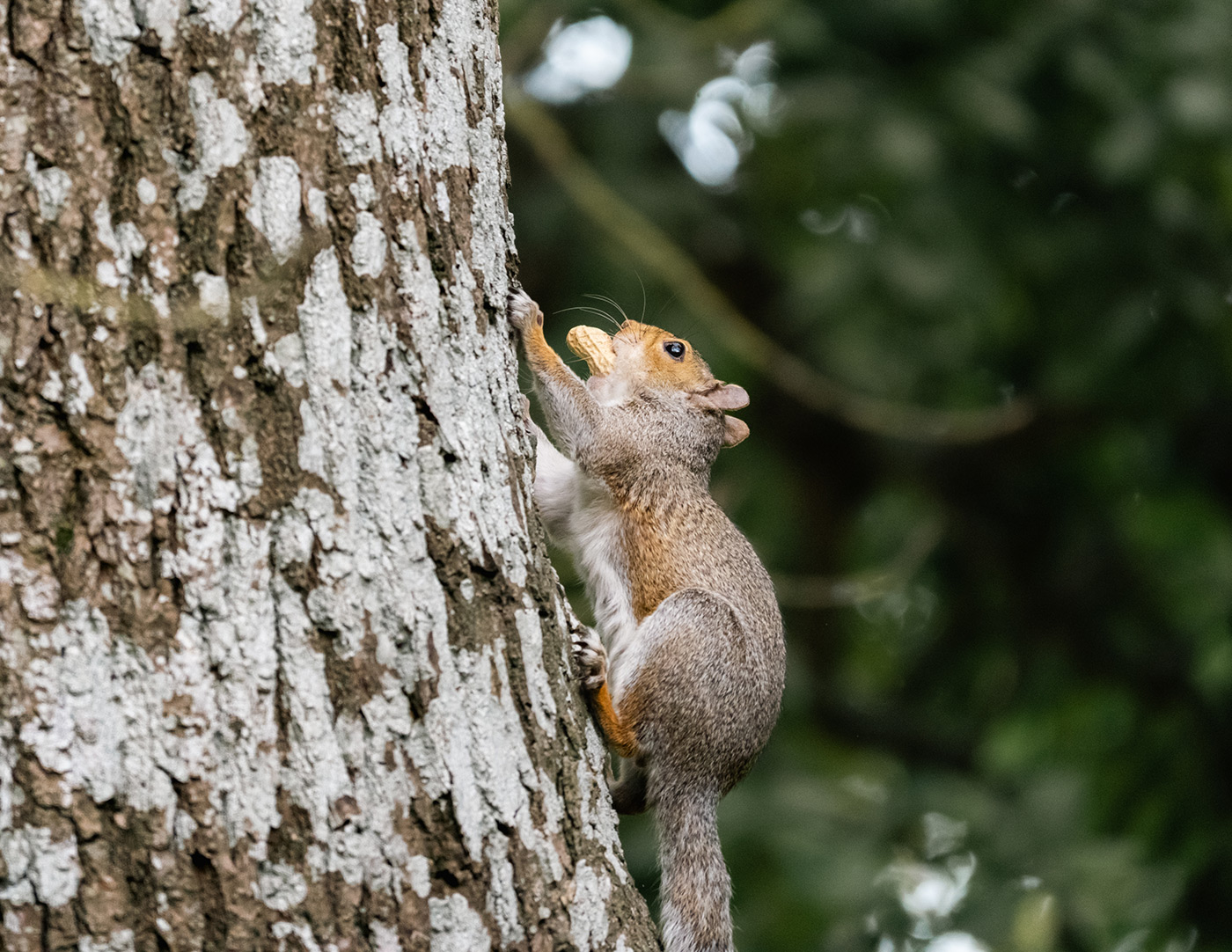
Sample 01 Squirrel @400mm. Camera settings: 1/1000 sec. f/8. ISO 3200
Which is the best camera for the budget-friendly option?
There's not really a single best option, as this zoom lens performs equally well across most of the range, and the right camera will depend on your budget and priorities.
For newcomers to the system, there are two ready-made full-frame kits. The A7 IV + 100-400mm kit costs £2,599.00, pairing the lens with a higher-resolution 33MP sensor and advanced AI-driven autofocus. The A7 III + 100-400mm lens kit is £1,999.00, providing the lens with a well established, third generation A7 series body.
Notably, an APS-C camera will extend the focal length to an effective 150-600mm, making an APS-C camera like this an excellent choice for wildlife and bird photography where the extra reach is generally beneficial.
If you prefer a full-frame option, this lens is well matched to other bodies such as the compact A7C and A7CR series and Gareth notes in his video review that it would complement an a7V or a7 IV.
Whichever you decide on, you’ll have a lightweight kit that’s comfortable for extended carry, while still offering the image quality and autofocus performance these cameras are well known for.
One advantage that this lens provides over third-party options is the ability to add a teleconverter. A SEL14TC 1.4x and SEL20TC 2x are available, extending maximum reach on full-frame to 560mm or 800mm respectively. On a crop-sensor body such as the A6700, this increases to an effective 210-840mm and 300-1200mm. Keep in mind that adding a teleconverter reduces the amount of light reaching the sensor, making the maximum aperture narrower, so you'll need brighter conditions or a higher ISO to compensate.
The lens reach calculator below provides more information about using this lens on each sensor platform, with or without a teleconverter.
Reach Calculator
How far will it reach, try our handy tool below to figure out the best subjects, cameras and extender combination for your needs.
Explore the lens
How Far Can the Sony FE 100-400mm Reach?
Choose your camera format and teleconverter to see the equivalent focal-length range, or explore the subjects this lens can capture.
Your equivalent reach
100-400mm
100-400mm on a full-frame camera
100mm600mm1200mm
Physical focal length100-400mm
Maximum aperturef/5.6-8
A versatile range for wildlife, sport, travel and distant landscape details.
Equivalent focal length describes the comparable angle of view on a full-frame camera. Using an APS-C camera changes the field of view but does not physically alter the lens focal length or maximum aperture.
Recommended use
Bird Photography
Useful range300-400mm
The longer end of the zoom helps isolate garden birds, waterfowl and larger birds in flight while keeping a practical working distance.
Why it worksPortable super telephoto reach
Consider APS-C whenYou need a tighter view of small or distant birds
Start around 300mm when locating a moving subject, then zoom towards 400mm once it is comfortably within the frame.
With that sorted, it’s time to summarise what Gareth’s thinks about this new model.
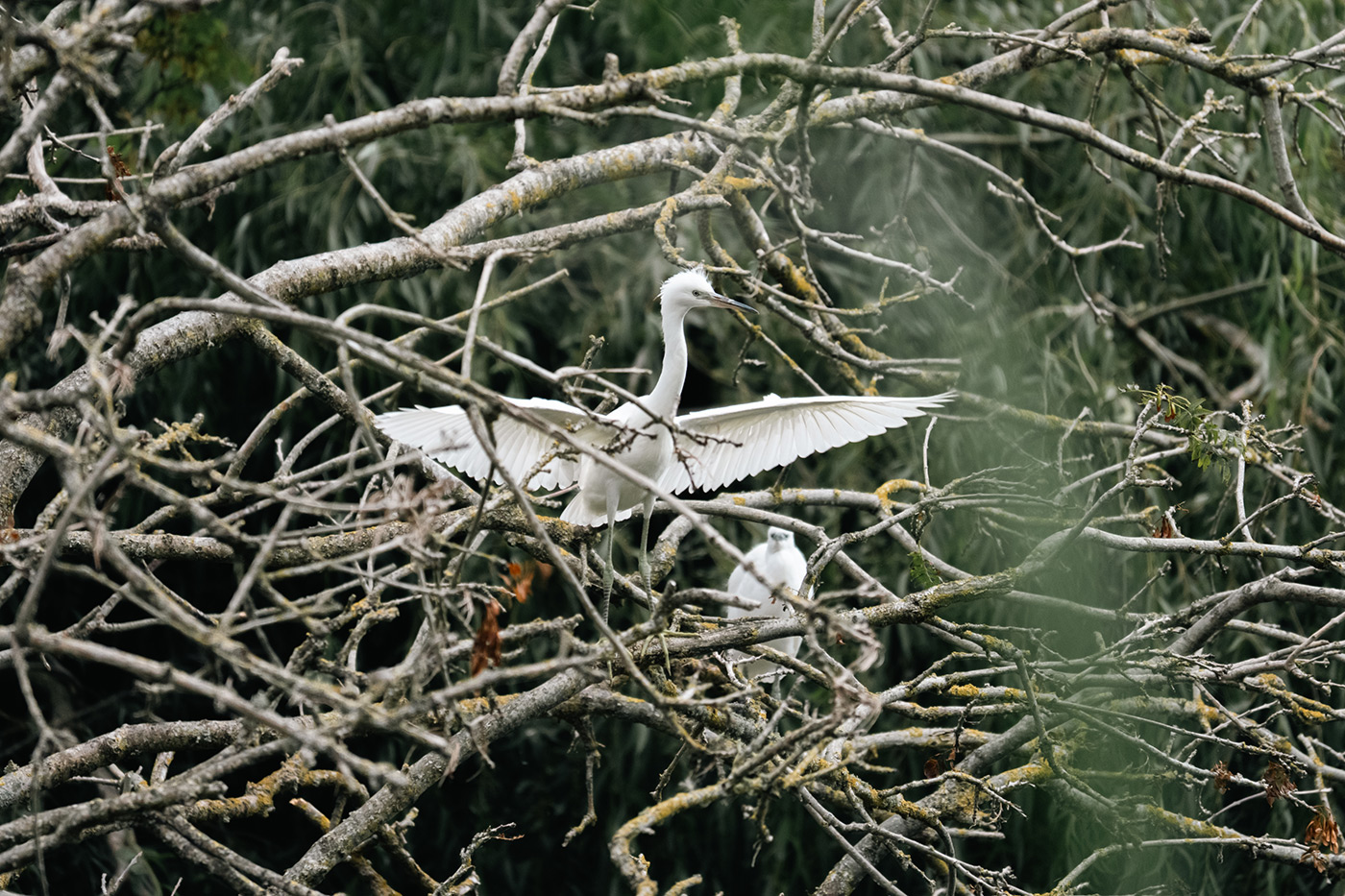
Sample 02 Little Egret @400mm. Camera settings: 1/1000 sec. f/8. ISO 1600
Gareth’s hands-on thoughts
Having had some hands-on time with the lens, Gareth comments that it is noticeably smaller and lighter than similar lenses, making for a very comfortable all day handheld shooting experience. It also fits easily in a camera bag unlike some larger lenses of this kind.
The optical stabilisation was very effective, and he comfortably shot using slower shutter speeds of 1/100 second at 400mm.
Even though the lens has a slower aperture, it was completely fine on a newer camera, so aperture shouldn’t be a concern for most users. He also commented that image quality is really nice, especially for a beginner lens.
Image quality
Despite accessible pricing, this zoom delivers very good image quality, allowing beginners and enthusiasts to capture subjects that have historically been reserved for quite expensive lenses. Key features that enhance image quality include:
2 ED elements, which help to control chromatic aberration (colour fringing)
2 aspherical elements that correct distortion and spherical aberration across the zoom range
A 9-blade circular aperture, matching the £2,149 GM, so background bokeh shape should be comparably smooth and round
Multi coating, providing baseline control of flare and ghosting
GM lenses include Super ED glass, providing better colour fringing correction, especially at the telephoto end. The flagship fixed-aperture lens also adds an XA (extreme aspherical) element, which render smoother bokeh and sharper edge-to-edge resolution, setting it apart in the trio.
The modest f/8 aperture at the telephoto end is also worth noting, as low-light situations will push your ISO up, creating more noise in images, which is a real-world trade-off. That said, with modern cameras and in good light you can expect excellent results, and noise reduction in post-processing will help minimise the effect too.
This has all the ingredients to produce enviable garden wildlife and travel images for many photographers, while also holding its own for outdoor sports, particularly in good lighting conditions.
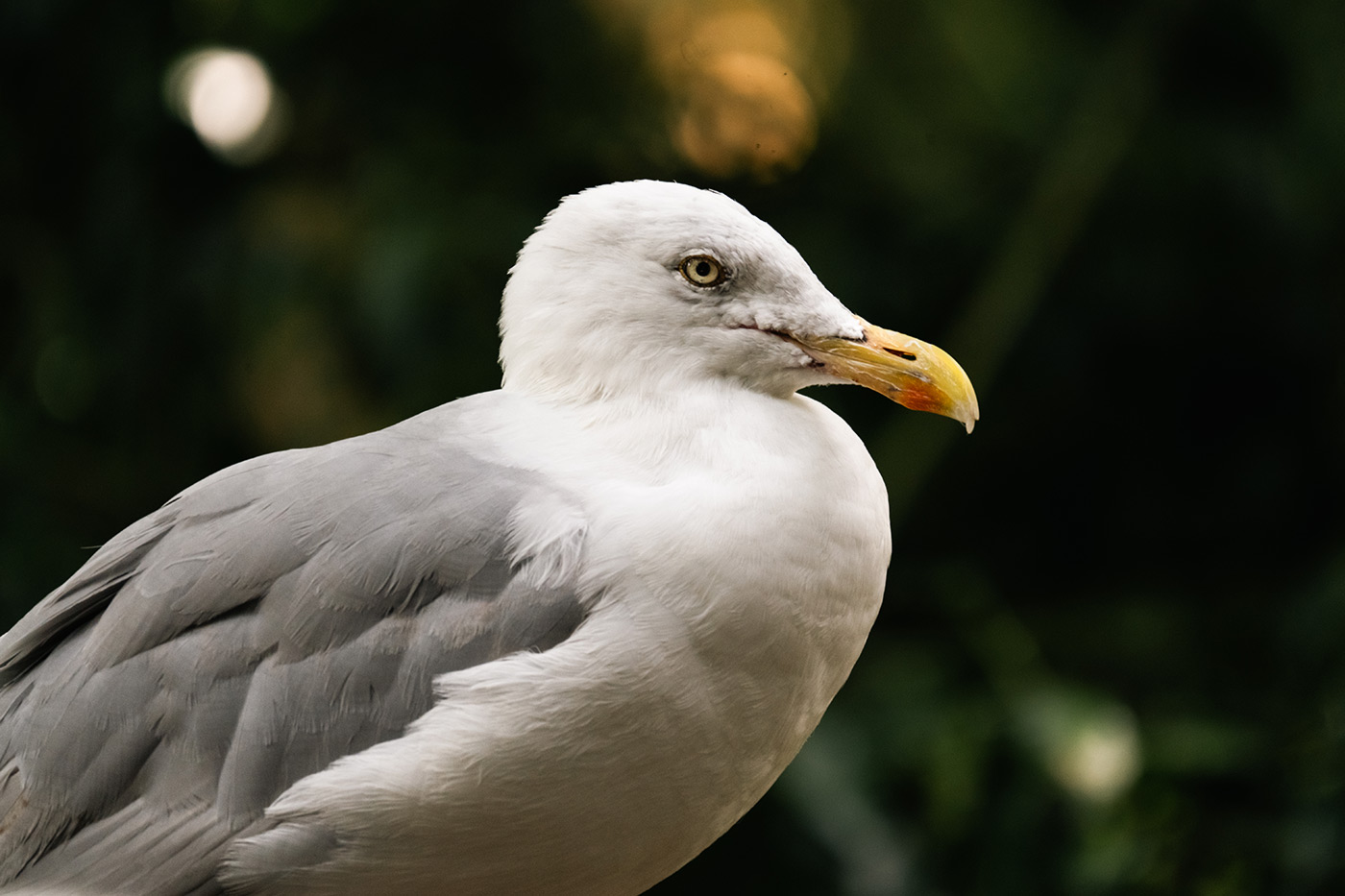
Sample 03 Seagull @560mm (with 1.4x teleconverter). Camera settings: 1/200 sec. f/11. ISO 1000
Autofocus and image stabilisation
At longer focal lengths it’s important to acquire focus accurately on what are often small or distant subjects, while still being able to handhold your kit to stay agile when shooting. This is achieved by using dual linear motors, which provide fast, quiet and responsive autofocus.
Optical SteadyShot (OSS) complements the autofocus system by reducing the effects of camera shake. While an official stabilisation rating isn't published, OSS typically makes it easier to shoot at slower shutter speeds. Gareth noted that when photographing static subjects OSS helps maintain a steadier viewfinder image when tracking subjects at longer focal lengths.
If you have a more recent camera body, it should work very well with features such as Real-time Tracking, Bird Eye AF and Animal Eye AF. This will contribute to capturing sharp results. Next we move onto handling.
Handling and usability
As noted earlier, this is extremely lightweight for the focal length. Measuring just 78.2 × 164.5mm it’s also really compact, which is great for handholding over extended periods. It has an internal focus mechanism, which means that the front element doesn't rotate during AF operation. That helps when using circular polarising filters, and ND filters.
The external zoom mechanism does extend the lens as you zoom, causing the balance to shift. This is common among telephoto zoom lenses and is also the case with the original F4.5-5.6 GM OSS.
The lens barrel has several controls, including an AF/MF switch and a focus range limiter (FULL / 3m-∞) and a customisable focus hold button. This is a really handy feature that lets you quickly access commonly used camera settings from the lens, rather than diving into the camera menu.
There’s also an image stabilisation switch, and the E-mount mount and controls are dust and moisture sealed for outdoor use. Lastly, the 67mm filter thread is a compact and very common size. This allows for cost-effective camera lens filters to protect the front element, and enhance results.
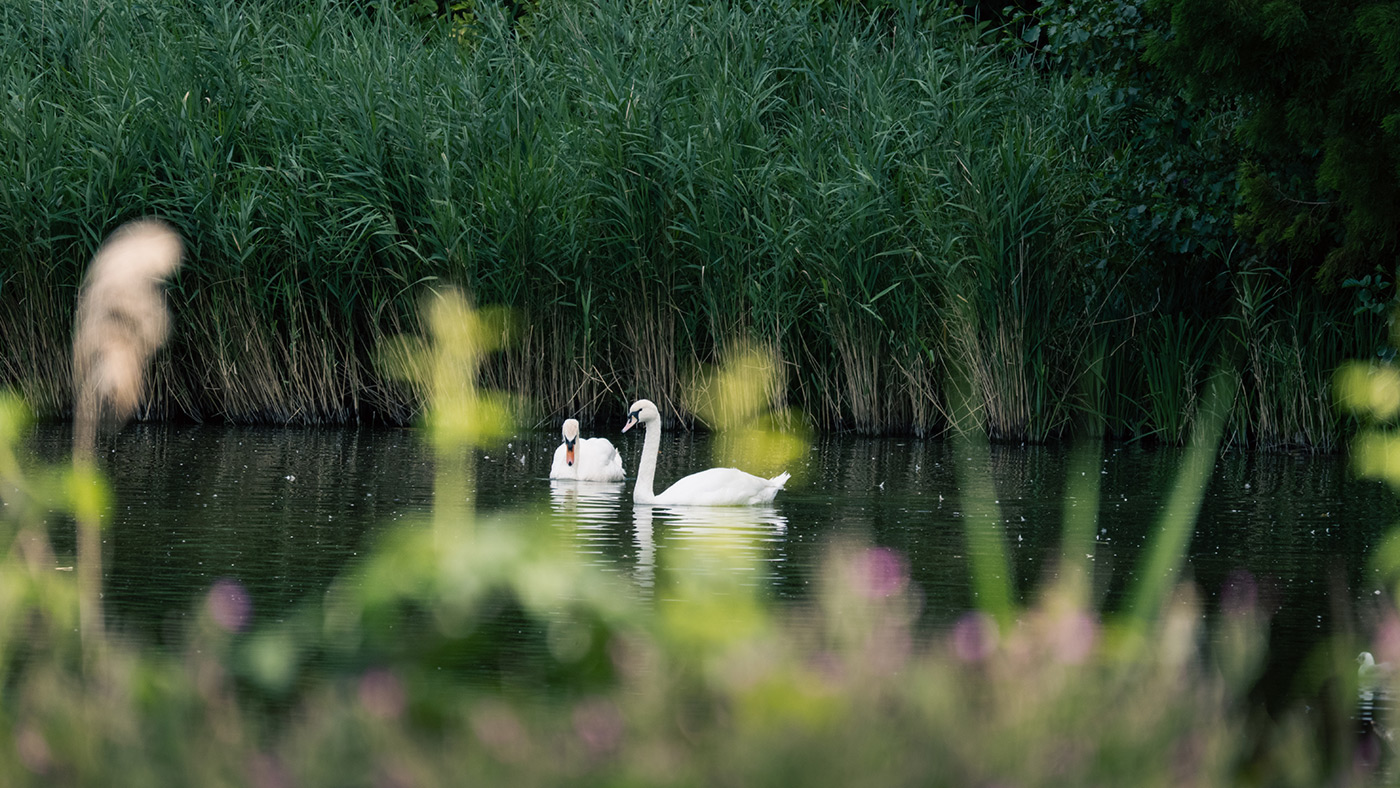
Sample 04 Swans @400mm. Camera settings: 1/800 sec. f/8. ISO 1250
What subjects can you capture with it?
We’ve already mentioned quite a few subjects that it covers really well, including wildlife, sports and birds. There are several others, which you may not have considered, such as:
Portraits, lifestyle and fashion photography
Pets and animals
Events and outdoor performances, airshows, aviation and similar
Watersport
Nature and close-ups
Travel
While not exhaustive, this list gives you a good idea of other subjects that are suited to this focal range.
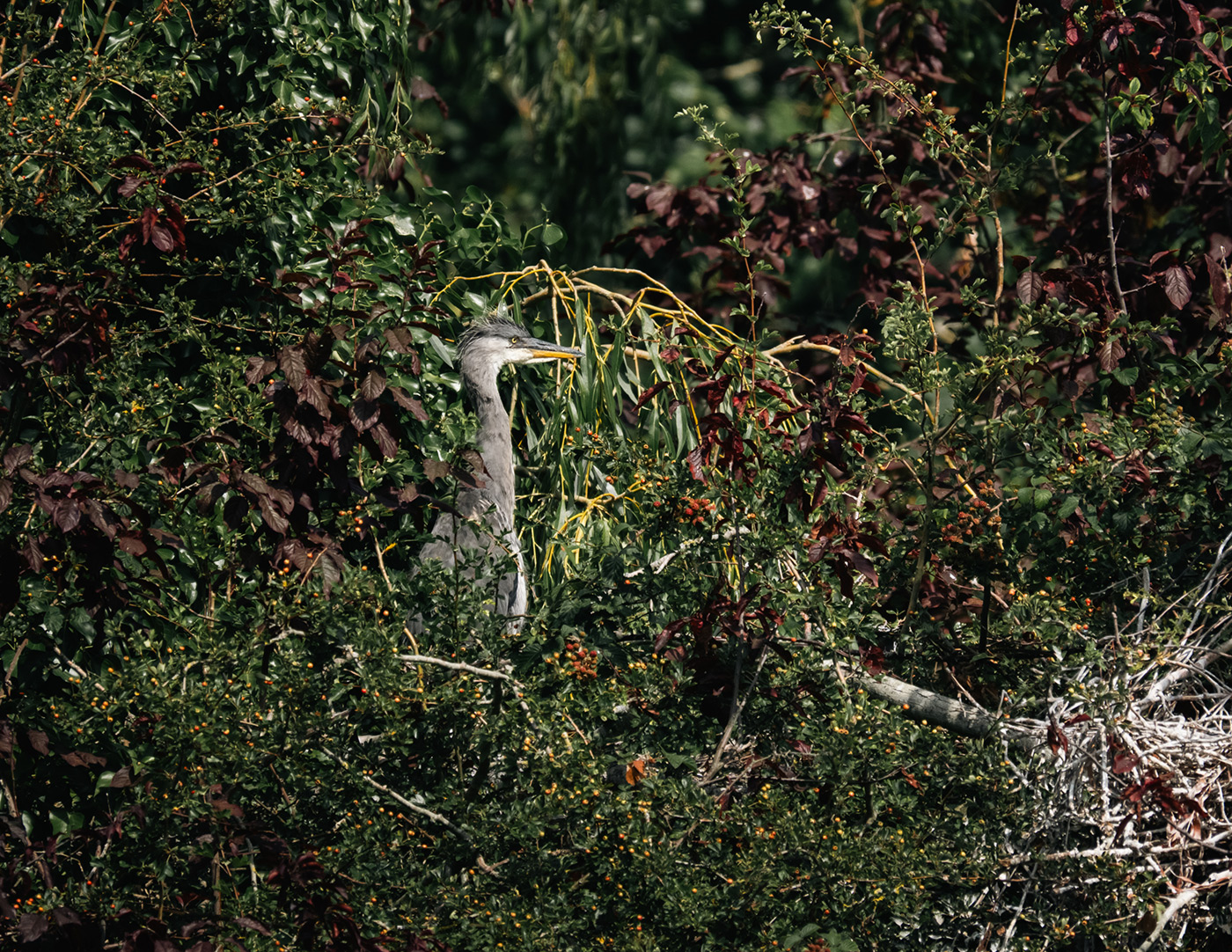
Sample 05 Grey Heron @560mm (with 1.4x teleconverter). Camera settings: 1/800 sec. f/11. ISO 640
Should you buy it?
This could be the right time to make the move if you've been considering telephoto photography, but are put off by the cost.
Although there are some compromises compared to the GM lenses, such as a slower maximum aperture and the absence of certain controls, this is an excellent option for many lighter full-frame and APS-C cameras. This includes crop format models like the A6700, where the effective reach extends even further. Adding a teleconverter extends reach further still, providing the versatility to capture really far off or very small subjects more easily.
For beginners, enthusiasts and anyone who wants an accessible super telephoto lens for travel, landscape and wildlife, this really is an appealing option that won't break the bank, or your back!
Sample 06 Squirrel @400mm. Camera settings: 1/800 sec. f/8. ISO 4000
Nick Dautlich is the Senior Content Writer and Product Reviewer at Park Cameras, with over 15 years of photography experience. A Sony Imaging Professional and expert reviewer, Nick has worked with major brands such as Canon, Sony and Nikon. His work is also featured on Vanguard World UK’s website, Capture Landscapes, and Shutter Evolve. Nick’s photography includes National Trust projects and magazine covers and he is passionate about landscapes and storytelling. Nick also enjoys hiking and teaching his children about nature. Learn more on his profile page.
Trade in your old equipment
Fast and easy trade in service ensures your old gear is collected efficiently and you are paid quickly! It's very simple to trade in your unwanted photography gear. Just head over to our dedicated Sell or Part Exchange page, fill out the details, and we'll get back to you with an offer for your old gear. Take the cash, or put it towards the cost of your new gear. It's up to you!
Find out more
sign up to the newsletter
Keep up to date on the latest photography news, events and offers.
Sign up now