- Call us 01444 237070

-
- Back
- Used Cameras
- Used Accessories
- Used Lenses
- Back
- Used Canon Lenses
- Used Nikon Lenses
- Used Fujifilm Lenses
- Used Sony Lenses
- Used Micro 4/3rds Lenses
- Used Leica Lenses
- Used Panasonic Lenses
- Used Pentax Lenses
- Used Samyang Lenses
- Used Sigma Lenses
- Used Tamron Lenses
- Used Tokina Lenses
- Used Voigtlander Lenses
- Used Zeiss Lenses
- Used Hasselblad Lenses
- Used Video
- Used Film Equipment
- Used Stock Alert
- Used Blank Test
- Sell or Part Exchange
- Used Clearance
- Recently Added Used Equipment
- Park Picks
- Faulty
- Trade-In
- Blog
- New in
- Call us
- Contact us
- Stores
- Sign in
product
A-021
Call us: 01444 237070
Search terms
Brands
Category
Products
[[{name}]]
[[{attributes.Price}]]
- Categories
- Tips & Inspiration
- Reviews
- News
- Events
- Features
- Buying Guides
- Competitions
UK Astrophotography Highlights November 2026
Images ©Jonathan Penberthy
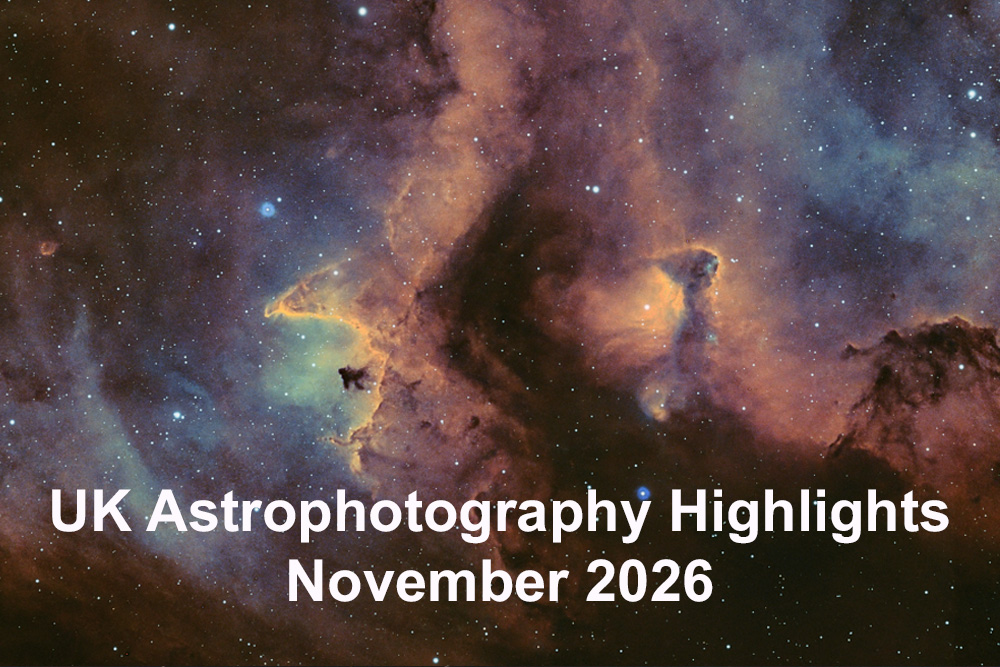
At this time of year, I imagine the local wildlife breathe a sigh of relief, as we’re no longer doing astro in shorts and inflicting our bare legs on them! I’ve dusted off my astro suit (a boiler-suit affair designed for working in freezers) and my snow boots. The nights are getting colder, but colder nights mean crisper images. We’ve got some exciting news, tips and experiments to share this month.
NEWS
UK Astrophotography Calendar: November 2026
All times GMT for London · 🌌 Dark = astronomical darkness with the Moon below the horizon · ↑ rise ↓ set
| Monday | Tuesday | Wednesday | Thursday | Friday | Saturday | Sunday |
|---|---|---|---|---|---|---|
|
26 Oct
🌕 Full Moon (04:12)
☀️ Sun: 06:43 – 16:45
🌙 Moon: ↑ 16:21 · ↓ 07:16
🚫 Moonlit (No Dark)
|
27 Oct
🌖 Waning Gibbous
☀️ Sun: 06:45 – 16:43
🌙 Moon: ↑ 16:47 · ↓ 08:47
🚫 Moonlit (No Dark)
|
28 Oct
🌖 Waning Gibbous
☀️ Sun: 06:47 – 16:41
🌙 Moon: ↑ 17:26 · ↓ 10:16
🚫 Moonlit (No Dark)
|
29 Oct
🌖 Waning Gibbous
☀️ Sun: 06:49 – 16:39
🌙 Moon: ↑ 18:22 · ↓ 11:33
🚫 Moonlit (No Dark)
|
30 Oct
🌖 Waning Gibbous
☀️ Sun: 06:50 – 16:37
🌙 Moon: ↑ 19:36 · ↓ 12:33
🌌 Dark: 18:30 – 19:36
|
31 Oct
🌖 Waning Gibbous
☀️ Sun: 06:52 – 16:35
🌙 Moon: ↑ 21:01 · ↓ 13:14
🌌 Dark: 18:28 – 21:01
|
1 Nov
🌗 Last Quarter (20:28)
☀️ Sun: 06:54 – 16:34
🌙 Moon: ↑ 22:28 · ↓ 13:43
🌌 Dark: 18:27 – 22:28
|
|
2 Nov
🌘 Waning Crescent
☀️ Sun: 06:56 – 16:32
🌙 Moon: ↑ 23:53 · ↓ 14:03
🌌 Dark: 18:25 – 23:53
🌙 Moon, Jupiter & Mars 🧭 Look: E–SE after moonrise (23:53) ⏰ Moon ~2° from Jupiter around 01:00; Regulus 1.6° by dawn
|
3 Nov
🌘 Waning Crescent
☀️ Sun: 06:57 – 16:30
🌙 Moon: ↑ --:-- · ↓ 14:18
🌌 Dark: 18:24 – 01:15
|
4 Nov
🌘 Waning Crescent
☀️ Sun: 06:59 – 16:28
🌙 Moon: ↑ 01:15 · ↓ 14:31
🌌 Dark: 18:22 – 02:33
|
5 Nov
🌘 Waning Crescent
☀️ Sun: 07:01 – 16:27
🌙 Moon: ↑ 02:33 · ↓ 14:43
🌌 Dark: 18:21 – 03:50
☄️ Southern Taurids Peak 🧭 Look: S (Taurus) ⏰ Best: Evening until moonrise (02:33) · slow fireballs, ~5/hr
|
6 Nov
🌘 Waning Crescent
☀️ Sun: 07:03 – 16:25
🌙 Moon: ↑ 03:50 · ↓ 14:55
🌌 Dark: 18:19 – 05:07
|
7 Nov
🌘 Waning Crescent
☀️ Sun: 07:05 – 16:23
🌙 Moon: ↑ 05:07 · ↓ 15:09
🌌 Dark: 18:18 – 05:11
🌘 Crescent Moon & Venus 🧭 Look: ESE, very low ⏰ Best: ~06:15 · Moon 2° from Venus, Spica nearby
|
8 Nov
🌘 Waning Crescent
☀️ Sun: 07:06 – 16:22
🌙 Moon: ↑ 06:24 · ↓ 15:25
🌌 Dark: 18:17 – 05:13
|
|
9 Nov
🌑 New Moon (07:02)
☀️ Sun: 07:08 – 16:20
🌙 Moon: ↑ 07:40 · ↓ 15:46
🌌 Dark: 18:15 – 05:14
🌑 Prime Deep-Sky Window
|
10 Nov
🌒 Waxing Crescent
☀️ Sun: 07:10 – 16:18
🌙 Moon: ↑ 08:54 · ↓ 16:14
🌌 Dark: 18:14 – 05:16
|
11 Nov
🌒 Waxing Crescent
☀️ Sun: 07:12 – 16:17
🌙 Moon: ↑ 10:02 · ↓ 16:52
🌌 Dark: 18:13 – 05:17
|
12 Nov
🌒 Waxing Crescent
☀️ Sun: 07:13 – 16:15
🌙 Moon: ↑ 10:59 · ↓ 17:41
🌌 Dark: 18:12 – 05:19
☄️ Northern Taurids Peak 🧭 Look: S (Taurus) ⏰ Best: Around midnight · Moonless night, ~5/hr
|
13 Nov
🌒 Waxing Crescent
☀️ Sun: 07:15 – 16:14
🌙 Moon: ↑ 11:44 · ↓ 18:42
🌌 Dark: 18:42 – 05:20
|
14 Nov
🌒 Waxing Crescent
☀️ Sun: 07:17 – 16:13
🌙 Moon: ↑ 12:16 · ↓ 19:50
🌌 Dark: 19:50 – 05:21
|
15 Nov
🌒 Waxing Crescent
☀️ Sun: 07:18 – 16:11
🌙 Moon: ↑ 12:41 · ↓ 21:02
🌌 Dark: 21:02 – 05:23
|
|
16 Nov
🌒 Waxing Crescent
☀️ Sun: 07:20 – 16:10
🌙 Moon: ↑ 12:59 · ↓ 22:16
🌌 Dark: 22:16 – 05:24
🪐 Mars–Jupiter Conjunction 🧭 Look: E after 01:00, S by dawn ⏰ Best: Pre-Dawn · 1.2° apart, Regulus close by
|
17 Nov
🌓 First Quarter (11:48)
☀️ Sun: 07:22 – 16:09
🌙 Moon: ↑ 13:14 · ↓ 23:29
🌌 Dark: 23:29 – 05:26
☄️ Leonids Peak (night 17/18) 🧭 Look: E–SE (Leo, rises ~22:30) ⏰ Best: After moonset (23:29) to dawn · ~10–15/hr
|
18 Nov
🌔 Waxing Gibbous
☀️ Sun: 07:24 – 16:07
🌙 Moon: ↑ 13:26 · ↓ --:--
🌌 Dark: 00:43 – 05:27
|
19 Nov
🌔 Waxing Gibbous
☀️ Sun: 07:25 – 16:06
🌙 Moon: ↑ 13:38 · ↓ 00:43
🌌 Dark: 01:59 – 05:28
★ Park Cameras Event
🔭 Observe the Moon Evening 📍 Burgess Hill store ⏰ 17:30 – 19:30 🌔 Moon 70% lit, high in the SE–S |
20 Nov
🌔 Waxing Gibbous
☀️ Sun: 07:27 – 16:05
🌙 Moon: ↑ 13:50 · ↓ 01:59
🌌 Dark: 03:19 – 05:30
🌔 Moon near Saturn 🧭 Look: SSE after dark ⏰ Best: Evening · ~5° apart
|
21 Nov
🌔 Waxing Gibbous
☀️ Sun: 07:28 – 16:04
🌙 Moon: ↑ 14:04 · ↓ 03:19
🌌 Dark: 04:43 – 05:31
☿ Mercury Greatest Elongation 🧭 Look: ESE, low (Venus above right) ⏰ Best: ~40 min before sunrise · 19.6° from Sun
|
22 Nov
🌔 Waxing Gibbous
☀️ Sun: 07:30 – 16:03
🌙 Moon: ↑ 14:21 · ↓ 04:43
🚫 Moonlit (No Dark)
|
|
23 Nov
🌔 Waxing Gibbous
☀️ Sun: 07:32 – 16:02
🌙 Moon: ↑ 14:44 · ↓ 06:12
🚫 Moonlit (No Dark)
|
24 Nov
🌕 Full Moon (14:53)
☀️ Sun: 07:33 – 16:01
🌙 Moon: ↑ 15:18 · ↓ 07:44
🚫 Moonlit (No Dark)
🌕 Beaver Supermoon
|
25 Nov
🌖 Waning Gibbous
☀️ Sun: 07:35 – 16:00
🌙 Moon: ↑ 16:07 · ↓ 09:09
🚫 Moonlit (No Dark)
🪐 Uranus at Opposition 🧭 Look: S near midnight (Taurus) ⏰ Best: 22:00–01:00 · binoculars, between Pleiades & Hyades
|
26 Nov
🌖 Waning Gibbous
☀️ Sun: 07:36 – 15:59
🌙 Moon: ↑ 17:16 · ↓ 10:20
🚫 Moonlit (No Dark)
🔴 Mars passes Regulus 🧭 Look: S ⏰ Best: Pre-Dawn · 1.7° apart
|
27 Nov
🌖 Waning Gibbous
☀️ Sun: 07:38 – 15:58
🌙 Moon: ↑ 18:41 · ↓ 11:10
🌌 Dark: 17:58 – 18:41
✨ Venus at Greatest Brilliancy 🧭 Look: SE ⏰ Best: Dawn · mag −4.9
|
28 Nov
🌖 Waning Gibbous
☀️ Sun: 07:39 – 15:57
🌙 Moon: ↑ 20:11 · ↓ 11:44
🌌 Dark: 17:58 – 20:11
🌖 Moon in the Beehive (M44) 🧭 Look: E ⏰ Best: ~22:50 · bright Moon, short exposures
|
29 Nov
🌖 Waning Gibbous
☀️ Sun: 07:41 – 15:56
🌙 Moon: ↑ 21:40 · ↓ 12:07
🌌 Dark: 17:57 – 21:40
|
|
30 Nov
🌖 Waning Gibbous
☀️ Sun: 07:42 – 15:56
🌙 Moon: ↑ 23:04 · ↓ 12:25
🌌 Dark: 17:57 – 23:04
🌖 Moon, Jupiter & Mars 🧭 Look: S ⏰ Best: Pre-Dawn · Moon 2° from Jupiter
|
1 Dec
🌗 Last Quarter (06:08)
☀️ Sun: 07:44 – 15:55
🌙 Moon: ↑ --:-- · ↓ 12:38
🌌 Dark: 17:56 – 00:23
|
2 Dec
🌘 Waning Crescent
☀️ Sun: 07:45 – 15:54
🌙 Moon: ↑ 00:23 · ↓ 12:51
🌌 Dark: 17:56 – 01:41
|
3 Dec
🌘 Waning Crescent
☀️ Sun: 07:46 – 15:54
🌙 Moon: ↑ 01:41 · ↓ 13:03
🌌 Dark: 17:56 – 02:57
|
4 Dec
🌘 Waning Crescent
☀️ Sun: 07:48 – 15:53
🌙 Moon: ↑ 02:57 · ↓ 13:16
🌌 Dark: 17:56 – 04:12
|
5 Dec
🌘 Waning Crescent
☀️ Sun: 07:49 – 15:53
🌙 Moon: ↑ 04:12 · ↓ 13:31
🌌 Dark: 17:55 – 05:28
|
6 Dec
🌘 Waning Crescent
☀️ Sun: 07:50 – 15:52
🌙 Moon: ↑ 05:28 · ↓ 13:51
🌌 Dark: 17:55 – 05:49
|
View the Night-Sky evening 19th Nov
We are holding our first view the Night-Sky evening on 19th November at our Burgess Hill store, all are welcome and its free! We will have Celestron there showcasing the Celestron Origin Mark II - a RASA smartscope - just think of the possibilities at f2! and many an Astro Nerd (including me!). If the weather is good we shall project the Moon live on to the side of the building, have a few telescopes out for people to see in action and of course our team will be on hand to offer guidance and advice.
Vaonis ATLAS
How can we not mention the launch of the Vaonis Atlas, I can't wait to get my hands on one or two (if I am allowed near the Twin version) to try! Sporting one or two 80mm F4.5 apochromatic quadruplets, and the IMX585 sensor, this rig is like a whole observatory of some serious standing in a portable package!
Aurora 9-11th October
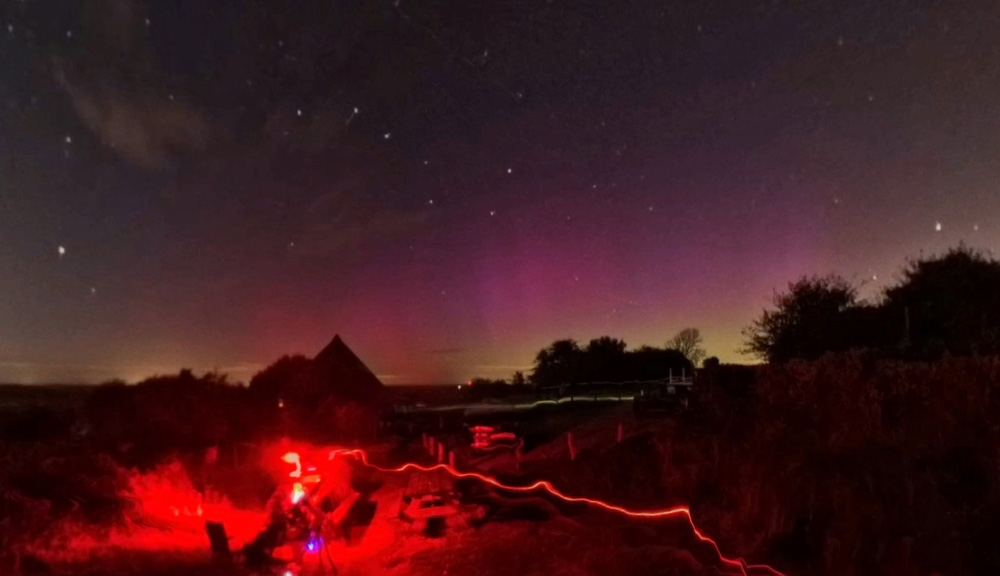
Once again, and unexpectedly here in the south of the UK we were treated to a lightshow that is second to none. Sadly I was laid up in bed with gout and so couldn't get out to capture it, but here is a screen shot that Woody Ede took from a timelapse video he made with his Insta360 X4.
Coincidentally, I also took a picture of the Plough the last time we had such a display (16th May 2024).
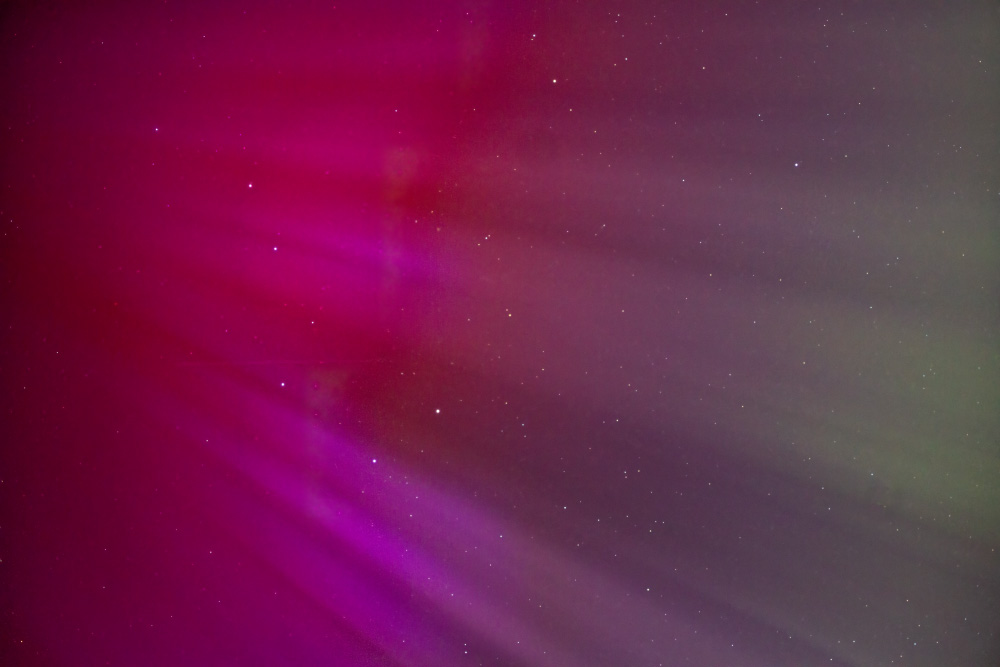
EXIF
EF-S 18-55mm
f4.5
ISO 1600
6 sec
Meet AstroBear: A Free Planning App for Astrophotographers
If like me you've ever lost half a clear night flicking between a weather app, a planetarium program and a spreadsheet of integration time, you'll understand why AstroBear exists. It's a new UK-built web app that pulls astrophotography planning into one place, and it's completely free, made for the benefit of the astro community.
Who's behind it
AstroBear was built by Cassio Trevisani, a fellow UK imager who I met one night by chance in a dark sky location. What I like is that Cassio is fairly new to the hobby himself, about a couple of years in, and built the site out of his own frustration at piecing everything together from scattered guides and forums. He shoots with an Askar 71F and an ASI2600MC Pro all on a Sky Watcher GTI Mount, and his narrowband nebula images are impressive to say the least. Later in this blog you will read about a collaboration between us on the Squid Nebula.
What it does
The session planner is the heart of it. You pick a date and location, browse what's up that night, add a target to a project, frame it in the FOV simulator, choose filters, work out your subs with the exposure calculator, then log hours per channel until the project's done. That last bit is a real help on multi-night targets, where it's easy to lose track of how much data you've got per filter.
Around that you get weather (cloud, transparency, seeing and moon phase), an events calendar, a dark-sky site finder, equipment comparisons, learning videos, a forum and a built-in AI assistant called Ursa.
Worth a look
It's early days, but there's a lot here already and it costs nothing to try. Have a play at astrobear.co.uk, plug in your own rig and see what it suggests for the next clear night!
TUTORIAL
How to shoot Meteor Showers
During November, the Leonids Meteor Shower will take place in the night sky, peaking on 17-18th November. They are usually one of the more prolific annual meteor showers, with fast, bright meteors giving you a good opportunity to capture them on camera (pending clear skies!).
Follow our tips to help you capture some great images:
- Look for dark sky – it sounds obvious, but the best conditions for shooting meteors are cloudless skies and when there is little light from the moon (due to set at around midnight in mid-November). Meteors can be seen in all parts of the sky, so it’s good to be in a wide open space, but if you trace the paths that the meteors take, they seem to originate from the constellation of Leo. Check out a collection of UK stargazing locations that are publicly accessible during night-time recommended by Go Stargazing at gostargazing.co.uk/location-map. Phone Apps are also available which will pinpoint the area in the sky where you're likely to see the most meteors for any particular shower
- Use a wide aperture – Use manual mode and a set as wide an aperture on your lens as possible in order to let as much light through to the sensor as you can. Set your exposure time to 20-30 seconds. You’ll also want to use manual focus, setting it to infinity
- Up the ISO – set your ISO to 400, 800 or 1600 in order to make the sensor more sensitive
- Fill your photo with meteors - meteor showers are typically unpredictable, so you might want to fill your shot with a series of images shot over a long period. To do this, some cameras have a built-in interval timers which enables you to automatically set how many shots the camera takes, and the gap between each shot. You can then layer these in Adobe Photoshop or Lightroom, or use something like Sequator which is a free piece of software that can track stars on multiple images, align stars and stack them
- Wrap up warm – like the rest of astronomy, hunting for meteors is a waiting game, so we recommend you wrap up warm, have a comfy chair and a warm drink as you could be outside for a while.
HDRMT - High Dynamic Range Multiscale Transform
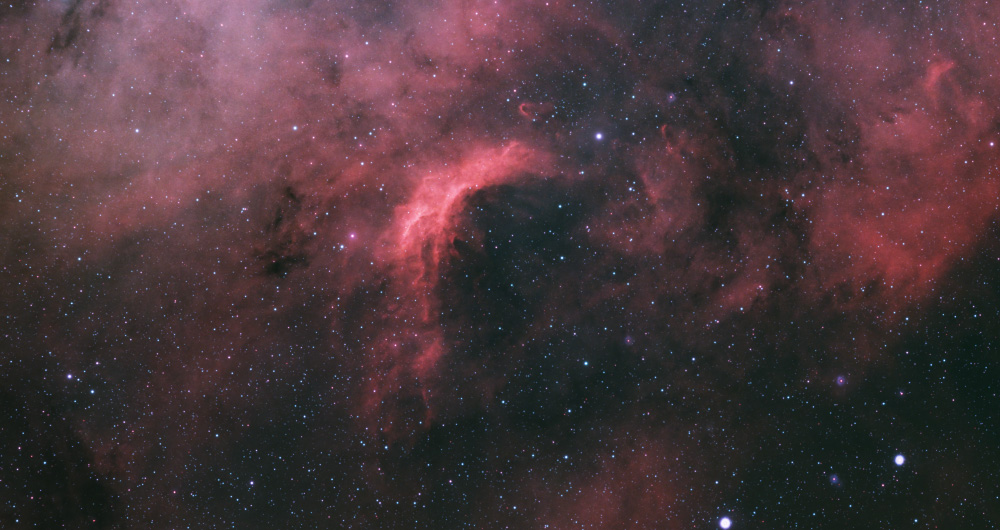
What you may ask is that? Which is exactly what I did when the AstroBear said to me to use it in Pixinsight to bring out more detail in my image that I was processing. You can find it under Process in the menu as HDRMultiscaleTransform, it works really well for nebula of all kinds, but can be a bit too much on some targets. Of recent I have been imaging parts of targets that often get overlooked. So I thought I would try it on what I call 'the back of the' North American Nebula (NGC 7000). As you can see I have cranked the Number of Layers to 8, and left the rest to its default settings, then just drop that triangle on your image:
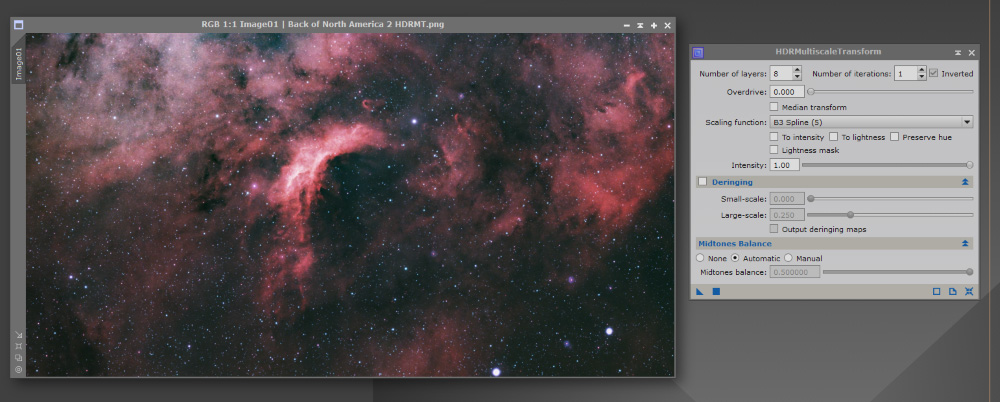
Before:
After:
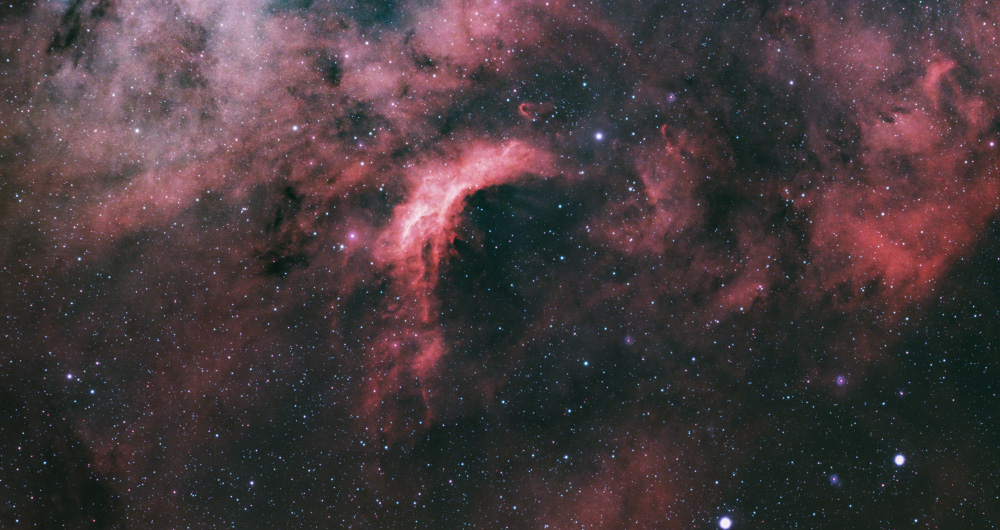
Equipment and settings:
Camera: ZWO ASI585MC Pro.
Telescope: Altair Astro 70ED Telescope (420mm).
Mount: Juwei 17 Mount Similar: ZWO New AM5N Harmonic Drive
Filter: Optolong L eNhance
Guide Camera: ZWO ASI120mm-s
Guide Scope: SVBony 30mm (f4)
Computer: ZWO ASIAIR pro
Method:
Lights: 60 x 120 sec Gain 200 - Optolong L eNhance
Darks: 0
Flats: 0
Bias: 0
Stacked in DSS, Processed in Pixinsight with RC-Astro Suite of tools.
EXPERIMENTAL
Return of the Squid (Sh2-129) - Data sharing
As you will have read in the News section above, the AstroBear and I have been hard at work collaborating on my failed attempt at the Squid Nebula which you can read about in last months blog. Well I am delighted to say that we have something that we can be proud of (16 hrs of integration). Cassio kindly took the helm on processing, and after many hours he reached this image:
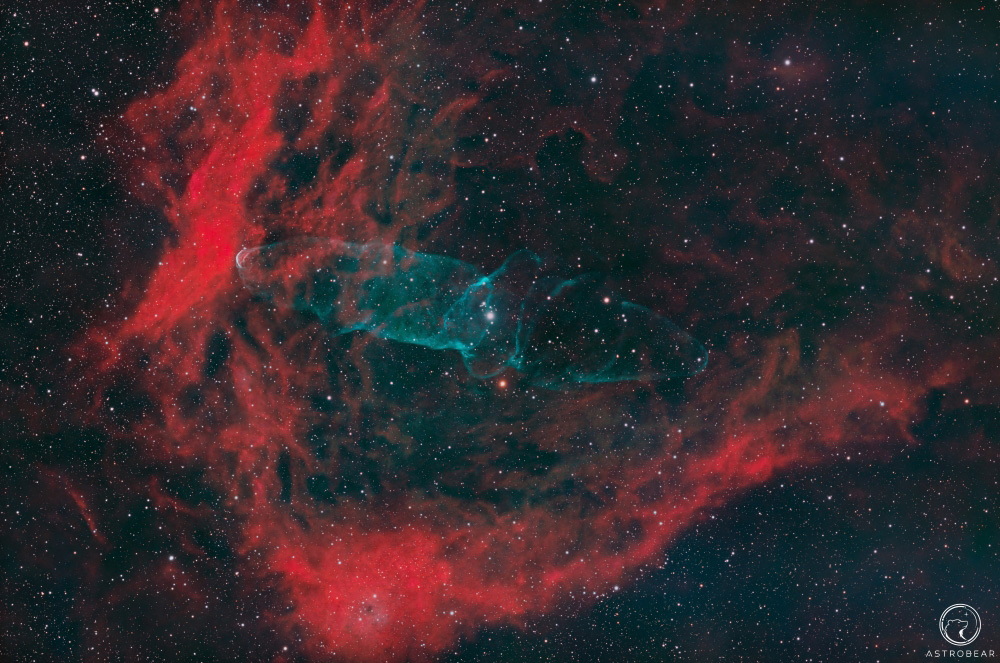
AstroBear's recipe for success:
"I captured this with a ZWO ASI2600MC Pro, using the Askar Colour Magic C1 (Hα/OIII) and C2 (SII/OIII) dual-band filters, plus unfiltered data for RGB.
In PixInsight, I split out the Hα, OIII and SII channels and cropped them with DynamicCrop. I then used PixelMath to combine the two OIII datasets from the Askar filters into one.
Next, I took the unfiltered RGB image as the base and combined it with the narrowband image, which was also in RGB. Finally, I used the NBRGBCombination script to blend the two files together, and that gave me the final image."
Cassio's rig:
Camera: ZWO ASI2600MC Pro.
Telescope: Askar 71F Flat-Field Refractor.
Mount: Sky-Watcher Star Adventurer GTi
Filters: Askar Colour Magic C1, Askar Colour Magic C2, ZWO R, G, B and luminance
Guide Camera: ZWO ASI120mm mini
Guide Scope: SVBony 30mm (f4)
Computer: ZWO ASIAIR Plus
Method:
Lights: Total integration was 13h 10m, all in 300s subs: 1h 15m luminance, 2h 30m red, 50m each of green and blue, and 7h 45m through the multiband filters.
Darks: 0
Flats: 0
Bias: 0
Processed in Pixinsight with RC-Astro Suite of tools and Photoshop
My rig:
Camera: ZWO ASI585MC Pro.
Telescope: Altair Astro 70ED Telescope (420mm).
Mount: Juwei 17 Mount Similar: ZWO New AM5N Harmonic Drive
Filter: Optolong L eNhance
Guide Camera: ZWO ASI120mm-s
Guide Scope: SVBony 30mm (f4)
Computer: ZWO ASIAIR pro
Method:
Lights: 90 x 120 sec Gain 200 - Optolong L eNhance
Darks: 0
Flats: 0
Bias: 0
IMAGES
Milkyway
As you may remember in the summer my beloved Canon 7D finally gave up, and so I was left with an Astro-mod 500D, which I have leant to a friend as he finds his feet in the adventures of astrophotography. I decided that a suitable replacement for me is a Used Canon EOS R, here are my first two attempts at capturing our galaxy:
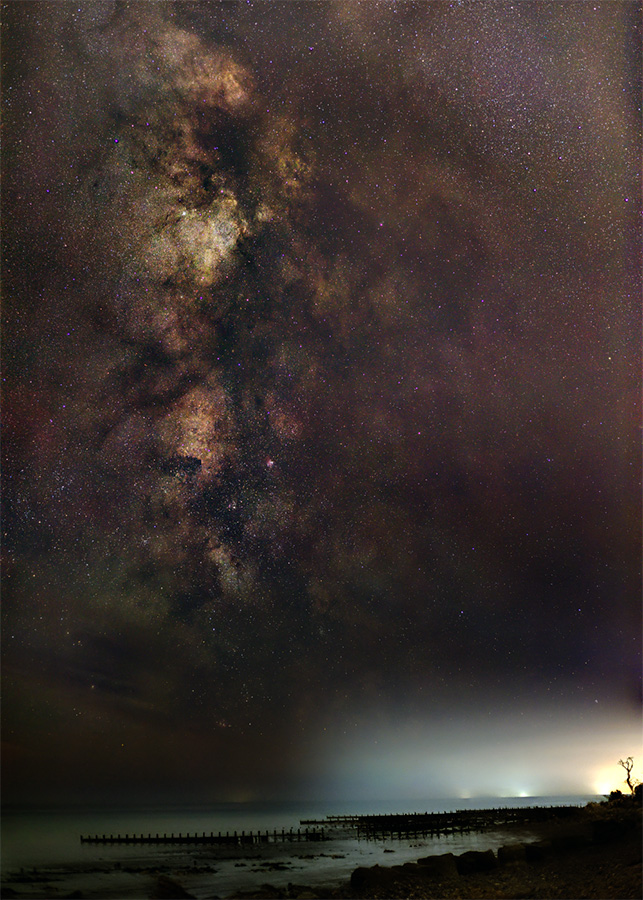
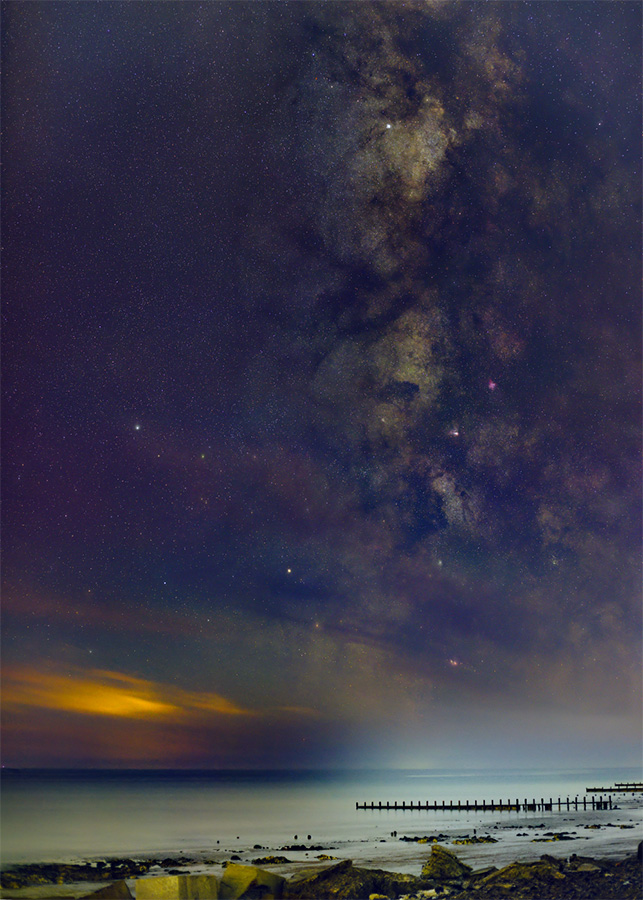
Equipment and settings (both images):
Camera: Canon EOS R
Lens: Canon EF 50mm.
Tripod: Manfrotto 290 lite
Method:
Lights: 10 x 10 secs, ISO 1600, f2.8.
Darks: 0
Flats: 0
Bias: 0
Stacked in Sequator, Stretched in Photoshop.
I have always wanted to have a picture of the constellation of Cygnus with its so many targets all in one image. This is untracked and as you can see there is some light pollution creeping in to the right, and so as such is a work in progress, but that being said it is clear to see The North America Nebula, Pelican Nebula, Butterfly Nebula, part of the Veil Nebula and several star clusters to name a very few... sadly, as Cygnus starts to set, I may not have chance to complete this project much before the swan rises once again in the spring.
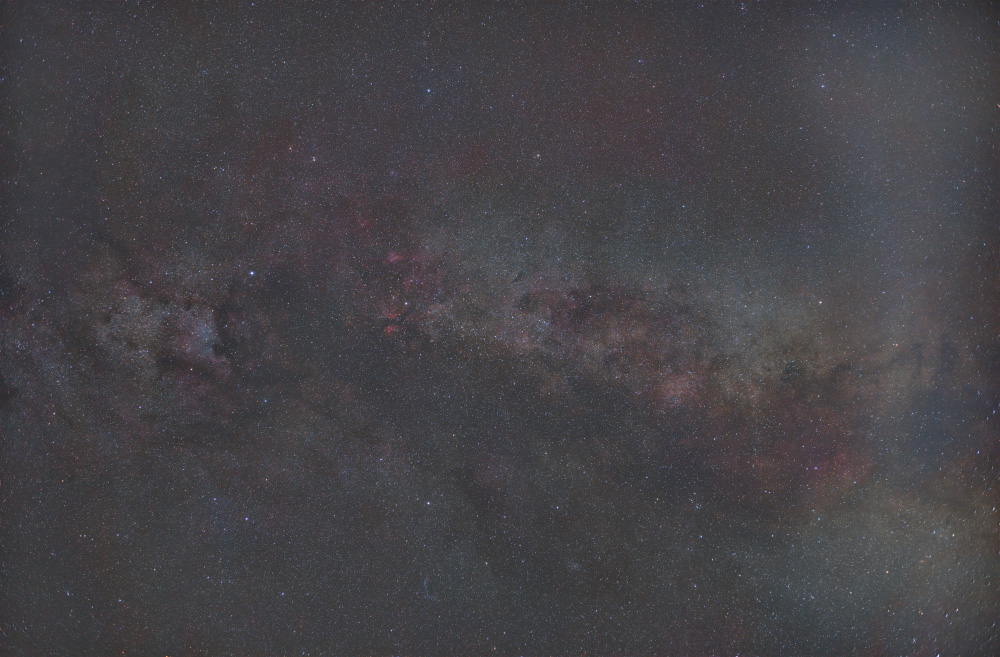
Equipment and settings (both images):
Camera: Canon EOS R
Lens: Canon EF 50mm.
Tripod: Manfrotto 290 lite
Method:
Lights: 10 x 10 secs, ISO 1600, f2.8.
Darks: 0
Flats: 0
Bias: 0
Stacked in Sequator, Stretched in Photoshop.
Deep sky
Orion Nebula (M42)
Fellow Astro Nerd Jeff Blunsdon was out and about with his Dwarf Mini this month and he captured this masterpiece. It is truly amazing what this box can achieve, especially when you think it can literally fit in your pocket!
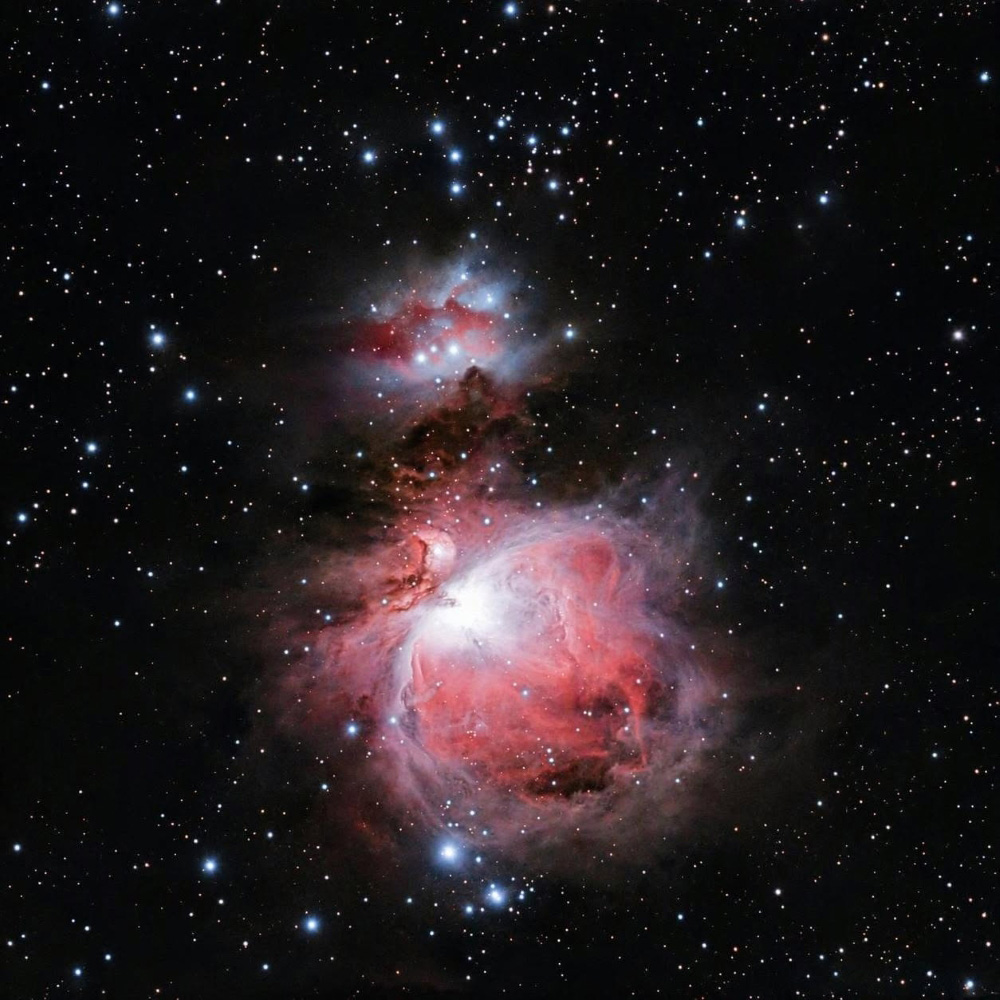
Equipment and settings:
Soul Nebula (IC 1848)
This emission nebula is located in the Constellation of Cassiopeia, and is a great target to capture at this time of year as it is virtually straight above our heads, but approximately 6,500 light-years above! I like this nebula as it contains so many shapes that prompt my imagination, a face to the left, and perhaps ET to the right, and something looking like an AT AT from Star Wars!
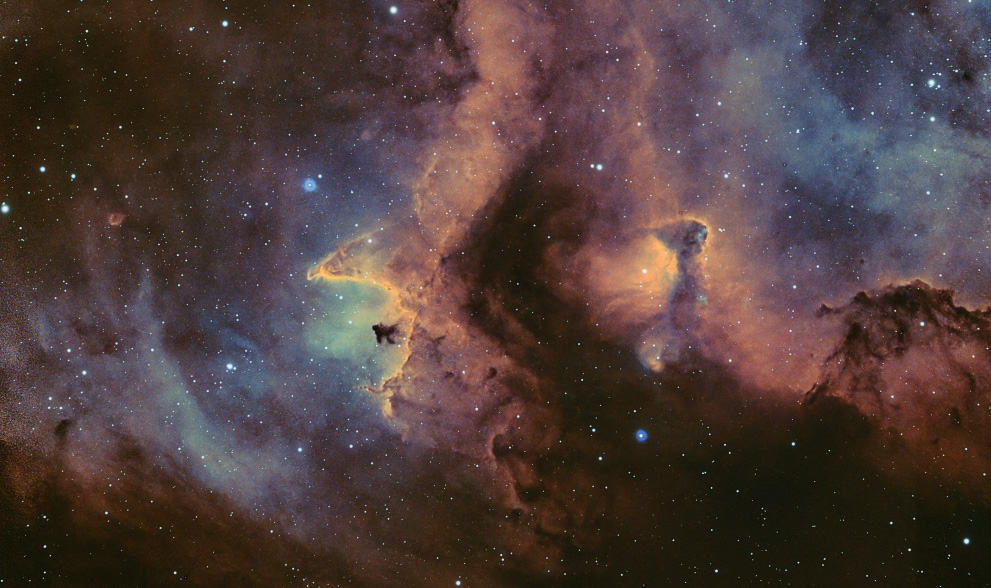
Equipment and settings:
Camera: ZWO ASI585MC Pro.
Telescope: Altair Astro 70ED Telescope (420mm).
Mount: Juwei 17 Mount Similar: ZWO New AM5N Harmonic Drive
Filter: Optolong L eNhance / Askar Colour Magic C2
Guide Camera: ZWO ASI120mm-s
Guide Scope: SVBony 30mm (f4)
Computer: ZWO ASIAIR pro
Method:
Lights: 150 x 120 sec Gain 200 - Optolong L eNhance
Darks: 0
Flats: 0
Bias: 0
Stacked in DSS, Processed in Pixinsight with RC-Astro Suite of tools.
The Ghost of Cassiopeia (IC 63)
Once again I turned my scope to Cassiopeia, this popular target is both an emission and a reflection nebula, as such it tests the astrophotographer to the limit. In my case the blasted star Gamma Cassiopeiae (the centre of the W) which in part illuminates this celestial wonder is with my kit at least very difficult to get under control. But as I try my best to show what I have captured rather than editing out what I dont like, I have kept it in!
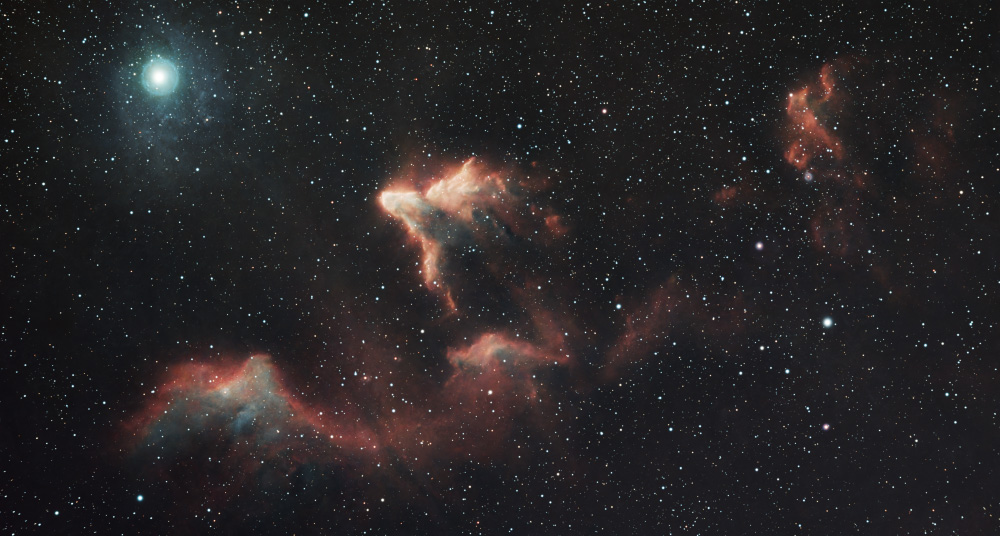
Equipment and settings:
Camera: ZWO ASI585MC Pro.
Telescope: Altair Astro 70ED Telescope (420mm).
Mount: Juwei 17 Mount Similar: ZWO New AM5N Harmonic Drive
Filter: Optolong L eNhance / Askar Colour Magic C2
Guide Camera: ZWO ASI120mm-s
Guide Scope: SVBony 30mm (f4)
Computer: ZWO ASIAIR pro
Method:
Lights: 60 x 120 sec Gain 200 - Optolong L eNhance
Darks: 0
Flats: 0
Bias: 0
Stacked in DSS, Processed in Pixinsight with RC-Astro Suite of tools.
Share this post:
By Jonathan Penberthy on 28/10/2026

Jonathan Penberthy
Cosmic Shutter Seeker and Star Programmer
Jonathan Penberthy is the Cosmic Shutter Seeker and Star Programmer at Park Cameras, with over 20 years of experience as a software engineer. His career journey has spanned industries, but a move to Park Cameras sparked a passion for astrophotography. Jonathan’s interest began while working on a lens selection app, leading him to explore the night sky with a Canon 7D. When he’s not programming or photographing the stars, he enjoys sailing and navigating by the cosmos. Learn more on his profile page.
Trade in your old equipment
Fast and easy trade in service ensures your old gear is collected efficiently and you are paid quickly! It's very simple to trade in your unwanted photography gear. Just head over to our dedicated Sell or Part Exchange page, fill out the details, and we'll get back to you with an offer for your old gear. Take the cash, or put it towards the cost of your new gear. It's up to you! Find out more
sign up to the newsletter
Keep up to date on the latest photography news, events and offers. Sign up now